Living What They Know
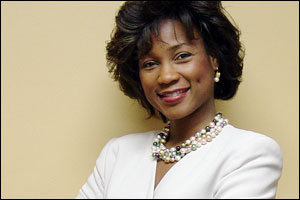
By Sharon Egiebor
Too many children are living in households where marriage is uncommon and sexual abstinence is rarely considered an option. The children come from homes where their mother is the second, third or even fourth generation of households headed by single women. For these children, taking an abstinence only education program may not prevent premarital sex, but it may encourage them to form life goals, to stay in school and to delay their first pregnancy. “We have kids who never see anyone get married and who see sex and cohabitation as the norm. The first thing we do is to convince kids that marriage is possible, healthy and available for them,” said Jacqueline Del Rosario, executive director of ReCapturing The Vision. “Our program comprehensively teaches them to find a mate and that abstinence is about waiting to get married. If you’re able to change their mindset, it is a great milestone.” Over a 9-year span, students from the ReCapturing The Vision, based in Miami-Dade, Fla. School district, participated in a federally-sponsored study that looked at the value of abstinence only education. This was the first longitudinal study of abstinence only programs. Other agencies participating included My Choice, My Future! in Powhatan, Va.; Families United to Prevent Teen Pregnancy in Milwaukee; and Teens in Control in Clarksdale, Miss. Statistically, the children, who voluntarily took classes as early as the 6th grade, were no different than children who took comprehensive sex education that may have been offered in mandated classroom curriculum. About half of both sets of students reported remaining sexually abstinent, and a slightly higher proportion reporting having been abstinence during the 12 months before the study, conducted by Mathematica Policy Research Inc., based in Princeton, N.J. ReCapturing the Vision had the largest number of students who either remained abstinent or abstained from sex over the 12 months prior to the final study. Del Rosario said that slight difference is a result of the program’s positive impact on her students, many who are poor, Hispanic or African American girls living with single parents. Most of the students were between 18 and 20 years old when the study concluded. Mathematica released the report in four waves. The final study was released in April. Del Rosario said her agency keeps track of most of its former clients. One of her first students, identified as L.S., didn’t get pregnant until she was about 21 years old. L.S.’s mother had her when she was 15 and unwed. “We have to look at abstinence education holistically, When you see what the kids’ lives are like day in and day out and where they come from and what their perspective is, then you’re more able to see the successes.”
The abstinence lessons helped L.S. focus on getting her high school diploma, Del Rosario said.
“Abstinence only is an alternative message and whether they [students] choose to say no, is another issue. The real point of the message is that people first need to make the decision to do the right thing, and then understand that human nature may have them do the wrong thing,” she said. Del Rosario cited a study by Rebecca Maynard that showed girls given comprehensive sex education, condoms and contraceptives still got pregnant. Del Rosario said society is arguing unnecessarily about the values or lack of values of abstinence only education programs. “When someone tells me that a 12 year old shouldn’t have sex, I wonder what planet are they a from. Sex is a very adult activity. Who would say that a 12 year old should not be told to wait to find out about themselves, who they are, what is important, to find friends, to look for someone who is like yourself to share your views and morals. All of this information is wonderful for kids to learn and to get out of sticky situations. We don’t just teach them to avoid sex, but sex, drugs and violence. “That is a message I would never stop giving, whether Mathematica says it is scientific improvement or not. I walk the halls daily and know that the program works. The parents say they are kids are thriving.” Del Rosario said the youth in the program had better school attendance, an improvement in grades and fewer school suspensions. Del Rosario said she is concerned that too many children are bombarded by sexually explicit messages every day through television shows or music. “In the past, Jimmy and Jane have sex because it is puppy love,” she said. “If you work around youth on a daily basis, you would know how base human sexuality has come about with our youth. Sexual intercourse is a transaction now, defunct of a commitment and a relationship.” The Miami school district, like many around the country, is being confronted with the casual sex attitudes, teenagers sleeping with adults, experimentation in homosexuality and oral sex, she said. Del Rosario also said she worries that too many girls are at risk of being sexually molested, and too frequently by a boyfriend or friend of their young, single mother. Del Rosario calls it a symptom of the Single Mother Syndrome: “There are a host of problems you will find with single mothers. There is the intergenerational cycle of young motherhood who have never been married to anyone staple. They will get pregnant at 15 and they’ll have a daughter. The daughter will get pregnant at 16. It is a cycle that becomes more and more acute over time.”
Table 1. A-H Definition of Abstinence Education for Title V, Section 510 Programs
• A. Have as its exclusive purpose teaching the social, psychological, and health gains to be realized by abstaining from sexual activity. • B. Teach abstinence from sexual activity outside marriage as the expected standard for all school-age children. • C. Teach that abstinence from sexual activity is the only certain way to avoid out-of-wedlock pregnancy, sexually transmitted diseases, and other associated health problems. • D. Teach that a mutually faithful, monogamous relationship in the context of marriage is the expected standard of sexual activity. • E. Teach that sexual activity outside the context of marriage is likely to have harmful psychological and physical effects. • F. Teach that bearing children out of wedlock is likely to have harmful consequences for the child, the child’s parents and society. p>• G. Teach young people how to reject sexual advances and how alcohol and drug use increases vulnerability to sexual advances. • H. Teach the importance of attaining self-sufficiency before engaging in sexual activity. Source: Title V, Section 510 (b)(2)(A-H) of the Social Security Act (P.L. 104-193)

Where the Heart Is
By Andrea Conley
FORT WORTH – The caseworker came regularly to Crystal’s southwest Fort Worth apartment. In fact, the person was too regular. Eventually Crystal’s neighbors found out about her HIV positive status. The confrontations started after Crystal felt her life was back to order following the HIV-positive diagnosis. She was in treatment and was responding very well, and her doctors were impressed. Her sons were doing well in school and had lots of friends coming over to play. “Soon,” Crystal says, “the neighbors were gathering mob-like in the breezeway of our apartment building, shouting threats and obscenities at me and my babies on a daily basis.” Her son’s classmates mimicked the vile insults learned from the parents. The 9-year-old defended his mother and came home with a bloody nose. “The [neighbors] came over and tossed condoms in front of my doorway,” she recalls. The petty ugliness gave way to violence. “They threatened to gang rape me,” she continues. “And when I was hospitalized for about a month, they broke into my apartment three or four times.” Now she and her sons, ages 4, 6 and 10, live at The Villages of Samaritan House, and Crystal says she sleeps at night. “I feel safe her,” she repeats softly. The 66-unit complex is outfitted with security cameras everywhere. Children can romp about on the playground and not be terrorized, because their neighbors have HIV-positive loved ones at home, too. Steve Dutton, president and CEO of Samaritan House, says the 1, 2 and 3-bedroom units filled up quickly after they opened on Dec. 1, 2006, World AIDS Day. Within the next four months, all the units had been leased. At least 90 children reside at The Villages with their families. “More than anything, it was about letting people know about the opportunity. You really can’t put an ad in the paper [like for regular rental properties].” Dutton and his team contacted doctors’ offices, hospitals and other service providers, and waited for the word-of-mouth approach to bring in eligible families. “The first month was very slow,” he recalls. “The second month, things picked up a bit. By the last month and a half, we were so busy we could hardly keep up with the applications.” Their strategy had worked perfectly. The word had spread and people finally knew the apartments were clean, bright, attractive, and most of all, affordable with all bills included. Tenants must be HIV-positive, homeless or at the risk of homelessness and meet federal low-income guideliens. Dutton says there is now a waiting list, albeit not an extremely long one. Residents are afforded a myriad of services, including job search and other life skills assistance, medical, nutritional and transportation services, and more. Soon they – and eventually the general public -- will have access to cutting-edge technology with the Mobi-med kiosk. Dutton describes this equipment, developed and provided to Samaritan House/The Villages by Fred Kimble at Mobi-Med Technologies, as a sort of cyber-triage center. Similar to a coin-operated photo booth, it allows a patient to have a seat, speak face-to-face with a health care professional via satellite; test their blood pressure, weight and other vitals. Then, the provider can determine whether or not the patient needs to report in person to a facility for further treatment. This technology, says Dutton, has been used in rural areas, as well as in the Iraq War.
The Villages were funded in part by $7.3 million in tax credits. But they were also brought to fruition through the support of the surrounding community.
Dutton says he went into the neighborhood in 2004, and discovered a small, dilapidated bookstore and neighboring homes that were also in disrepair. He asked neighbors what they thought of the plans for the special housing, and they were for it. Dutton’s group negotiated purchase prices for the property, and later received the tax credits to build the apartments. They raised a total of $12.5 million to cover the associated costs, including legal fees. Local elected officials also rolled up their sleeves. Dutton recalls the contributions of, among others, Fort Worth City Council member/Mayor Pro Tem Kathleen Hicks, State Rep. Marc Veasey and retired Judge Maryellen Hicks, to name a few. Although there has been much talk of the reticence of the black church to address HIV and AIDS, Dutton says the opposite has been true in this case. He says Samaritan House has received great support from area churches, many of whom have played a significant role in planning Samaritan House’s upcoming Hoops ‘N’ Harmony basketball tournament and health fair, scheduled for Sept. 8. Crystal, 27, who was diagnosed HIV-positive seven years ago, said she was taken aback at the level of ignorance regarding her condition. “People really need to know they cannot catch it just because they live next door [to an HIV infected person] or just because their kids play in my yard.” However, she says she is not bitter from her experience. On the contrary, she sounds hopeful, excited about the future. “I have completed two already,” she says of the many computer courses and other educational programs available at The Villages. In addition, she still has the firm support and love of her mother, and the father of her youngest child. “He does a lot of online research, educating himself so he can try to help me,” she says. Of her new home she says, “People here are like family. Some of them have been disowned by their relatives, so we are family for each other.” She has lived at The Villages for more than six months now and still marvels at the outpouring of support she has received from the staff. “I never knew people cared so much.” For more information about Samaritan House, The Villages, or volunteer opportunities, please contact Samaritan House at 817.332.6410.
In the news
By Sharon Egiebor
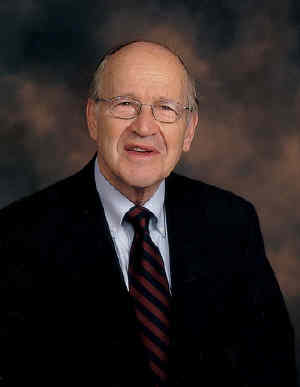
Dr. Samuel Katz, Wilburt Cornell Davison Professor and chairman emeritus of pediatrics at Duke University, was the co-founder of the measles vaccine in 1958 and has testified before Congress advocating mandatory immunizations as necessary for the public’s good. Sharon Egiebor, Blackaids.org project manager, interviewed Katz by telephone on the recent controversy over the HPV vaccine and its potential connection to an AIDS vaccine. As of yet, there is no AIDS vaccine and no cure for HIV/AIDS. Katz has been involved in studies of vaccinia, polio, rubella, influenza, pertussis, HIV, Haemophilus influenzae b conjugates and many others. He has chaired the Committee on Infectious Diseases of the American Academy of Pediatrics (the Redbook Committee), the Advisory Committee on Immunization Practices (ACIP) of the CDC, the Vaccine Priorities Study of the Institute of Medicine (IOM), and several WHO and CVI vaccine and HIV panels. He recently received the Pollin Prize for contributions to pediatric infectious disease research and vaccine development. BA: Will this controversy over the HPV vaccine affect a future HIV/AIDS vaccine? And if so, how? SK: I think that the public and as well as the health care community are so much aware of AIDS that you wouldn’t run into the same sort of thing that you run into with HPV. One of the problems with HPV is that Gov. Perry and others are pushing for mandates that an awful lot of the public do not know much about. Even if you believe in mandates, you don’t do that sort of thing until the people who are going to be involved in receiving the vaccine, the families of those people as well as nurses, physicians and public health people, know a great deal about it. It is not surprising that there are not a lot of people who know about the connection between papilloma virus and carcenoma of the cervix. You need a time period for education so people will understand why you are pushing the vaccine for my daughters. I think this is something was mistakenly done, a little bit prematurely by Merck (the manufacture of Gardasil) and their marketing people. BA: What do we know about the effectiveness of the vaccine? SK: This is vaccine is being recommended for children as young as 9 years of age. There is not any data on the safety of this vaccine in children that young. If and when it is implemented, it will probably be among 11-12 years old and maybe up to age 18 because the vaccine for children’s program will provide this vaccine free, if they qualify for that program. The total number of children who have been evaluated is really very, very small. The group between 9 and 15 years of age hasn’t been studied at all. You’re talking about giving a vaccine, which probably is safe and effective, but you’d like to have evidence of this. We don’t know if when they are 30 years of age, if they are going to need a booster or is this vaccine going to protect them for life. These are questions that will be answered with longitudinal studies and trials. But without all of this information, I think it is pretty premature to mandate this vaccine. I don’t think you should say ‘you can’t go to school unless you get it.’ BA: What is the difference between mandating HPV vaccine and say the measles or chicken pox? SK: Most of the vaccines we have mandates for their agents are usually bacterial. They are transmitted very rapidly. If you have one child with measles in a classroom in school, you could be certain that every other child that has not been vaccinated will get the virus. With HPV that is not the situation, the only way we know of transmission is sexual means. BA: Is the concern for this vaccine tied into the issue of sex, since the most common way to transmit HPV is through sexual contact? SK:I think the inquiries that have been made have not shown that to be very important. Initially, the people who were for abstinence … have been very muted or in the background. I don’t think it has been a major issue with this vaccine. It was with years ago with the Hepatitis B vaccine. That first was licensed, recommended and mandated and people said it was going to encourage intravenous drug use and people would have sexual relations and not worry. I don’t think that happened either. There were plenty of studies that show it didn’t happen. BA: Is this vaccine going to force parents to have the sex talk with their daughters before they are ready? SK: I think this is why the physicians who deal with adolescents are very, very anxious to have the conversation. Once you are of the age that this vaccine is being recommended for, it isn’t just your parents signing permission for it. The young lady herself signs the assent form. The individual youngster is supposed to agree or disagree that he or she is willing to take this. I realize that people can say that HIV is a sexually transmitted and this is the main root of transmission. I don’t think you’ll run into people saying we shouldn’t do an HIV vaccine because it will increase sexual promiscuity. If we had an HIV vaccine tomorrow that had been shown to work and to be safe, you would have people lining up like they did for the polio vaccine in 1955. BA: Are there other issues with the HPV vaccine? SK: We haven’t discussed the issue of cost. It cost $306 for three doses. If your insurance company will pay for it, that’s fine. If you come under a state program, a number of states will pay for it, but a number of states will not. There is also an issue of let’s get this thing rolling appropriately. I’m not a great believer in mandate for this vaccine anyway. If we’re going to discuss it, it is very premature. BA: Will we have an HIV/AIDS vaccine? SK:It depends on whether or not you see the glass as half empty or half full. I am one who thinks it is half full. Will there be one next year, in five or 10 years, maybe.

By Katie Pence
CINCINNATI -- After a University of Cincinnati (UC) study revealed that people living with the HIV virus felt alienated by their churches following diagnosis, researchers began to explore the feelings of religious leaders and congregations about the illness.
Previous research showed among other things that black patients claimed to have become more spiritual and that more white than black patients felt alienated from their religious communities after HIV diagnosis. Now, Magdalena Szaflarski, PhD, and Joel Tsevat, MD, both researchers at UC’s Institute for the Study of Health, have received a grant from the National Institute of Child Health and Human Development to study how religious organizations respond to HIV/AIDS within their congregations and communities. The grant will fund a two-year study in which UC researchers will interview clergy from 150 different religious organizations in Greater Cincinnati and compare their responses with 60 HIV/AIDS patients who have or haven’t felt welcome in their congregations. "There isn’t much research on how churches, synagogues and other places of worship feel about HIV or AIDS, and the research that was done is mostly from the 1980s and ’90s," Szaflarski says, adding that the study will describe the current levels of HIV-related involvement on the part of religious organizations and highlight factors shaping religious organizations’ responses to HIV/AIDS. "We’re interested in seeing the organizations’ viewpoints," Szaflarski continued. "We want to see if these affiliations can improve levels of support provided to patients with HIV/AIDS and create better quality of life for patients." In a previous study published in December 2006, Szaflarski, Tsevat and colleagues showed that spirituality and religion play an important role in shaping patients’ perceptions of living with HIV/AIDS. In a report on the study, Sian Cotton, PhD, assistant professor of family medicine, said the team found that patients with HIV/AIDS, particularly black patients, claimed to have become more spiritual after diagnosis. However, more white patients felt alienated from their religious communities than did blacks. "Twenty-four percent of all patients felt alienated in their religious communities, 60 percent did not feel welcome, and 10 percent changed their place of worship because of their HIV status," says Szaflarski. In the new study, Szaflarski says she wants to look closely at the role of black churches in the lives of patients with HIV. "There’s a large population of African-Americans affected by HIV/AIDS, and they seem to gain a lot of knowledge and strength from their religious communities," she says, adding that about 50 percent of participants, again, mostly blacks, believed their spirituality helped them live longer. Researchers hope the new study will help discover existing support groups and reveal how these social networks could increase patients’ self-worth and prolong their lives. "People with HIV and AIDS tend to live much longer than they used to, and if they have a good social support network, they have a better chance of living a longer, more normal life," says Szaflarski. "Religious organizations tend to raise social capital. They are social groups promoting cohesiveness and support. "We want to know how people living with HIV/AIDS could benefit from these organizations."
Statement
By Chris Collins
[Email This Article To a Friend] Tuesday, May 1, 2007 Contact: Amy Weil, OSI, Wendy Sefsaf, OSI, The United States spends over $16 billion a year on HIV/AIDS, but has failed to make adequate progress on the epidemic. The number of annual new HIV infections has remained at 40,000 for over a decade and half of people in need of treatment are not receiving it. African Americans suffer most for this failure – accounting for half of all new infections though they represent 12 percent of the U.S. population. “Black Americans are dying, even though we know how to help people live longer, productive lives,” said Phill Wilson, executive director of the Black AIDS Institute and a member of the advisory committee for the OSI report. “Only the federal government is in the position to coordinate a truly national response that draws on the experiences of the private sector, faith-based institutions, community-based organizations, civil rights groups, government, and others. We’ve done this in other countries. Let’s do it here at home.” Black Americans with AIDS have not seen equal benefits from AIDS treatment: from 2000 to 2004, deaths among whites living with HIV declined 19 percent while only 7 percent among blacks. The report argues that a national plan is long overdue to guide a more effective use of federal funding. The study, Improving Outcomes: Blueprint for a National AIDS Plan for the United States, offers several recommendations for progress against the disease, including a renewed focus on the prevention and treatment needs of African Americans. It also recommends trying new innovative approaches to address persistent structural barriers; focusing federal resources on concrete outcomes; and increasing the use of evidence-based, cost effective strategies that have already proven successful. “Twenty-five years into this epidemic, we are at a crossroads in our battle against HIV/AIDS,” said Rebecca Haag, executive Director of AIDS Action. “We need to adapt and encourage innovation in prevention programs so that they serve the hardest hit communities. The national plan would hold our leaders accountable for delivering measurable results in reducing new infections." “America’s response to its AIDS epidemic at home has lost momentum,” said Chris Collins, author of the OSI report. “The U.S. needs to develop what it asks of other nations combating AIDS: an outcome-oriented strategy that holds us all accountable for helping people protect themselves against HIV infection and delivering health care to people who need it." To learn more about the findings of the report and the recommendations for policy makers, please visit www.publichealthwatch.info. ###New report offers concrete recommendations to reduce HIV infection rates, increase access to AIDS-related care, and combat racial disparities
FOR IMMEDIATE RELEASE
212-548-0381
202-721-5642
NEW YORK –America must develop a comprehensive national strategy to make measurable progress in the fight against AIDS, the Open Society Institute said in a report issued today.
The Open Society Institute, a private operating and grantmaking foundation, works to build vibrant and tolerant democracies whose governments are accountable to their citizens. To achieve its mission, OSI seeks to shape public policies that assure greater fairness in political, legal, and economic systems and safeguard fundamental rights. OSI works in over 60 countries including the United States, Europe, Asia, Africa, Latin America, and the Middle East.