Drug Therapy
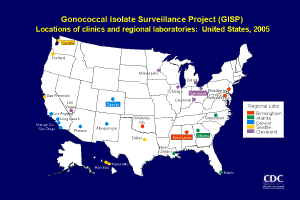
*Additional information on available gonorrhea treatments can be found at: www.cdc.gov/std/gonorrhea/arg/. Gonorrhea, the second-most common sexually transmitted disease in the United States, is increasingly becoming resistant to certain classes of standard antibiotics. The Centers for Disease Control and Prevention is now recommending the use of a new drug class. "Gonorrhea has now joined the list of other superbugs for which treatment options have become dangerously few," said Dr. Henry Masur, president of the Infectious Disease Society of America told the Associated Press. "To make a bad problem even worse, we're also seeing a decline in the development of new antibiotics to treat these infections." Fluoroquinolone-resistant gonorrhea is now widespread in the United States among heterosexuals and men who have sex with men (MSM). The data showed the proportion of drug-resistant cases among heterosexuals rising above the recognized threshold of 5 percent for changing treatment recommendations. CDC had recommended fluoroquinolones no longer be used to treat gonorrhea in MSM when this threshold was crossed in earlier years. “New treatment recommendations are critical if we are to continue to see progress in controlling gonorrhea,” said Dr. John Douglas, director of the Division of STD Prevention. “We cannot afford to lose ground against a disease that continues to affect roughly 700,000 Americans each year.” The new data, from CDC’s Gonococcal Isolate Surveillance Project (GISP) in 26 U.S. cities, showed that among heterosexual men, the proportion of gonorrhea cases that were fluoroquinolone-resistant Neisseria gonorrhoeae (QRNG) reached 6.7 percent in the first half of 2006, an 11-fold increase from 0.6 percent in 2001. Recommended options for treating gonorrhea are now limited to a single class of antibiotics known as cephalosporins. Public health officials said they believe the lack of treatment options underscores the need for accelerated research into new drugs, as well as increased efforts to monitor for emerging drug resistance, especially to cephalosporins. “There is also an urgent need for new, effective medicines to treat gonorrhea. We are running out of options to treat this serious disease,” said Dr. Kevin Fenton, director of CDC’s National Center for HIV/AIDS, Viral Hepatitis, STD, and TB Prevention. “Increased vigilance in monitoring for resistance to all available drugs is essential.” While significant resistance to cephalosporins has not been observed to date, CDC is working with state and local health departments to monitor emerging cephalosporin resistance. CDC is urging health departments to maintain or develop capacity to perform cultures for Neisseria gonorrhoeae and to assess any gonorrhea treatment failures for possible resistance. In addition, CDC is working with the World Health Organization to strengthen international efforts to monitor for the emergence of cephalosporin resistance and with government and industry partners to identify and evaluate promising new drug regimens. These additional measures are critical for the control of gonorrhea. Oral fluoroquinolones were recommended as first-line treatments for gonorrhea in 1993. But drug resistant cases have increased steadily in recent years, rising first in the western United States and then among MSM nationwide. In 2002, CDC recommended that fluoroquinolones not be used to treat gonorrhea infections acquired in California and Hawaii, and in 2004 that the drugs no longer be used to treat MSM with these infections. The new CDC analysis shows an increase in the past five years in the overall proportion of gonorrhea cases that are fluoroquinolone-resistant – from less than 1 percent in 2001 to 13.3 percent in the first half of 2006.
The analysis also indicated that fluoroquinolone resistance is widespread geographically. Resistant cases were seen across the United States in the first half of 2006 (in 25 of the 26 cities in the analysis), and sharp increases occurred from 2004 to 2006 in several cities, including Philadelphia (from 1.2 percent to 26.6 percent of gonorrhea cases) and Miami (from 2.1 percent to 15.3 percent). In addition, the analysis showed QRNG continued to rise among MSM; 38 percent of MSM gonorrhea cases were QRNG in the first half of 2006, compared to 1.6 percent in 2001.
Within the class of cephalosporins, CDC now recommends ceftriaxone, available as an injection, the preferred treatment for all types of gonorrhea infection (genital, anal, and throat). For genital and anal gonorrhea, there are some alternative oral cephalosporin treatments that physicians can consider, but there are currently no recommended alternatives for pharyngeal infection. Gonorrhea is the second most commonly reported infectious disease in the United States after chlamydia. In 2005, 339,593 cases were reported nationwide, although experts believe the actual number of cases may be twice that. Following a substantial decline in national gonorrhea rates from 1975 to 1997, overall rates appear to have leveled off in recent years. States participating in GISP include Alabama, Arizona, California, Colorado, Florida, Georgia, Hawaii, Illinois, Louisiana, Maryland, Michigan, Minnesota, Nevada, New Mexico, North Carolina Ohio, Oklahoma, Oregon, Pennsylvania, Texas, and Washington.

Prevention
By Frankie Edozien
NEW YORK -- When it was reported over a year ago, that New York City health officials were working on a plan to brand their own condom, Big Apple residents snickered. Jokes could be heard from one end of the city to the other. The city’s health commissioner, Dr. Thomas Frieden, who had pushed through a smoking ban in public restaurants before it became di-riguer around the world, just soldiered on. His boss, Mayor Michael Bloomberg stood by him and the deal was made. Even as the secret was out, health officials revealed no details on their plan until almost two months ago when the official ‘NYC Condom’ was unveiled on Valentine’s Day. It was no joke. City officials, celebrities -- including designer and amfAR president Kenneth Cole -- and AIDS service workers showed off the product, with workers giving them away at subways, street corners, bars and just about everywhere that day. Cole hosted the news conference announcing the condoms at his Rockefeller Center store. Each standard-size condom, made by LifeStyles, is packaged in a wrapper stamped with the letters "NYC CONDOM" in the same font and bright colors used on city subway maps and signs. Some began calling them the subway rubbers. There were the first of its kind for any municipality. The distinct packaging helps officials keep track of the product’s effectiveness as well as encourages its use. However, grumbling came from the city’s catholic leaders as the packets were handed out all over town. Edward Cardinal Egan, head of the Archdiocese of New York, and Bishop Nicholas DiMarzio of Brooklyn, released a joint statement lashing out at City Hall leaders and denouncing the program as "tragic and misguided." Egan and DiMarzio, who together serve more than 4 million Catholics, added that the only way to protect against sexually transmitted diseases such as HIV/AIDS is through abstinence before marriage and fidelity among married couples. “Our political leaders fail to protect the moral tone of our community when they encourage inappropriate sexual activity by blanketing our neighborhoods with condoms," they said. But Bloomberg shrugged off their criticism and defended the initiative, saying it was not an issue of faith but a "real world" solution to a health crisis. More than 100,000 of New York's 8.2 million residents have HIV or AIDS, and officials estimate some 20,000 don’t know their status. The Big Apple remains the epicenter of the pandemic with blacks and women increasingly bearing the brunt of new infections. The city began giving away condoms in limited quantities back in 1971. But the recent ramped up efforts have seen the numbers go from 4 million in 2003 to 18 million in 2006. That record could be surpassed by years end. In the first month of NYC Condom’s distribution, 5 million were given away to residents and visitors. The total cost is still unclear but officials say it’s a drop in the bucket for a city with a $57 billion budget. Few cities could match New York’s public health budgets and so far none has tried to brand their own condoms. Frieden "The NYC Condom is a sensation," a thrilled Frieden said.
“Hundreds of community organizations are signing up to give out free condoms, many for the first time. I commend them for doing their part to prevent sexually transmitted diseases and unplanned pregnancies,” the commissioner said.
Indeed it seems as if everywhere one goes in the Big Apple, the prophylactics are available. Officials saw a torrent of hits to the www.nyccondom.org website, they set up for distribution (15,000 hits the first week and 35,000 by the end of the month) and sent new condoms to a myriad of establishments. From AIDS advocacy groups to hair salons, clothing stores, nightclubs, coffeehouses and more. Anyone who wants can simply order them. But officials have been proactive too, asking some establishments like Monster Sushi, a popular eatery with multiple branches, to pick them up. Managers said they constantly refill the baskets at the door. Close to a million condoms were distributed that way. A sentiment echoed at other hitherto non-tradition condom distributors. “Our customers keep asking for more,” said Peace St. Clair, a barber at the Levels Hair Salon of Harlem. At the Pieces Bar, a gay watering hole in Greenwich Village, manager Brandon Griewank said the product’s vivid packaging sells itself. “They're going by the handful. They capture the style and wit of New York." Frankie Edozien is a reporter for the New York Post.
Youth
By Sharon Egiebor
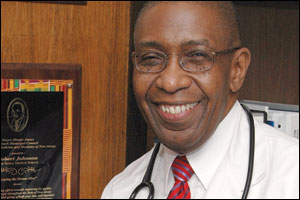
Dr. Robert L. Johnson, co-author of “Strength of Their Journey – 5 Essential Disciplines African-American Parents Must Teach Their Children and Teens (Random House October 2002),” treats one of the largest clientele of young adults living with HIV/AIDS in America. Johnson also is the interim dean of the New Jersey Medical School at the University of Medicine and Dentistry of New Jersey, a professor of pediatrics and psychiatry at the university and the The Sharon and Joseph L. Muscarelle Endowed Dean (interim). He spoke by telephone with BlackAIDS.org project manager Sharon Egiebor about the rising number of HIV/AIDS in African-American teens. BA: How has HIV/AIDS affected your patient load? The number of cases? Was there a change from children born with HIV to teenagers who acquired the virus through other means? RJ: It has had a traumatic affect. We have about 100 patients, the largest program for teenagers living with HIV in the country. In our program, we take care of teenagers who primarily acquire the disease from their activities. There are a few who were born with it. They were in the pediatric program and they continue in the program through adolescence. The pediatric HIV program is being closed. We do have a few patients, but this is one of the great success stories. It was a combination of two things: improved prenatal care for pregnant women in general and secondly, our ability to give pregnant women medication to prevent transmission of the disease from mother to infant. However, the public shouldn’t get the impression that it is a problem that is solved. The success of the treatment of HIV with one-pill-a-day means that more people will be living with HIV and living rather healthy lives. But on the other side, people continue to engage in that risky behavior and the number of HIV cases will continue to go up. We have to continue the treatment of pregnant women. BA: You participate with several community and government organizations on HIV prevention. What message seems to be working better than others? RJ: The realistic, most effective method of HIV prevention is related to testing and treatment. It is very important to find someone in the very early stages of the infection and provide care for them. Care may mean close monitoring at the beginning of the infection. The most important prevention is the detection of infection, which is chiefly HIV testing. The most important thing a person can do is to get HIV testing. The Centers for Disease Control and Prevention is recommending routine testing. The biggest problem is that the people who have the disease and are unaware of it have had some form of medical contact but they didn’t have an HIV test. The recommendation is now that we make HIV testing routine. If someone goes in for a STD (sexually transmitted disease) they will get an HIV test also. If you get one STD you may have another. It is a no brainer. There are people going to emergency rooms for an HIV test. The best form of testing right now to achieve the public health benefit is rapid testing. One of the problems in the past was that if people got tested, they wouldn’t be around to get the results. (Rapid tests results are available in about 20 minutes.) That enhances our ability to do the testing as well. For the public, it is real important to get tested. We’re not talking about people with relevant risk. Everyone from 13-64 years old needs to be tested. You need to know your HIV status, and if you are infected, you need to get in treatment. We also recommend routine condom use, abstinence and not using intravenous drugs. RJ: It is just like the rest of the country. Teenagers and young adults are engaging in risky behavior. The established medical community has never been able to significantly reduce the rising rate. There has been some decrease in risk behaviors. We are seeing more kids using condoms. An estimated 85 percent of African American males are using condoms. The STD rates are going down and teen pregnancies are going down. What we haven’t seen is the type of behavior change that would reduce the rate of HIV in young, gay men. There has been a return, especially among young, black gay men, in activity, like barebacking, which is not using condoms. Four of my patients went to the same New Year’s Eve party. All of them came back with gonorrhea. None of them used a condom. Although they are college students and they know about the spread of HIV, they weren’t worried enough about HIV to change behavior. Many of us are of the opinion that we are not going to be able to change risk behaviors. I don’t believe we are going to get a significant change in the prevalent rate of the infection until we get a vaccine. I’ve been saying this for some time now. Prevention is not working. If it were working, it would wipe out syphilis, gonorrhea and chlamydia. Although it is important to know about HIV, it does not change behavior and we need some other methods to do it. Treatment reduces viral loads and the possibility that those people are going to spread HIV. We can’t rely on prevention and the change of risky behaviors. We must really rely on detection. We need to do much broader testing. We’ve seen a great impact from treatment on the viral loads in Newark. In every zip code where we have pockets of people with HIV infection, we have viral loads going down. Today, the treatment is much easier because of the improvement in pharmaceutical technology, i.e. the one-pill-a-day. It has made a significant impact on the reduction of HIV. There is a debate over whether or not we should spend a lot of money on prevention activities, especially faith-based abstinence. There are many of us who believe that people in the South (which has one of the highest rising rates of HIV infections in the U.S.) is about having money for medication. The national problem is that we don’t have good HIV detection and treatment programs nationwide. In places like the Northeast and California, where you have programs with heavy state support, you have the assistance to allow better testing and better treatment. In the rural South where we know there is a growing problem, we don’t have good outreach programs. It is easier for me to test people in New Jersey than rural Mississippi, because people are closer together. New Jersey uses federal funds and the state supplements those funds and that’s why our mortality rate is going down. RJ: I think it goes back to another issue. Parents need to do a lot of things with teens that ultimately have an impact on risky behaviors. But parents need to spend more time with their kids. They need to have conversations with their kids. They need to know what is happening with their kids, better ways of disciplining their kids and new techniques to be better parents. This is a global approach, not just an approach on HIV. This is discussed in “Strength for Their Journey.” One of the things we know is that if we strengthen families, increase communication between parents and children, which means being around your kids and really listening to them. If we strengthen parents to live what they preach, then you have better families. If you have better families, you have decreased teen pregnancy rates, decreased drug use rates, decreased delinquency rates, decreased gang membership, decreased STD rates and improved academic performance. Of all the things we want to do for our children that we develop fancy intervention for, the most important thing we can do is to strengthen the family. BA: What about the school system? Is there a place for them to impact the increasing rate of HIV/AIDS among teenagers? RJ: If you look at interventions for teen behavior, none of them have anything to do with the school. Schools can be a place where kids get information about HIV, and that is one of the things they do. I think schools should be a place to give out condoms. I don’t think schools can change behavior, other than increasing knowledge. One of the important things schools can do is to teach kids to read. BA: I don’t understand. Clearly, the four college men you discussed earlier are literate, but it didn’t change their behavior. Why? RJ: The four boys don’t have pregnancies and they don’t have HIV, and this is their first STD. It is not the specific risky behavior. It is the number of risky behaviors. The fact that more educated young men are less likely to engage in risky behavior is true, but not for individuals. BA: What is the greatest barrier to reducing the rate of HIV/AIDS among teenagers? RJ: I don’t really know right now. I guess the answer would be sexual activity, which is the way HIV is spread among teens. Therefore if you increase abstinence or protected sexual behavior, you will reduce HIV. We have a problem with intravenous drug use, but the nationwide problem of intravenous drug us is not a problem with teens. The exception is young women who have sex with older men may acquire the disease as a result of IV drug use. . IV drug use among teens is relatively is low and declining nationwide. BA: Even though you say prevention efforts are not working, you still participate with several prevention programs. Tell me how the Peer Outreach Workers Educating Risk-takers (POWER) Program you developed more than eight years ago is coming along. RJ: The POWER program is going well. The kids will participate in the third annual teen summit in a month. We had 600 people participating in that. The kids are still going out in the street doing improvisational theater, and doing more to train HIV facilitators.
By IRIN News
Tuberculosis (TB) is back with a vengeance and it has a new face: the combination of the HIV epidemic with new strains of the disease that are resistant to the existing drugs has seen new TB cases and TB-related deaths skyrocket in the last decade. Mycobacterium TB, the bacterium that causes the disease, is ancient. But powerful antibiotics brought it under control in the developed world, scientists largely abandoned efforts to develop new drugs or diagnostics, donors stopped funding TB programmes and the global health community shifted its attention elsewhere. The world, and sub-Saharan Africa in particular, is now paying the price. Very few countries in Africa have the technology to test for drug-resistant TB. Without sophisticated laboratory facilities, TB patients co-infected with HIV also present a diagnostic challenge. In countries like Lesotho and Mozambique, lack of access to health services in remote, rural areas adds to the likelihood that large numbers of TB infections are going undetected and untreated, including cases of multidrug-resistant (MDR) and extremely drug-resistant (XDR) TB. In Kenya, where overcrowded slums like those in the capital city of Nairobi create the perfect breeding ground for MDR-TB, there is some capacity to diagnose drug-resistant strains, but no treatment is available from public health services. Only a handful of patients access the drugs, which cost about 300 times more than those for standard TB treatment, from an international relief organisation, Medecins San Frontieres (MSF). South Africa, with superior resources and laboratory capacity, is better positioned than most African countries to detect and manage the new, more dangerous forms of TB. But experts say the country's TB control programmes have failed to adapt to the new threats of drug-resistance and HIV co-infection. Some have blamed South Africa's dismal TB cure rates on poor implementation of the WHO-recommended Directly Observed Short-Course Treatment (DOTS) for TB; others have called for a new, more patient-centred approach drawing on the strategies used for AIDS treatment. With the outbreak of virtually untreatable XDR-TB in KwaZulu-Natal Province in 2006 the debate has widened to include the issue of infection control at health facilities, and the potential need for forced hospitalisation and treatment of infected individuals. Talk of quarantine could add to the stigma that already prevents many people from seeking TB treatment: in the Johannesburg township of Soweto, the strong association between TB and HIV means that people suffering TB symptoms often prefer not to seek treatment rather than face the possibility of being HIV-infected. TB has always affected the most marginalised groups of society, which may explain why the disease has fallen off the public agenda. A recent report by an international development nongovernmental organisation (NGO), Panos, says even when journalists do cover TB, they usually fail to explore the links between TB, poverty and other socio-economic factors, or interview people affected by the disease. World TB Day was Saturday, March 24, and provided an opportunity for activists, health practitioners and journalists to push for a greater sense of urgency in TB responses, particularly in the context of southern Africa's already crushing HIV burden.
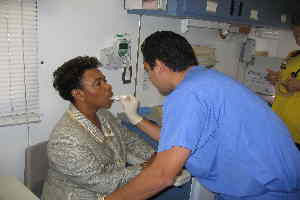
Rep. Barbara Lee taking an HIV test. (File photo)
AIDS Funding
WASHINGTON --- A new report released by the Institute of Medicine (IOM), shows that the fight against AIDS is being undermined by the requirement that most U.S. funding to address sexual transmission of the HIV virus go to abstinence-until-marriage programs. The report states that the requirement greatly limits the ability of countries to respond to local needs. To fix this dangerous flaw in the U.S. approach to global AIDS, a bill was introduced in Congress that would lift the funding restriction. The Protection Against Transmission of HIV for Women and Youth Act of 2007 (PATHWAY Act), introduced by Rep. Barbara Lee (D-CA) and Rep. Chris Shays (R- CT), would eliminate the abstinence-until-marriage funding requirement, fulfilling a primary recommendation of the IOM report. "Our HIV prevention policies should be based in science, not ideology. We need a comprehensive and balanced prevention approach that achieves results, and this report shows that the insistence on abstinence funding is disrupting the development of country specific prevention plans and keeping us from achieving the results we are looking for," said Lee. The bill would also require a comprehensive strategy for responding to the particular vulnerabilities to HIV of women and girls. This vulnerability was also highlighted in the IOM report, which stated that the U.S. global AIDS program must increase its emphasis on interventions that address this population. "This is a must-pass bill for the new Congress," said Dr. Paul Zeitz, executive director of the Global AIDS Alliance. "We have to ensure that U.S. AIDS policy is grounded in scientific evidence, and is doing what we know works. The Institute of Medicine's report showed that this funding requirement is undermining the success of the whole AIDS program. That's why this bill is so critically important." The HIV virus is primarily spread through sexual activity. The U.S. approach in this area is thus crucial to success in the fight against the pandemic. While most U.S. funding to address AIDS is financing treatment, a significant portion is going towards sexual prevention programs. The funding requirement results in two-thirds of the budget for sexual prevention going towards abstinence-until-marriage programs, even though these programs have not been shown to be effective. In addition, the funding requirement does not reflect the reality that women and girls are increasingly infected with HIV, and yet frequently do not have full control of their sexual choices. The IOM report demonstrates that, if the US government is to meet its HIV/AIDS prevention and treatment targets, women and girls must be given more support in AIDS programs and countries must have greater flexibility in designing programs to meet their needs. "This funding requirement distorts not only the U.S. response to AIDS," said Zeitz. "Because of the tremendous influence of U.S. policy in this area, it also leads governments to modify their own programs in order to show they are in sync with U.S. wishes. It has given a green light to religious conservatives to push policies that stigmatize sexuality and deprive people at risk of the information, training and products, such as condoms, that they need to survive. The PATHWAY Act does not say abstinence and faithfulness will never be promoted, only that U.S.-supported country programs will have the flexibility they need to implement the most successful strategy." In addition to co-authoring the legislation that created PEPFAR, Lee also co-authored the Global AIDS and Tuberculosis Relief Act of 2000, which established the framework for the Global Fund to Fight HIV/AIDS, Tuberculosis and Malaria. To date, the Global Fund has committed $4.4 billion in 128 countries to support aggressive interventions against HIV/AIDS, tuberculosis, and malaria. In 2005, she successfully passed and the president signed in to law legislation to focus U.S. foreign assistance on the impact of AIDS on orphans and vulnerable children in developing countries.
The PR Newswire and Congresswoman Barbara Lee's office contributed to this report.