New CDC Analysis
By Sharon Egiebor
African Americans are still the racial group mostly affected by HIV/AIDS, according to the Centers for Disease Control and Prevention. Of the estimated 184,991 adult and adolescent HIV infections diagnosed during 2001--2005, more than 51 percent occurred among blacks than among all other racial/ethnic populations combined. An estimated 62 percent of new HIV/AIDS diagnoses were among persons aged 25-44 years; in this age group, blacks accounted for 48 percent of new HIV/AIDS diagnoses. “We have rates of HIV/AIDS among blacks in some American cities that are as high as in some countries in Africa,” said Dr. Robert Janssen, director of the Division of HIV/AIDS Prevention at CDC in Atlanta. ”When you look at New York City and Washington, D.C., the rates among blacks are higher than Ghana, Senegal and Chad.” The rate of prevalence for blacks in Washington, D.C., is 3 percent, based on the number of AIDS cases being reported. However, Janssen said the total rate is probably closer to 4.5 percent, if you add the HIV infections, which the district is currently not reporting. While in New York, according to a New York Times article, about 50 percent of AIDS-related deaths in the city occur among black women, who account for 25 percent of the city's population. In addition, black women account for 34 percent of the city's new AIDS cases -- an increase from 12 percent twenty years ago -- and approximately one in five black men ages 40 to 49 living in the city is HIV-positive, according to the Times. The HIV prevalence rate for In Senegal, the HIV/AIDS rate for people 15-49 years olds us stable at .9 percent; 2.3 percent in Ghana and 4.8 in Chad. While in South Africa, the prevalence rate is 18.8 percent. Janssen said there are probably several reasons for the increase, including more testing. “In many cases, a higher proportion of black people are being tested than any other racial group,” Janssen said. ”We are doing a better job of encouraging African Americans to tests. Every African American between 13-64 years old should know their status and take steps not to infect others.” HIV is still the leading causing of death for African American women 25-34 years old. Among black men who sleep with men (MSM), the annual HIV/AIDS diagnosis black/white ratio to ratio (RR) of 6.9 was higher than the Hispanic/white RR of 3.1. Among females, the black/white RR was 20.5, and the Hispanic/white RR was 5.4. “Research indicates that blacks’ sexual behavior is no different than those of whites,” Janssen said. “The most important factor in the increasing number of HIV cases in the African American community is the prevalence of HIV in the community. Racial groups tend to have sex with members of their own racial group. The mere fact that prevalence is higher among black people means that a black person having sex with another black person is more likely to bump into someone who is HIV infected than white people are.”
The report, released March 9, updates HIV/AIDS diagnoses during 2001--2005 among black adults and adolescents and other racial/ethnic populations reported to CDC through June 2006 by 33 states† that had used confidential, name-based reporting of HIV and AIDS cases since at least 2001.
Janssen said the CDC needs the support of the African American community to reduce the rising number of new HIV infections. The federal agency is implementing a Heightened National Response to the HIV/AIDS Crisis among African Americans to reduce the toll of this disease. This response will focus on four main areas: • • expanding the reach of prevention services, including ensuring that federal prevention resources are expended where the need is greatest; • increasing opportunities for diagnosing and treating HIV, including encouraging more blacks to know their HIV serostatus; • developing new, effective, prevention interventions, including behavioral, social, and structural interventions; and • mobilizing broader action within communities to help change community perceptions about HIV/AIDS, to motivate blacks to seek early HIV diagnosis and treatment, and to encourage healthy behaviors and community norms that prevent the spread of HIV. Janssen said there is some good news in the analysis. The number of individuals becoming infected from intravaneous drug use is declining. During 2001--2004, HIV diagnosis rates among black males and females declined by 4.4% and 6.8%, respectively. A 2007 study reported similar declines among blacks in Florida. These declines were observed among black heterosexuals and injection-drug users but not among MSM.
Statement
By Phill Wilson
Because of two recent acts -- one of courage, the other of hate -- the National Basketball Association has an historic opportunity to combat AIDS in the Black community.
Earlier this month, retired NBA player John Amaechi took a courageous step, unveiling in his memoir that he is a gay man. The announcement, a simple statement of Amaechiís truth, was sadly historic: It made him the first National Basketball Association player to publicly state he is not heterosexual. By standing up and telling the truth about who he is, Amaechi also stood up for a healthy Black America. He struck a blow against the stigma and shame that keeps too many in our community -- gay, straight and anything in between -- from talking openly about their sexuality and their sexual health. Silence, as the old saw goes, equals death. And a world in which any part of our community canít speak honestly about his or her sexuality is one in which all of our sexual health is put in danger. With more than half of all new HIV infections occurring among African-Americans, we can no longer afford sexual silences of any sort. Most NBA players responded to Amaechi's statement with heartening affirmation, and he has characterized the response he's received in general as "overwhelmingly positive." That positive response is extremely important, given how desperately Black America now needs to come together to protect itself from the devastation of HIV/AIDS. As Julian Bond, the chairman of the board of the NAACP, said in a recent interview, "Homophobia is one of the major obstacles to Black America coming to grips with this disease [AIDS] in the ways that we should." Last summer, the NAACP boldly positioned itself to be among the leaders in our community's new movement against this epidemic. In July, an unprecedented coalition of Black leaders and organizations convened at the global AIDS conference in Toronto and pledged themselves to a "Marshall Plan" to end AIDS -- and they counted striking down deadly stigma surrounding sexuality among the top items on their to-do list. Sadly, however, some in our community still haven't gotten the memo, and former Miami Heat star Tim Hardaway appears to be among those left out of the know. In a Valentineís Day radio appearance, he responded to a question about Amaechiís laudable honesty with his own shameful vitriol. "I hate gay people," Hardaway boasted. "I don't like to be around gay people. I am homophobic. I don't like it. It shouldn't be in the world or in the United States." The tragedy of Hardaway's statement is that, at a time when many of our leaders are trying to mobilize our community to fight a deadly killer, his outburst drags us backward into a retrograde discussion. I'm glad the NBA immediately condemned the tirade and banished Hardaway from its All-Star activities in Las Vegas. That swift action was enough to get the five-time All Star's attention, apparently, and Hardaway has since apologized for his remarks. But the NBA has an opportunity and a responsibility to not only use this occasion to undue the damage done by Hardaway, but to join the growing movement to stop AIDS in Black America. About four in five NBA players are Black, and millions of young Black men look to the league for clues about what it means to be young, Black and male in America. Many of them are at risk for HIV/AIDS, and the NBA is ideally positioned to help them avoid getting infected. It can sponsor free HIV testing at its games, for instance, or it can mobilize its star talent for public education campaigns. The league's potential to change the course of the epidemic is massive. The AIDS epidemic in America is a story of a failure to lead. But Amaechi's courage and Hardawayís outburst has handed NBA Commissioner David Stern and NBA Players Association President Antonio Davis a chance to demonstrate the opposite: a willingness to lead on this issue, and to save lives. We call on them to do so.
Statement
By Phill Wilson
In an Associated Press report published March 5, NAACP Executive Director Bruce S. Gordon announced he has resigned his post as the organization’s chief manager. The Black AIDS Institute’s Executive Director Phill Wilson, who has worked closely with the NAACP during Gordon’s tenure, made the following statement concerning the organization’s leadership on addressing the AIDS epidemic:
“At a time when half of all new HIV infections are among African Americans, the Black community desperately needs the sort of bold vision that the NAACP has demonstrated under the leadership of Bruce Gordon and Chairman Julian Bond. Time and again, the organization has stepped up to push Black America forward in its high-stakes fight against this disease.
“In August 2006, the NAACP was among a group of Black institutions that convened at the global AIDS conference in Toronto, Canada, to hammer out a ‘Marshal Plan’ to end AIDS in our community. Like the others present, the NAACP pledged to encourage HIV testing, hold policymakers accountable for treatment access in Black communities, and attack stigma surrounding the virus, among other commitments. It was an historic meeting in which the NAACP played a crucial role.
“And the organization has put action behind its words. At its annual convention, it offered onsite HIV testing and hosted several educational and cultural events raising awareness about the epidemic. Both Bruce Gordon and Chairman Bond took public HIV tests themselves. It further organized a national petition to reauthorize the Ryan White CARE Act and launched both a national HIV-testing campaign and its ‘NAACP CARES’ campaign to eradicate AIDS across the African Diaspora, including among African Americans.
“All of this unflinching leadership is just the sort the Black community has too long lacked on HIV/ AIDS.
“Gordon articulated in his convention address an organizational perspective that all of Black America must come to embrace surrounding HIV: ‘We’re going to reverse the trend of the spread of HIV/AIDS in our community,’ he said. ‘We’re accountable for it.’
“The Black AIDS Institute thanks Gordon, Chairman Bond and the NAACP for that accountability. And as the NAACP moves into its next exciting era, we are confident the organization will maintain the bold and crucial leadership post it has taken up in the fight against AIDS in Black America.”
By Sharon Egiebor
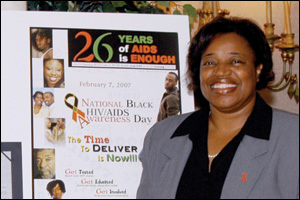
Dr. Debbie P. Hagins, the clinical director of outpatient services for the Chatham County Health Department IDC Clinic, a Ryan White-funded clinic in Savannah, GA, is an investigator in the recently announced GRACE study. GRACE (Gender, Race And Clinical Experience) will study the in-treatment experienced adult women with HIV to evaluate gender and race differences in response to a specific HIV medication, according to news releases. The study's sponsor, Tibotec Therapeutics Clinical Affairs, a division of Ortho Biotech Clinical Affairs, LLC, is seeking to raise awareness among African-American women of the trial and its importance to the treatment of HIV. GRACE, a multi-center, open-label Phase IIIb trial, will compare gender differences in the efficacy, safety and tolerability of PREZISTA (darunavir) tablets administered with ritonavir and other antiretroviral agents over a 48-week treatment period. The study also will explore racial differences in treatment outcomes. Eligibility is open to men and women of all races. Hagins, who spoke to a group in Dallas on Feb. 8 for National Black HIV/AIDS Awareness Day, says her life experiences play a great part in the way she conducts her medical practice. Hagins, who graduated from Mercer University School of Medicine in 1992, is an African American female pastor who lived in government housing projects as a child. She was invited to speak by AIDS Arms, Inc. and The Resource Center of Dallas. Gilead sponsored the meal. “HIV/AIDS in the black community is in a state of emergency. This emergency we are facing didn’t happen overnight. This emergency has lasted 20 years,” Hagins told the audience at The Top of The Cliff restaurant. Hagins said HIV/AIDS became an epidemic in the African American community because too many people still do not know how the disease is acquired, others live in denial about the disease’s potential risk and many are unwilling to move beyond the stigma. In the late 1990s, she said a relative’s husband died with AIDS. “His father was a pastor of a local church and everybody knew he was with men and women. Everybody knew,” she said. “But in 1999, at our family reunion, this woman said she was compelled to testify and tell how real God is.” The woman’s testimony affected many of the family members. “We often overlook the impact of HIV in our community, especially among women. It is right here at home. It is on every continent. Every hour, every day, one teenager is being afflicted because they are having unprotected sex,” she said. Hagins said her responsibility as a medical professional includes dispelling myths. She gave the following statistics:
• HIV/AIDS is the number one killer among 25-34 year old women. • It is the number 3 killer among 35-44-year-old women, falling right behind cancer and Cardiovascular disease. • An estimated 1 million Americans are living with aids and twenty-five percent of them do not know it. • African American women are 1/8 of the Americans living the country, however, as a race, African American women, are more than one-half of the new HIV cases. In Savannah, her agency serves eight counties with five HIV clinics that have a total of 900 clients. Most of the clients are African American and live below the poverty line. She said improving the attitudes and the knowledge base of Black Americans will make a difference. “In the age of information, we have learned as we talk to people whole lives we are trying to impact is that they do not understand how HIV is transmitted. They don’t know how to prevent it. HIV is passed on by mother’s breastfeeding and sex – vaginal, oral and anal. It is not in the air.” Hagins said she was participating in telephone bank that answered the public questions on the West Nile Virus, which is passed to humans by mosquitoes. One African American woman was concerned that the mosquitoes would pass HIV to humans. Hagins said she took time out to educate the caller. “We need to seize the moment and take every opportunity to get the plug in. Prevention is the other am. The spread of HIV is in our personal control. If you are negative, you can stay negative. If you are positive, you don’t have to pass it on,” Hagins said. She says she encourages male and female condom use. Hagins also discussed two of her personal health experiences. She became pregnant while in college but was in too much fear and denial to seek medical care. Her sorority sister encouraged her to get prenatal care and then went with her for the appointment. Several years ago, Hagins, who has three children – 27-year-old son and two daughters, 19 and 16 years old – was diagnosed with fibroid tumors. But instead of having them treated, she suffered for years until the situation was unbearable. Her doctors recommended a hysterectomy. “Before the hysterectomy, I was on pain medication. I was in a state of emergency, but it was one that I ignored. I let my condition go for so long. We know about the condition. I had waited for years. The tumor in my uterus was the size of a five-month fetus. The doctor asked how I was existing. People feel that way about HIV. “Denial keeps you from taking care of our issues. Sometimes, our enemy is our self,” said Hagins, who has practiced medicine for 18 years, treating underserved and indigent clients. “We have a personal responsibility to get the message out and to get people educated. We need to support organizations. We have to not discriminate, regardless of gender, economic funds and the color of your skin. Let’s remember what it feels like.”
By Sharon Egiebor
Bling H20, the bottled water company targeted toward luxury consumers, and Lucy Florence Cultural Center, a renowned entertainment complex in Los Angeles, are going Red to raise funds to support the fight against HIV/AIDS in African Americans in America. The two companies are creating a twist on the international Red campaign where portions of the proceeds of special “red” products are donated to eliminate HIV/AIDS in Africa. Bling H20, a bottled water company that sells its frosted and etched glass bottles that are encrusted with Swarovski Crystals for up to $40, is placing the logo for Black AIDS Institute on plastic bottles and creating red crystal writing for the glass bottles. To kick-off the campaign, Lucy Florence, 3351 West 43rd St. in the Historical Leimert Park Village, is hosting a “Red Tie Event” from 7:30 p.m.-11:30 p.m. on March 10. During the event, HBO’s “Life Support,” staring Queen Latifah, will be screened. The telefilm focuses on the AIDS crisis in the Black Community. Richard Harris, who co-owns Lucy Florence with his twin brother Ron, said 50 percent of all sales of Bling H20 red plastic bottles will be donated to the Black AIDS Institute, a national policy organization that advocates for Blacks in America. “Bling is the only bottle of water that we’ve carried for about six months, and it has done quite well. The bottle retails for about $3.00. We estimate we’ll raise thousands of dollars,” Harris said. “In addition, we are going to distribute wholesale cases to local venues who would like to carry the red label bottles. We hope that every one will participate in investing in this movement.” Harris said he and Ron wanted to give back to the community in the same way African Americans often did when living and struggling together in the segregated South. “As Afro Americans, we have a real obligation to invest in a movement to take care of our own,” said Richard Harris. “We have a created this as a venue that will have an ongoing fundraising activity for the Black AIDS Institute.” Harris said the Lucy Florence, which is home to home to the Le Florence Gallery, The Village Studio Theater, and Lucy Florence Coffee House, will assess the fundraising effort every six months. Kevin G. Boyd, creator of the two-year-old bottled water company that markets its products to celebrities and those who want to be like them, said Bling H20 is following in the line of other companies, such as the Gap, Verizon and Apple, all of which created “red’ product lines where portions of the proceeds benefit HIV/AIDS causes in Africa. “This is just a small way of letting people know that the AIDS epidemic is not over. It is as bad now or worse than it was 20 years ago because people are acting like the disease doesn’t exist,” said Boyd. “Hopefully, every time a person takes a sip of this water, it will serve as a reminder that they must be educated and make smarter choices.” Phill Wilson, executive director of the Black AIDS Institute, said he’s pleased that BlingH20 and Lucy Florence are among the companies joining the movement to end the AIDS epidemic in African Americans. “ The only way to end the AIDS epidemic in Black America is for Black people, particularly black businesses to step up to the plate. Bling H2O is a small company that has made the kind of commitment we need all black businesses to make," he said.