It's Complicated—New Research Looks at Reducing HIV in Young Women
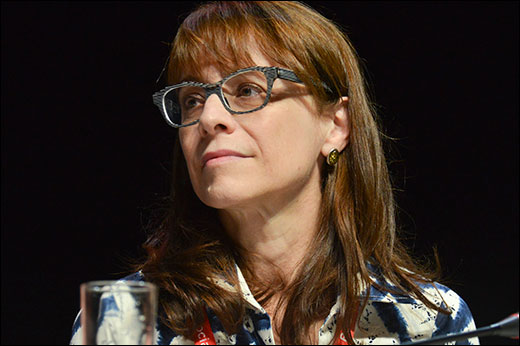
François Girard, the president of the International Women's Collective, listens to a speaker during a panel discussion on gender rights for young women and girls at the 2016 International AIDS Conference in Durban, South Africa. Photo: Freddie Allen
Whether they're in Durban or Detroit, in cities around the world Black women and girls grapple with disproportionately higher HIV rates than their peers. The universal factors contributing to the infections: a devastating mix of gender power imbalances, poverty, intimate partner violence, sexism and more. Researchers say that while a series of new studies released at the 21st Annual International AIDS Conference (AIDS2016) this week show promise, without tackling the conditions Black women and girls face, their troubling rates of HIV will persist.
Read more: It's Complicated—New Research Looks at Reducing HIV in Young Women
SisterLove's Dixon Diallo Hopes This Conference Will Be a Game Changer
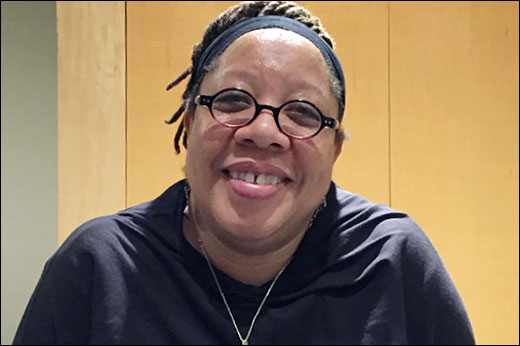
Women Now 2016! Summit chair Dazon Dixon Diallo after showing young women how to see their own cervix. Photo: Hilary Beard
It's been 16 years since the International AIDS Conference was last held in Durban, South Africa. As the world convenes in Durban once again July 18-22, 2016, reproductive-justice organization SisterLove Inc. founder Dázon Dixon Diallo reflects on how that year's conference was a watershed event, and how this year's can be just as important to the struggle to end the epidemic.
Read more: SisterLove's Dixon Diallo Hopes This Conference Will Be a Game Changer
NIH's Dr. Dieffenbach Shares Final Update from AIDS 2016
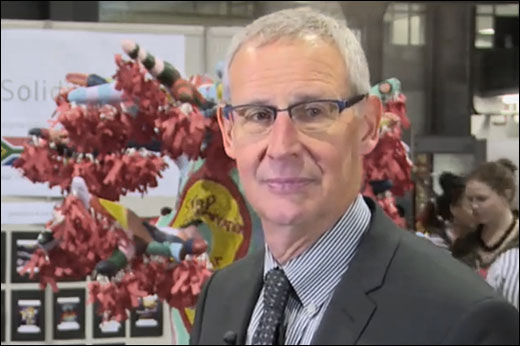
Carl W. Dieffenbach, Ph.D., the Director of the Division of AIDS at NIH's National Institute of Allergy and Infectious Diseases
In his third and final update from the International AIDS Conference (AIDS 2016) in Durban, South Africa, NIH's Dr. Carl Dieffenbach discussed highlights of ongoing HIV cure research presented at the conference. Dr. Dieffenbach, the Director of the Division of AIDS at NIH's National Institute of Allergy and Infectious Diseases (NIAID), spoke with his colleague Anne Rancourt via Facebook Live.
Read more: NIH’s Dr. Dieffenbach Shares Final Update from AIDS 2016
In This Issue
Earlier today, I was talking with one of our journalists about how it feels to be back in Durban 15 years after the first International AIDS Conference was held in this city, in this country and on this continent. It's really funny; Durban as a city has not changed a lot in the last 15 years. Of course, South Africa has changed a lot and HIV/AIDS from both a prevention and treatment paradigm is very very different in Africa than it was 15 years ago, when the debate was whether we should offer treatment to people living with HIV/AIDS in sub Saharan Africa. It's hard to imagine that that was, in fact a debatable topic. But in many ways, the energy at this conference is different. The level of energy here is certainly less than it was 15 years ago. So clearly we're in a different place.
At 21st International AIDS Conference Raising Questions About Whether Black Gay Lives Matter
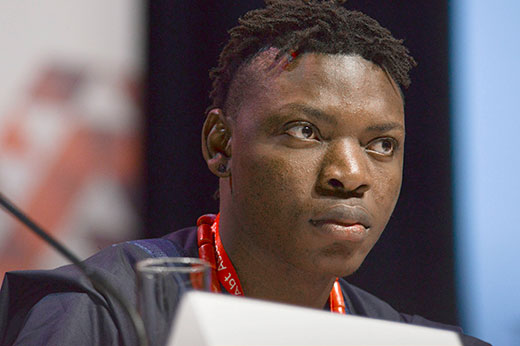
Micheal Ighodaro, a Nigerian activist that works for the AIDS Vaccine Advocacy Coalition, listens to a speaker during the morning plenary session at AIDS 2016 in Durban, South Africa on July 20, 2016. Photo: Freddie Allen
"When we say 'Black Lives Matter,'" said Michael Ighodaro, "where are Black gay lives in that?" A young, gay Nigerian refugee living with HIV in New York City, Inghodaro posed this question during a talk leading up to the International AIDS Conference (AIDS 2016). Now a program and policy assistant for AVAC, Inghodaro is far from alone in using the "hashtag that became a movement" as a lens to view his own community, and to push boundaries in advocacy.