In This Issue

Today we report from Day One of the 20th International AIDS Conference in Melbourne, Australia. Read Linda Villarosa's compelling piece on the promise of the "Mississippi Baby"—now a young girl—in spite of the recent disappointment, as well as other research from around the world that's pointing the way to The Cure. Ending the AIDS epidemic requires that civil society be involved. Anne T. Sutton, Ph.D., J.D., the senior international reporter for The Jackson Advocate, reports on the vital role the public must play, particularly with clinical trials.
Toward a Cure for HIV: The Promise of the 'Mississippi Baby' and Beyond
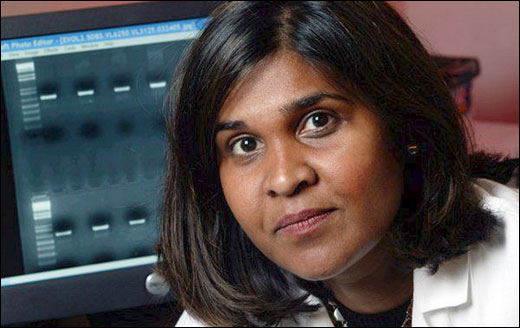
Dr. Deborah Persaud
Is the glass half empty—or half full? That was the framework for thinking about the so-called Mississippi baby case Monday at the AIDS 2014 conference in Melbourne.
Read more: Toward a Cure for HIV: The Promise of the 'Mississippi Baby' and Beyond
AIDS 2014: The Role of Civic Engagement in HIV Treatment and Prevention

Drs. Judith Auerbach and Anthony Fauci
Melbourne, Australia – Judith D. Auerbach, Ph.D., adjunct professor at the University of California, San Francisco, and Veronica Noseda of France moderated a panel of distinguished social scientists exploring the technological, behavioral, social, political and economic factors that impact people's decisions to participate in HIV prevention and treatment programs.
Read more: AIDS 2014: The Role of Civic Engagement in HIV Treatment and Prevention
Remembering Race as We "Step Up the Pace" Internationally

Rebekah Israel and Kwaku Adomako
AIDS 2014 is my first International AIDS Conference, so I didn't know what to expect. I knew I would gain insight from scientific updates delivered by esteemed researchers from around the world, and I knew I would engage with countless colleagues and share best practices for the work that we do. What I didn't expect was such a transformative experience in just two days, mostly due to the African Diaspora Zone developed by the African Black Diaspora Global Network (ABDGN), created to address the lack of access and programming for Black people at the International AIDS Conference.
Read more: Remembering Race as We "Step Up the Pace" Internationally
AIDS 2014: Youth Leadership Is Essential to End The AIDS Epidemic
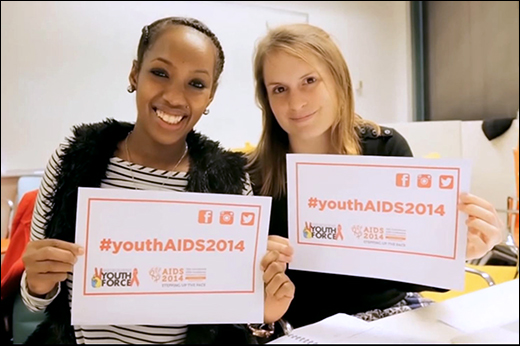
Youth Force girls
Even as HIV-related deaths decreased by 30 percent between 2005 and 2012, adolescent HIV-related deaths rose by 50 percent. Globally young people between the ages of 15 and 24 are highly affected by HIV, accounting for 41 percent of new cases. This shows the need for adolescent and youth response towards the continuing fight against AIDS. The youthful voice needs to be heard.
Read more: AIDS 2014: Youth Leadership Is Essential to End The AIDS Epidemic