AIDS 2014: Youth Leadership Is Essential to End The AIDS Epidemic
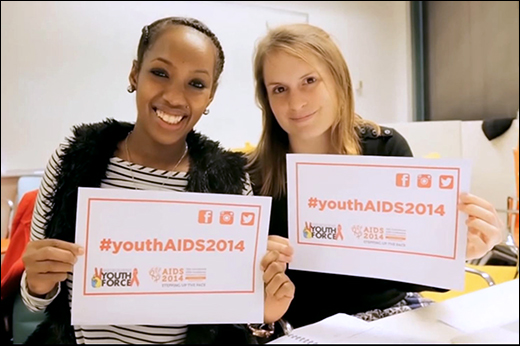
Youth Force girls
Even as HIV-related deaths decreased by 30 percent between 2005 and 2012, adolescent HIV-related deaths rose by 50 percent. Globally young people between the ages of 15 and 24 are highly affected by HIV, accounting for 41 percent of new cases. This shows the need for adolescent and youth response towards the continuing fight against AIDS. The youthful voice needs to be heard.
This need could not have been better represented than in the panel titled "Stepping Up The Pace," where five intelligent youth activists took the stage to discuss the Melbourne Youth Force Action Plan: the world we want beyond 2014 and the road to Durban. The Youth Plan sets forth four key messages needed to reach an HIV/AIDS-free generation: treat, reform, educate and love. Panelists expressed that young people's leadership in the local, national and international AIDS response is fundamental, but that balance most be found between youth initiative and political/governmental response before success can be reached.
Two adults joined the youth panelists, a UNAIDS representative sitting in for that organization's executive director, Michel Sidibé, and Mark Dybul, executive director of the The Global Fund to Fight AIDS, Tuberculosis and Malaria. Mr. Sidibé's colleague started by congratulating the newly reconstituted youth movement. He then repeatedly emphasized the need for government support, saying that officials' "feet must be kept in the fire until they deliver" on the post-2015 agenda.
But it was Mr. Dybul who really sparked a debate with his comment, "[The Global Fund] must give [youth] the space to deliver, but you are the ones who actually have to deliver". He repeated that "youth must actually take the responsibility to solve the problems," and wrapped up by stating that "the only example of a youth movement that lasted more than an election cycle...was Darfur, that lasted 10 months before people got busy and went on to do other things."
Now I find I few faulty statements in Dybul's words. I do agree that as the next generation in power, youth must take responsibility for the fight against HIV/AIDS, create the desire for change and push for legal rights and diminished discrimination for all. However, where his argument falters is in stating that organizations such as the Global Fund are only there to provide "a space to deliver". Actually, they should include youth, help them access opportunities and information and support them in voicing their concerns and making governments respond to their needs.
I would further like to point out that this year's youth created a very thorough and specific plan for action, or what I would call "taking responsibility to deliver," to echo the language Mr. Dybul used in his challenge. Today's youth can push and prod and protest all they want, but governments make laws and prioritize policy, just as health care providers have the final say in the distribution, pricing and availability of treatment. As Mike Ighodaro, one of the panel members pointed out, "we have the ideas, we have the incentive, but we are not given the opportunity for involvement."
Another panelist, Ms. Piplani, from India, responded by showing a cartoon depicting youth pushing on a door with a large, restricting policy written on it, while politicians and funders (such as The Global Fund) cheer them on from the opposite side. She brought up the fact that, yes, politicians, funders and donors encourage youth, who have no seats at the table, but the only thing that they actually have to do "is open the damn door." Ms. Piplani pointed out, "It doesn't make sense to invest in advocacy so we can scream louder, but rather just open the door." She continued, "You can use that money to advocate with governments to create evidence that exposes the punitive laws that don't work," referring to the criminalization of HIV and homosexuality taking place in nations around the world. There is no point in funds going to young people as they stand outside as bystanders, when the money could fund research, lower the price of medication or help lobby governments and leaders who hold young people's health in the palms of their hands.
In the end the panel boiled down to donors and politicians calling for youth to "roll up their sleeves" and become leaders and activists, while youth advocates called for proper representation and the opportunity to participate. Mr. Dybul may disagree, but these young leaders showcased their advocacy for equal rights and leading roles in ending the epidemic. As panelist Amy Herten of Australia so importantly pointed out, "We volunteer, we are not getting paid, YOU [Mr. Dybul] are getting paid."
Kali Villarosa is a volunteer reporter with Black AIDS Daily, covering youth issues.She also attended the 2008 AIDS conference in Vienna. A recent high school graduate from Beacon High School in Manhattan, she is headed to Skidmore College in upstate New York this fall. She plans to pursue a career in international relations.