News 2007

‘Life Support’ star Gloria Reuben speaks out on HIV/AIDS In the acclaimed HBO movie “Life Support,” Gloria Reuben plays the director of a real-life nonprofit AIDS outreach organization.
By Chris Bournea
COLUMBUS, Ohio -- Actress Gloria Reuben, known for her groundbreaking work as television’s first HIV-positive character in a regularly occurring role, is also an outspoken HIV/AIDS activist. Since being cast as Dr. Jeanie Boulet on the long-running medical drama “ER” in 1995, Reuben has used her notoriety to bring awareness to the AIDS epidemic around the world. Reuben stars alongside Queen Latifah in the critically acclaimed HBO movie “Life Support,” which has also helped promote dialogue about HIV/AIDS. Inspired by the real-life story of African-American director and co-writer Nelson George’s sister, Andrea, “Life Support” uses a mix of actors and real people from the HIV/AIDS community. The film tells the story of an HIV-positive Brooklyn woman named Ana (Queen Latifah), who channels her energy and regret over contracting HIV through past drug addiction into working for an AIDS outreach organization called Life Force. Reuben plays the director of Life Support. A Toronto native and daughter of a black mother and a white Canadian father, Reuben is also an accomplished singer-songwriter. She left “ER” in 1999 to pursue a music career -- including a stint singing backup on superstar Tina Turner’s farewell world tour. Throughout her career as an entertainer, Reuben has used the spotlight to speak out for increased HIV/AIDS education, testing and medical research. Her high-profile appearances include introducing then-United Nations secretary-general Kofi Annan at the 2004 U.N. World’s AIDS Day convocation and delivering the keynote address at the 2005 Black Women’s Conference on HIV/AIDS in Los Angeles. In an exclusive interview with BlackAIDS.org, Reuben discussed her role in “Life Support” and her ongoing HIV/AIDS advocacy. BA: When did you become an HIV/AIDS activist? Was it when you joined the cast of “ER?” GR: It was definitely during that time, primarily because of the storyline. It definitely started there. I think it started with the Pediatric AIDS Foundation. There were a lot of foundations that came forward to have me get involved. It really was a great way to find out what people were doing and get involved. I found out about the medicines and the work people were doing. BA: Appearing as an HIV-positive character on a television show that became a global phenomenon, did you feel a responsibility to represent the HIV/AIDS community? GR: It’s not like you’re doing a sitcom. It’s not like doing “Friends,” where you can revel in the success of the show. It’s a huge responsibility to take on. With the stigma that still revolves around the virus, I think there was a real stigma attached to me in playing the role. Hollywood can be incredibly closed-minded about what you do for work, versus what you do in your personal life. BA: You mentioned that you still receive letters and e-mails and are approached by people about how your role on “ER” affected them, since the show reruns several times a day in global syndication. Do you think that demonstrates the power of the media, particularly television, to shed light on HIV/AIDS and other important issues? GR: I think that’s a prime example of how powerful it can be. Of course, it’s entertainment. It is, and yet it’s more than that. When it’s dealing with something like this, then it crosses that line from just being entertainment. BA: At a recent speaking engagement at Ohio Wesleyan University, you described the long battle you had with “ER” producers, who suggested that your character die of HIV-related complications when you decided to leave the show. Although you were threatened with legal action, you said you were adamant that the producers honor your original agreement that Jeanie Boulet would never die from AIDS. Ultimately, your character left on a positive note, having gotten married and adopted a baby. Why was it so important to you to take that stand? BA: How did you get involved with the HBO movie “Life Support”? GR: I’m an executive producer on “Padre Nuestro,” (a critically-acclaimed independent film) which won the grand prize at Sundance Film Festival this year. We were editing the film at PostWorks, which is the best production house in New York City. So we’re editing this movie and directly across the hall from us, Nelson George was casting “Life Support.” He and I saw each other in the hallway quite often. We walked into the building at the same time, rode up on the elevator together and he filled me in on the story, which is based on his sister, and Queen Latifah was playing the role. I was like, ‘Look, I gotta be in this movie. Man. It’s way too important. It’s what I do. It’s no accident that we’re literally across the hall from each other.’ BA: Is it true that HBO sponsored screenings of the film in communities around the country where you, Queen Latifah and other cast members appeared and discussed prevention methods, treatments and other issues surrounding HIV/AIDS? GR: HBO has been very supportive. They’re using (the film) as a tool to go into communities. We had a screening in Philly with grassroots organizations and it was open to the public, so the public could come for free. BA: Has the movie helped raise the profile of Life Force, the real-life nonprofit organization that Queen Latifah’s character works for in the film? GR: If it wasn’t for outreach programs like this, people would have to go to hospitals (to obtain information about HIV/AIDS). Who’s going to go to a hospital to talk to somebody or find out information? It’s way too overwhelming and way too impersonal. (Life Force workers), they’re out there on a daily basis, handing out condoms, doing important things. The ironic thing is Life Support is on the verge of being shut down. People are rallying around it, helping to get grants and additional funding to stay open. BA: In your research on HIV/AIDS, have you found any answers as to why the African-American community has been disproportionately affected? GR: It’s such a huge, complex issue. Societal and cultural influences are such that, it perpetuates the stigma. If we look at, for the most part, the hip-hop culture, when it’s all about having sex and women are just there to have sex with -- having sex with as many people as possible, sex all the time, no protection, blah, blah, blah. If we look at economics, if you’re not educated and you don’t have a job, you’re going to end up in jail. It’s about the homophobia, it’s just unbelievable. The stigma around homophobia in the Black and Latino communities is unbelievable -- you gotta put on a front and have sex on the ‘down-low.’ The shame and stigma around it perpetuates the shame and stigma around HIV/AIDS. What ends up happening is clearly the double life that goes on. BA: What can be done to help bring down the HIV/AIDS infection rates among African Americans? GR: It’s as quick as a phone call, to get a mobile (testing) unit to come to the church on Sunday. BA: Why does there seem to be so much misinformation about HIV/AIDS, especially in the African-American community? BA: Do you think part of the reason why the African-American community is disproportionately affected by HIV/AIDS is that people are afraid to get tested and discover they’re HIV-positive? GR: If it turns out that you’re positive, there’s so much more access and medicine and information (than in the past). The chances of extending your life are so much better. But you have to get tested and find out. The sooner you find out, the sooner you can get started in treating it and managing the disease. BA: Do you think rapid testing has helped, since people don’t have to wait days or weeks to find out their results? GR: The rapid testing is a wonderful thing. You can sit for 20 minutes, you read up (about HIV/AIDS), and you talk to a counselor right then and there. That’s why foundations like Life Support, outreach programs, are so vital. BA: When you appeared at Ohio Wesleyan, you mentioned that HIV/AIDS is the No. 1 killer among African-American women ages 25 to 34. Do you think HIV/AIDS would get more media coverage if the infection rates were as high among white women? GR: No doubt, if the numbers were like this with white women, first and foremost, at the very least, people would know about it. BA: AIDS was once perceived as a gay white male disease. What did gay white activists do in the 1980s, when the disease first came to public attention, to raise awareness and funding that can be replicated by the African-American community? GR: We need to learn by example from that first group where the pandemic started. We need to mobilize and stand up as a group and not deny what’s going on, but raise our voices.
By Dennis J. Freeman
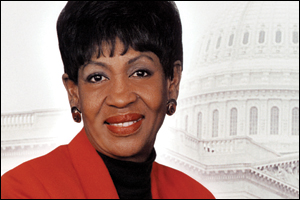
LOS ANGELES -- Congresswoman Maxine Waters said she wants insurance companies to cover the cost of HIV testing and testing for federal prisoners when they arrive and when they leave the penal institutions. “We will ensure that your confidentiality is respected,” said Waters, D-California. “What we’re saying is…just offer it. Just do it. We believe that when you do this kind of testing, not only will you catch HIV/AIDS, but you can get people started on the kinds of medicines that they need in order to have long and healthy lives.” Waters said she realizes the bills are among the most controversial that she’s drafted related to HIV testing and funding for HIV/AIDS clients. The insurance bill (H.R. 822) would require insurance companies to pay for HIV testing in the same way they cover the cost of diabetes testing. H.R. 1943, the Stop AIDS in Prison Act of 2007, calls for mandatory HIV/AIDS testing for all inmates arriving and exiting a federal correctional facility. Waters and others introduced a similar bill (H.R. 6038, Stop AIDS in Prison Act of 2006) last fall. Waters efforts are a response to the growing impact HIV/AIDS is having on minority communities. According to the Centers for Disease Control and Prevention, African Americans account for half of all new HIV/AIDS cases. Racial and ethnic minorities comprise 69 percent of new cases, according to the 2005 data released by the CDC. According to the Bureau of Justice Statistics, African Americans made up 41 percent of all inmates in the prison system at the end of 2004. “Congresswoman Waters always has been an unapologetic advocate for fighting AIDS in black communities,” said Phill Wilson, executive director of the Black AIDS Institute. “AIDS in America today is a black disease. Current funding levels and HIV policies are not keeping up with the reality of AIDS in Black America. The Black AIDS Institute supports Congresswoman Waters’ call for additional funding for HIV awareness, prevention and treatment; we welcome her leadership on new ways to think about HIV policies in the United States.” By enacting this bill, Waters said she hopes that the spread of HIV/AIDS among inmates will be curbed. The congresswoman added that the bill would also provide comprehensive and timely medical treatment to those incarcerated. It’s also designed to promote HIV/AIDS awareness and prevention, she said. Although some state prisons require routine HIV testing among inmates and provide treatment access, federal prisons currently do not, according to CQ HealthBeat. Original cosponsors of the Stop AIDS in Prison Act include Rep. John Conyers, D-Mich., Chairman of the House Judiciary Committee; Rep. Lamar S. Smith, R-Texas, Ranking Member of the House Judiciary Committee; Rep. Robert C. Scott, D-Va., Chairman of the Judiciary Subcommittee on Crime, Terrorism, and Homeland Security, which has jurisdiction over federal prisons; and Rep. Randy Forbes, R-Va., Ranking Member of that subcommittee. Waters is also asking Congress for an additional $610 million for the Minority AIDS Initiative under a separate proposal.
Waters discussed the bills, immigration challenges, the Iraq War and the new Democratic power in Congress during a conversation with several journalists on April 6 at her Los Angeles congressional office.
Since the Democrats wrestled away the majority from the Republican Party in last fall’s election, Majority House Speaker Nancy Pelosi vowed that the first “100 Hours” work agenda for her party would be spent implementing changes in policies and procedures. Taking that mantra from her leader, Waters, who represents California’s 35th District, has been increasingly visible throughout the community, whether it’s meeting with residents or calling for a discussion with the media. On immigration reform, Waters said there is going to be a major overhaul to the program. “You hear about immigration reform from two perspectives,” Waters said. “First, you hear about the more conservative elements about getting rid of all the illegal immigrants, deporting them and getting rid of the problems they bring with them. And then, on the side of the immigrant population itself, particularly Latinos and other kind of immigrants … they say they have not been treated fairly. “Here’s what I think is going to happen with immigration: You’re going to end up with a bill with several components to it. It’s going to look pretty much like the legislation that was offered by the administration at the last session. First of all, you’re going to have a part that says you have to get tough and secure the borders. A second part of it will be a part to sanction employers who hire illegal immigrants. Right now, nobody pays attention to the law. And you have a lot of big corporations and agricultural interests who employ undocumented, illegal workers, and they’re not getting fined, they’re not getting prosecuted. The bill is going to tighten that up. Thirdly, there’s going to be a guest worker program.” The other burning issue that Waters touched on is the war in Iraq where, according to the website www.antiwar.com, more than 3,300 U.S. troops have died. At least 300 Californians have been killed in the war. Another 24,000 American soldiers have been injured in a war that has cost so far-$320 billion. And if President George W. Bush has his way with deploying another 21, 500 troops to Iraq, the American public will be asked to pay an additional $5.6 billion per year price tag, according to figures put together by Democrats. The Democratic Party has largely balked at Bush’s idea to send more troops, even outlining a time frame to bring the soldiers home. The challenge for the Democrats on this issue is battling the spin-cycle by Republicans suggesting the party is not committed to helping the troops, Waters said. “The thinking of the leadership was that they know that the people of this country want to end this war,” Waters said in speaking about last year’s election. “Many of our Democrats ran on the platform of getting out Iraq. People expect them to be able to vote to get the soldiers out of Iraq. Then the administration accuses them of being unpatriotic if they don’t vote in step with them, accusing them of not caring about the soldiers and leaving the soldiers exposed. It makes them nervous. It makes the leadership nervous. The leadership does not want to be seen as not being tough on security for this country. But they don’t want to seen as abandoning the soldiers.”
Research
By Science Daily
A new study has pinpointed a natural ingredient of human blood that effectively blocks HIV-1, the virus predominantly responsible for human AIDS, from infecting immune cells and multiplying. The virus blocker might play a role in the progression of HIV to full-blown AIDS and--because it works in a different way than existing antiretroviral inhibitors--could lead to the development of another class of drugs in the fight against the pandemic disease, researchers reported in the April 20, 2007 issue of the journal Cell, a publication of Cell Press. The research team found that fragments of a relatively abundant blood molecule, which they call VIRUS-INHIBITORY PEPTIDE, or VIRIP, acts as a broad-based inhibitor of HIV-1. Moreover, they showed that a few amino acid changes in the fragment enhanced its antiretroviral potency by two orders of magnitude. VIRIP and its derivatives remained effective against drug-resistant HIV strains, making them "highly promising for further clinical development," according to the researchers. "The findings reveal a new target for inhibiting HIV that remains fully active against viral strains that are resistant to other drugs," said study author Frank Kirchhoff of the University of Ulm in Germany. "That's a big advantage." Kirchhoff's group also provided evidence that HIV-1 does not easily develop resistance to VIRIP, at least in cell culture. Furthermore, their collaborators led by Wolf-Georg Forssmann of IPF PharmaCeuticals GmbH and Hannover Medical School found preliminary evidence showing that some derivatives of the peptide are highly stable in human blood plasma and are nontoxic even at exceedingly high concentrations. According to the latest World Health Organization estimates, nearly 40 million people worldwide are living with HIV/AIDS, including more than 2 million children. Close to 4 million people became infected with HIV in 2006, and the virus was responsible for about 3 million deaths last year alone. A variety of molecules in human blood have been implicated in the inhibition of HIV-1, the researchers noted. However, it had remained elusive which circulating natural compounds are most effective in controlling viral replication in the body. In the new study, the researchers sifted through a comprehensive library of small peptides that had been filtered from the blood of patients with chronic kidney failure during dialysis, in search of those with anti-HIV activity. After sorting the more than one million blood peptides into 300 fractions, they focused on one that blocked HIV without toxic effects on cells. Further examination revealed VIRIP as the active ingredient. A synthetic version of the peptide maintained its anti-HIV activity, excluding the possibility that some other factor was responsible. VIRIP specifically targets a conserved region in the HIV-1 transmembrane glycoprotein known as "gp41 fusion peptide." This peptide, which is normally buried in the viral envelope, becomes exposed during the process of viral entry and makes the first direct contact between the viral particle and host cell.
Thus, they showed, VIRIP plays an essential role in the ability of HIV to fuse with and infect its host's immune cells. That unique underlying mechanism allowed the inhibitor to remain effective against viral strains that are resistant to other antiretroviral drugs, they found.
"Our data support the possibility that VIRIP may contribute to controlling HIV-1 replication in infected individuals and that derivates thereof are highly suitable for development of a new class of HIV-1 inhibitors targeting the highly conserved gp41 fusion protein," the researchers concluded. There are now some 20 different HIV drugs in use, Kirchhoff said. However, the treatments all fall into one of four categories based on their modes of action, and a growing number of HIV strains are becoming drug resistant. HIV resistance to one drug can lead to resistance to other drugs in the same class, a phenomenon known as crossresistance. "You want a lot of drug classes because multi-drug resistant viruses are starting to show up more and more," Kirchhoff said. "In at least some industrialized countries, it is already a severe problem." The researchers include Jan Munch, Michael Schindler, Raghavan Chinnadurai, and Frank Kirchhoff of the University of Ulm in Ulm, Germany; Ludger Standker and Wolf-Georg Forssmann of IPF PharmaCeuticals GmbH and Hannover Medical School in Hannover, Germany; Knut Adermann of VIRO Pharmaceuticals GmbH & Co. KG and Hannover Medical School in Hannover, Germany; Axel Schulz of IPF PharmaCeuticals GmbH in Hannover, Germany; Stefan Pohlmann and Chawaree Chaipan of University of Erlangen-Nurnberg in Erlangen, Germany; Thorsten Biet and Thomas Peters of University of Lubeck in Lubeck, Germany; Bernd Meyer and Dennis Wilhelm of University of Hamburg in Hamburg, Germany; Hong Lu, Weiguo Jing, and Shibo Jiang of Lindsley F. Kimball Research Institute, The New York Blood Center in New York, NY. This work was supported by the government of Lower Saxony and by grants from the DFG and the Wilhelm-Sander Foundation and NIH grant 1R01AI067057-01A2 to F.K. W.-G.F. is founder and shareholder and L.S. is shareholder of Pharis Pharma Holding GmbH & Co. KG, the parent company of VIRO Pharmaceuticals GmbH & Co. KG. K.A. is Managing Scientific Director of VIRO Pharmaceuticals GmbH & Co. KG. The remaining authors have no financial interest related to this work.
By Sharon Egiebor
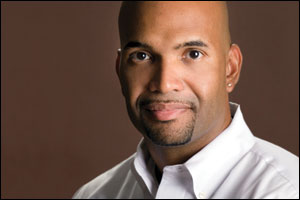
Even though HIV/AIDS is being discussed from the church house to the state house to the White House to the jailhouse, stigma still keeps many African American men who sleep with men from getting tested and seeking medical care, according to leading researchers. African American men, those who identify as gay and those who sleep with men but do not identify themselves as gay (MSM), are increasingly being diagnosed of HIV/AIDS at higher rates than men of other ethnicities. “There can be many reasons for the increases,” said Dr. Jose Nanin, director of education and training for the Center for HIV Educational Studies and Training (CHEST) at Hunter College, City University of New York (CUNY). “The big reason right now is the speculation of seeing HIV linked to so much stigma in our community.” Working with grants from the New York City Department of Health and Mental Hygiene and the New York City HIV Prevention Planning Group, Nanin and researchers from the Gay Men of African Descent (GMAD) developed a pilot study to explore the barriers and facilitators for HIV testing among black MSM. “The research revealed a lot of African Americans are still concerned with the stigma of being associated with HIV,” said Donald Powell, Health and Wellness Coordinator for the GMAD. “MSM have been seen as vector’s of the disease and that is the only identity that they have been given. There is also the stigma of being black MSM in a community that really, really holds masculinity up as a banner of what a black male should be.” The Centers for Disease Control and Prevention raised concerns about the resurgence of HIV in MSM populations in 2001, following years of consistent declines. In a five-city surveillance released in June 2005, 25 percent of the participating MSM population tested HIV positive, and of that 25 percent, nearly half of them were African American MSM. Whites composed 21 percent and Hispanics composed of 17 percent of the men who tested positive. Most of the men, regardless of race, were unaware of their positive status. Nanin, who also is assistant professor of health education at Kingsborough Community College of the City University of New York (CUNY), said researchers do not believe African American MSM have a higher incidence of unprotected sex. “It has a lot to do with the disproportionate number of sexual infections that occur in our community,” said Nanin, who is multiracial. “People are finding out that they have gonorrhea and syphilis, but they are not getting an HIV test along with it.” By the time the men take the HIV test, too many are getting a double diagnosis – HIV and AIDS, he said. “The majority of the brothers who are having sex with other men are testing. In studies, the rate of men not testing is still under 40 and 30 percent. The majority of men are testing regularly,” Nanin said. “We’re just afraid of those who don’t and who are unaware of their status and unaware that they may be positive. These men may be more likely to have unprotected sex and to spread the virus.” In the smaller, New York pilot study, Nanin said participants mentioned the various ways they experience stigma, which keeps them from testing. • The men said walking through the door of any testing site leads to the perception by others that a black MSM is at risk for HIV or is probably gay. • The belief also exists that testing sites are not well equipped to deal with the needs of men of color; some felt dismissed when they went for HIV testing services at certain clinics and community-based organizations. • Others mentioned the fear of disclosure and breach of privacy.
Other reasons for the increasing number of HIV infections may result from most men’s natural reluctance to seek medical care, unless it is an emergency.
Nanin said the CDC’s recommendation for routine HIV testing in all medical facilities, would benefit black MSM. He cautions that the testing should come with pre and post test counseling. Powell said the greater community and especially the religious community could do a lot to ease the pressure and stigma black MSM feel. “As a people, a lot of us are really rooted in the church. We are going to have to have much more than a position of tolerance from the church,” Powell said. “When you ask individuals to be themselves some place away from where they got comfortable. In order for me to be all that I am, I need to go to a church that is designated just for me. It sends a message that I am not welcome in my community. “If your family base, your school and your community have told you all your life that your are an abomination, how do you reconcile that?” Powell said. Powell said new studies are needed to see why 54 percent of the men in the CDC surveillance remained HIV negative. “What is working with them? What systems of support do they have in place that allows them to maintain boundaries in their status?” Powell said. “The bottom line of HIV is if I am negative, I want to continue my negative status. There are a lot of men who believe that at some point, he is going to test positive anyway because he is a gay, black man.” Powell said researchers need to find a way to stop that fatalistic viewpoint.

Mobilization
By Black Voice News
SAN BERNARDINO, Calif. -- Assemblywoman Wilmer Amina Carter and Sen. Negrete McLeod in conjunction with the City of Rialto have joined forces for an HIV/AIDS Leadership Forum to arm community leaders and elected officials with resources to deal with this growing health crisis. Reported cases of HIV and AIDS in the Inland Empire have grown significantly over the past five years. The most significant growth is among Blacks and Hispanics. The lack of health services and information combined with the stigma that surrounds the autoimmune disease often impedes treatment and prevention. Community leaders and elected officials have an opportunity to bring awareness to the communities they serve. As leaders, we should do whatever we can to help prevent or alleviate the HIV and AIDS crisis," said McLeod. The forum will be Saturday, April 21 from 10 a.m. to 12 p.m. at the Rialto Senior Center, 1411 S. Riverside Avenue, Rialto. Kurt Wilson, representing San Bernardino Mayor Patrick Morris, will moderate a panel of experts to discuss the issues surrounding HIV/AIDS. Participants will be provided information on what to do and where to go if a member of their constituency, congregation or organization comes to them for help. Jacqueline Sheffield will give the real life experience of a woman living with AIDS, Joseph Terrill and Deya Smith-Starks, AIDS Healthcare Foundation, will discuss legislation dealing with HIV/AIDS. Other panelists include Dr. Becky Nanyonjo, DrPH; Marshare Penny, MPH with San Bernardino County Department of Public Health; Kathaleen Collins, Planned Parenthood Health Education; Rev. Dr. Robert Fairley, New Hope Missionary Baptist Church; Deborah Morales, with Beinestar Health Services; Patricia Green-Lee, executive director of Brothers and Sisters in Action (BASIA); and Faith Bolton, First Chance Youth Community Health Outreach Workers (Y-CHOW). For more information on the HIV/AIDS forum, call (909) 820-5008 or (909) 381-3832.
http://www.blackvoicenews.com/content/view/40736/4/