Youth
By Sharon Egiebor
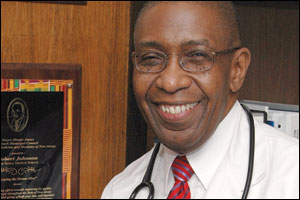
Dr. Robert L. Johnson, co-author of “Strength of Their Journey – 5 Essential Disciplines African-American Parents Must Teach Their Children and Teens (Random House October 2002),” treats one of the largest clientele of young adults living with HIV/AIDS in America. Johnson also is the interim dean of the New Jersey Medical School at the University of Medicine and Dentistry of New Jersey, a professor of pediatrics and psychiatry at the university and the The Sharon and Joseph L. Muscarelle Endowed Dean (interim). He spoke by telephone with BlackAIDS.org project manager Sharon Egiebor about the rising number of HIV/AIDS in African-American teens. BA: How has HIV/AIDS affected your patient load? The number of cases? Was there a change from children born with HIV to teenagers who acquired the virus through other means? RJ: It has had a traumatic affect. We have about 100 patients, the largest program for teenagers living with HIV in the country. In our program, we take care of teenagers who primarily acquire the disease from their activities. There are a few who were born with it. They were in the pediatric program and they continue in the program through adolescence. The pediatric HIV program is being closed. We do have a few patients, but this is one of the great success stories. It was a combination of two things: improved prenatal care for pregnant women in general and secondly, our ability to give pregnant women medication to prevent transmission of the disease from mother to infant. However, the public shouldn’t get the impression that it is a problem that is solved. The success of the treatment of HIV with one-pill-a-day means that more people will be living with HIV and living rather healthy lives. But on the other side, people continue to engage in that risky behavior and the number of HIV cases will continue to go up. We have to continue the treatment of pregnant women. BA: You participate with several community and government organizations on HIV prevention. What message seems to be working better than others? RJ: The realistic, most effective method of HIV prevention is related to testing and treatment. It is very important to find someone in the very early stages of the infection and provide care for them. Care may mean close monitoring at the beginning of the infection. The most important prevention is the detection of infection, which is chiefly HIV testing. The most important thing a person can do is to get HIV testing. The Centers for Disease Control and Prevention is recommending routine testing. The biggest problem is that the people who have the disease and are unaware of it have had some form of medical contact but they didn’t have an HIV test. The recommendation is now that we make HIV testing routine. If someone goes in for a STD (sexually transmitted disease) they will get an HIV test also. If you get one STD you may have another. It is a no brainer. There are people going to emergency rooms for an HIV test. The best form of testing right now to achieve the public health benefit is rapid testing. One of the problems in the past was that if people got tested, they wouldn’t be around to get the results. (Rapid tests results are available in about 20 minutes.) That enhances our ability to do the testing as well. For the public, it is real important to get tested. We’re not talking about people with relevant risk. Everyone from 13-64 years old needs to be tested. You need to know your HIV status, and if you are infected, you need to get in treatment. We also recommend routine condom use, abstinence and not using intravenous drugs. RJ: It is just like the rest of the country. Teenagers and young adults are engaging in risky behavior. The established medical community has never been able to significantly reduce the rising rate. There has been some decrease in risk behaviors. We are seeing more kids using condoms. An estimated 85 percent of African American males are using condoms. The STD rates are going down and teen pregnancies are going down. What we haven’t seen is the type of behavior change that would reduce the rate of HIV in young, gay men. There has been a return, especially among young, black gay men, in activity, like barebacking, which is not using condoms. Four of my patients went to the same New Year’s Eve party. All of them came back with gonorrhea. None of them used a condom. Although they are college students and they know about the spread of HIV, they weren’t worried enough about HIV to change behavior. Many of us are of the opinion that we are not going to be able to change risk behaviors. I don’t believe we are going to get a significant change in the prevalent rate of the infection until we get a vaccine. I’ve been saying this for some time now. Prevention is not working. If it were working, it would wipe out syphilis, gonorrhea and chlamydia. Although it is important to know about HIV, it does not change behavior and we need some other methods to do it. Treatment reduces viral loads and the possibility that those people are going to spread HIV. We can’t rely on prevention and the change of risky behaviors. We must really rely on detection. We need to do much broader testing. We’ve seen a great impact from treatment on the viral loads in Newark. In every zip code where we have pockets of people with HIV infection, we have viral loads going down. Today, the treatment is much easier because of the improvement in pharmaceutical technology, i.e. the one-pill-a-day. It has made a significant impact on the reduction of HIV. There is a debate over whether or not we should spend a lot of money on prevention activities, especially faith-based abstinence. There are many of us who believe that people in the South (which has one of the highest rising rates of HIV infections in the U.S.) is about having money for medication. The national problem is that we don’t have good HIV detection and treatment programs nationwide. In places like the Northeast and California, where you have programs with heavy state support, you have the assistance to allow better testing and better treatment. In the rural South where we know there is a growing problem, we don’t have good outreach programs. It is easier for me to test people in New Jersey than rural Mississippi, because people are closer together. New Jersey uses federal funds and the state supplements those funds and that’s why our mortality rate is going down. RJ: I think it goes back to another issue. Parents need to do a lot of things with teens that ultimately have an impact on risky behaviors. But parents need to spend more time with their kids. They need to have conversations with their kids. They need to know what is happening with their kids, better ways of disciplining their kids and new techniques to be better parents. This is a global approach, not just an approach on HIV. This is discussed in “Strength for Their Journey.” One of the things we know is that if we strengthen families, increase communication between parents and children, which means being around your kids and really listening to them. If we strengthen parents to live what they preach, then you have better families. If you have better families, you have decreased teen pregnancy rates, decreased drug use rates, decreased delinquency rates, decreased gang membership, decreased STD rates and improved academic performance. Of all the things we want to do for our children that we develop fancy intervention for, the most important thing we can do is to strengthen the family. BA: What about the school system? Is there a place for them to impact the increasing rate of HIV/AIDS among teenagers? RJ: If you look at interventions for teen behavior, none of them have anything to do with the school. Schools can be a place where kids get information about HIV, and that is one of the things they do. I think schools should be a place to give out condoms. I don’t think schools can change behavior, other than increasing knowledge. One of the important things schools can do is to teach kids to read. BA: I don’t understand. Clearly, the four college men you discussed earlier are literate, but it didn’t change their behavior. Why? RJ: The four boys don’t have pregnancies and they don’t have HIV, and this is their first STD. It is not the specific risky behavior. It is the number of risky behaviors. The fact that more educated young men are less likely to engage in risky behavior is true, but not for individuals. BA: What is the greatest barrier to reducing the rate of HIV/AIDS among teenagers? RJ: I don’t really know right now. I guess the answer would be sexual activity, which is the way HIV is spread among teens. Therefore if you increase abstinence or protected sexual behavior, you will reduce HIV. We have a problem with intravenous drug use, but the nationwide problem of intravenous drug us is not a problem with teens. The exception is young women who have sex with older men may acquire the disease as a result of IV drug use. . IV drug use among teens is relatively is low and declining nationwide. BA: Even though you say prevention efforts are not working, you still participate with several prevention programs. Tell me how the Peer Outreach Workers Educating Risk-takers (POWER) Program you developed more than eight years ago is coming along. RJ: The POWER program is going well. The kids will participate in the third annual teen summit in a month. We had 600 people participating in that. The kids are still going out in the street doing improvisational theater, and doing more to train HIV facilitators.