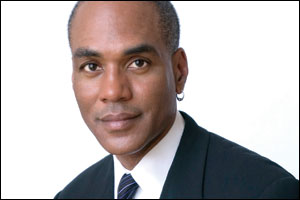
Opinion Editorial by CEO and Founder Phill Wilson
“We Don’t Quit” Either
President Barack Obama used his first State of the Union address to focus primarily on job creation and the economy. Despite soaring HIV seroconversions from Los Angeles to Washington DC—the District’s HIV rate is "on par with Kenya and Uganda,” according to the Washington Post—AIDS only merited a brief mention in the speech. “We are helping developing countries to feed themselves,” the President said, “and continuing the fight against HIV/AIDS.”
Disappointing, sure, but as an AIDS advocate and a person living with AIDS, I was inspired by the President’s own words that “we don’t quit.” While we can rally behind job-creation projects that will keep more people with HIV/AIDS employed and therefore insured, and support strengthening the economy; we cannot quit pressing for meaningful healthcare reform, comprehensive prevention and treatment policies, and a National AIDS Strategy that will benefit all. “We Are Closer Than Ever” The House plan contains some key HIV-related provisions, such as incorporating the Early Treatment for HIV Act. The Senate plan doesn’t. Let's be clear: Both plans are in jeopardy; meaningful healthcare reform is in peril. The opponents are organized, powerful, and committed. We are closer than ever but yet still so far away. “Never Been More Hopeful” Meaningful health care reform could dramatically improve the lives of many African Americans, disproportionately uninsured and HIV positive. In our current failed health delivery system, where health is overwhelmingly linked to employment, the chance of a portable health insurance account could be a godsend. But that means HIV/AIDS activists, health policy experts, LGBT activists—all stakeholders—have to continue to lobby and make the “hope” a “reality”. This means insurance, treatment, and medication for all of us--pre-existing conditions or not. Otherwise, thousands of PLWHA would be denied coverage or their premiums would be exorbitant. Anything less would not be healthcare reform. “We Just Can’t Afford it” In today’s faltering economy, social services are already taking a huge hit. AIDS Drug Assistance Programs are in danger of losing funding in many states and so are housing programs. The Administration may not cut AIDS funding directly, but it could take the scalpel to support-services that many of us depend upon. “We Don’t Quit”
When the President did begin discussing health care, which his Administration focused on for much of 2009, his words were prophetic for HIV/AIDS advocates: “We are closer than ever to bringing more security to the lives of so many Americans.” The House and the Senate have passed breakthrough legislation that would expand healthcare coverage to millions.
Toward the beginning of the speech, the President said: “I have never been more hopeful about America's future than I am tonight.” Indeed, many of us have never been more hopeful. Thanks to advances in prevention and treatment, many PLWHA are living longer. And while it may be many years away, there has been some recent promise in the elusive quest to develop a vaccine.
The President’s proposal for a three-year, non-discretionary spending freeze landed with a thud on Capitol Hill. “We can’t afford” to continue spending,” the President said, assuring his audience that Medicare, Medicaid, and Social Security will not be affected. “But all other discretionary government programs will.”
But it can be done. We can win on health care reform; we can win on keeping insurers from discriminating against people with HIV/AIDS; we can develop a National AIDS Strategy with comprehensive prevention--we can do all of that by fighting for and with our President. Like the struggling small-business owner who wrote the President, none of us should be willing to consider, even slightly, that we might fail. We can applaud the Administration’s many accomplishments and we can continue to hold it accountable. The President’s words should be our mantra: “We don't quit. Let's seize this moment to start anew, to carry the dream forward.”
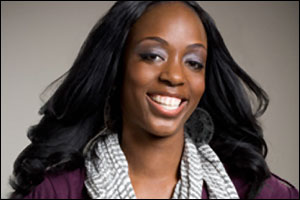
Marvelyn Brown Keynote Speak at LIFE AIDS Summit
Marvelyn Brown, community activist and author of The Naked Truth: Young, Beautiful, and (HIV) Positive will be a keynote speaker at the annual LIFE AIDS Black Student Mobilization Summit. The Summit is a part of the national Greater Than AIDS movement and sponsored by the Black AIDS Institute and the Magic Johnson Foundation in conjunction with the Centers for Disease Control and Prevention’s Act Against AIDS campaign, a 5-year national HIV/AIDS communication campaign.
Brown’s session will be held Saturday, February 6 at the Cornelius L. Henderson Student Center located at Clark Atlanta University. Her commentary will focus on developing strategies to expand the Greater Than AIDS movement onto college campuses across the nation. The Greater Than session is just one of the student activities that will take place throughout the weekend. The three-day event will kick off at 6:00 pm on Friday with a mini film festival and dinner held in the Cornelius L. Henderson Student Center on the AUC campus. The festival is free and open to any student with a valid college I.D.—reservations are required. Saturday evening, LIFE AIDS will sponsor a reception and special performance of Beyond the Diagnosis, a series of one-act plays, explores the predicament of HIV/AIDS patients and the struggles endured by their families, loved ones, caregivers and medical professionals. The free reception and performance is sponsored by Gilead Pharmaceuticals and open to the public. To RSVP, please contact the Black AIDS Institute at Sunday’s sessions will focus on action. Each student will be asked to make a personal commitment to do something on their campus to raise HIV/AIDS awareness on their campus and mobilize their peers. For additional information about LIFE AIDS, to register for the conference, or to RSVP for the Friday night film festival and/or the performance of Beyond the Diagnosis, please contact The Black AIDS Institute at LIFE AIDS is sponsored in part by the Elton John Foundation, Broadway Cares, and the Ford Foundation. About Greater Than AIDS About LIFE AIDS About Act Against AIDS
Greater Than AIDS is a public information campaign of the Black AIDS Media Partnership (BAMP), a sustained commitment among major U.S. media companies to work together to address the AIDS crisis facing Black Americans. Organized by the Kaiser Family Foundation and the Black AIDS Institute, this national mobilization is coordinated as a private-sector response to Act Against AIDS, a multi- year effort by the U.S. Centers for Disease Control and Prevention(CDC) to help refocus national attention on the HIV/AIDS crisis in the United States. The Ford Foundation, the Elton John AIDS Foundation, and the MAC AIDS Fund provide financial and technical support for Greater Than AIDS. For more information, visit: www.greaterthanaids.org.
LIFE AIDS (Leaders In the Fight to Eradicate AIDS), a mobilization initiative of the Black AIDS Institute, is the nation’s only HIV/AIDS collegiate mobilization network, maintained primarily by Black college students, and exclusively targeting Black college students. Founded in 2004, the mission is: “to educate college students on the causes and effects of HIV/AIDS, and to create a comfortable context for dialogues about sex and sexuality in order to eradicate the disease and restore hope in our community.”
The Centers for Disease Control and Prevention (CDC) has launched a national domestic campaign for HIV/AIDS called “Act Against AIDS” that aims to contribute to reducing HIV incidence in the United States. Act Against AIDS is a multi-year, multi-faceted communication campaign that is being planned and released in phases. Each phase, with its own unique objectives and target audiences, will utilize mass media and direct-to-consumer communication channels to deliver important HIV prevention messages in a manner designed to be compelling, credible, and relevant. Some campaign phases will influence knowledge and information-seeking behaviors, while other phases will influence complex prevention and testing behaviors. For more information, please visit www.actagainstaids.org
HIV in Black Women: It's Not About Men on the Down Low
In the late 1990s and early 2000s, media hype about men on the so-called down low prompted considerable finger-pointing in the Black community. A series of high-profile newspaper and magazine articles were written in response to a widely circulated report from the Centers for Disease Control and Prevention (CDC) on young men who sleep with men, and suddenly bisexual Black men were being blamed for disproportionate rates of HIV among Black women--even though there was little data to back the claim. Years later, an increasing body of evidence is undermining this theory, yet the media are barely covering the story. How do we correct misperceptions and undo the damage, now that this faulty information has pervaded our community, creating tension between Black men and women and confusing people about their HIV risk? We asked four experts for their perspectives. Kevin Fenton, M.D., Ph.D., is director of the National Center for HIV/AIDS, Viral Hepatitis, STD and TB Prevention at the CDC. Advice: Spread the word--Black bisexual men are not responsible for the high rates of HIV infection among Black women. "We have looked at the proportion of HIV infections among women from bisexual partners and have found no data to indicate this is the primary route through which Black women are becoming infected," Dr. Fenton says. "In fact, research has shown that Black men who are currently bisexually active account for a very small proportion, 2 percent, of the overall population of Black men. So while women certainly become infected through sex with bisexually active men, they also become infected from sex with men who are drug users or who have multiple female partners." David J. Malebranche, M.D., M.P.H., is an expert on Black male sexuality and an assistant professor at Emory University's School of Medicine in Atlanta. Advice: Challenge stereotypes about race, gender and sexual orientation. "The media has been portraying Black bisexual males as predators and Black heterosexual women as victims. That's unfair," Dr. Malebranche says. "Black women are empowered by their own sexual-behavioral choices. To suggest otherwise feeds into America's long-standing exploitation of Black male sexuality and pathology." The Rev. Carlton Veazey is president and CEO of the Religious Coalition for Reproductive Choice, has hosted the National Black Religious Summit on Sexuality at Howard University, and is a member of the National Baptist Convention, USA, Inc. Advice: Break the silence about sexual health within the church, including "taboo" topics like birth control, teen pregnancy, homosexuality and HIV/AIDS prevention. "When we started this conference 13 years ago, it was monumental--it had never been done before," the Rev. Veazey says. "Unfortunately this type of forum remains a rarity, even though it's obvious that the need is great. We must encourage our pastors to facilitate these discussions no matter what their personal views are. The quality of their parishioners' lives depends on it." Susan Newman, D.Min., a minister and the author of Oh God!: A Black Woman's Guide to Sex and Spirituality, is the former director of the Balm in Gilead's Washington, D.C., office. Advice: Take responsibility for the reality that everyone is at risk by slowing your roll, committing yourself to being honest, and requiring honesty in return. "Yes, there are women who have contracted HIV because they were with a man they trusted who betrayed them. But someone who's involved with a heterosexual man can contract HIV too," says the Rev. Newman. "It's about Black men and women not being so quick to jump into the sack with each other, and committing to be in relationships with integrity. It's about us talking to each other about our sexual partners without worrying about being judged. It's about caring for ourselves and caring for each other." Tomika Anderson is a freelance writer based in Brooklyn, New York. Her work has appeared in Essence, POZ, Real Health and Ebony magazines, among others.
Responding to the Horror in Haiti
Responding to the Horror in Haiti
We've all been shocked over the past few weeks by the images of death and devastation in Haiti. Although disaster assistance has been slow to actually reach the Haitian people, the initial response from governments and individuals has been tremendous and timely. Within the first eight days, more than $305 million had been raised, according to the Chronicle of Philanthropy, a newspaper covering non-profit organizations. The American Red Cross had raised more than $137 million, with $25 million coming in $10 text donations alone. The Hope for Haiti Now telethon that aired on January 22 has raised more than $58 million. But while no one could have stopped the natural disaster from happening, I don't think anyone will deny that the human catastrophe was preventable. Whether we consider the cataclysm that took place when the buildings collapsed or the one that continues to unfold today--with food, water and essential medical supplies slow to reach hungry, injured and desperate people--these outcomes are directly attributable to decades of international exploitation and neglect, compounded by domestic corruption and strife. Many of the buildings collapsed because they were poorly constructed, even though billions of dollars flow into Haiti's capital each year--about $160 million from the United States--and even though geologists knew that Port-au-Prince sat on a fault line, and had warned of an impending disaster. This calamity was exacerbated by the fact that, even after billions of dollars have been invested in the country, the Haitian government remains ineffective, the capacity of the civil- and human-service sectors is persistently low, and the nation's physical infrastructure is terrible. Yet for decades people have commented about and looked down upon Haiti, moralizing and wringing their hands while clearly not demonstrating the leadership required. I wonder what might have happened if the world had invested the aid that is flowing now--and must continue to flow for decades to come--long ago rather than only after the tragedy? We see this pattern time and time again: Rather than invest to prevent a foreseeable disaster, nations, including our own (see: Hurricane Katrina), would rather mobilize after the fact. This is often because poor people are not acknowledged--much less their lives valued--until after they're already sick or dead, or a horrific event delivers them into our living rooms and draws our attention to the fact that they've been there all along, neglected. But what if governments, as a prerequisite for aid, had mandated in Haiti the same building codes enforced in earthquake zones such as Los Angeles or San Francisco? What if the infrastructure had been more like that which exists in the Dominican Republic? What if the International Monetary Fund, the World Bank and lender nations had forgiven more of Haiti's foreign debt years ago? Tragically, these things didn't happen. As a result, tens of thousands of men, women and children are dead; countless numbers have been maimed; children are now orphaned; and millions of human beings are paying an incalculable price. Among those experiencing this devastation are tens of thousands of people with HIV/AIDS, whose medications are lost in the rubble, and replacement meds unavailable. We urge you to continue to be generous to the people of Haiti and in particular to support the many people with HIV/AIDS, whose treatment infrastructure has also been devastated. We recommend two groups in particular: CARE, a leading humanitarian organization, headed by Helene D. Gayle, M.D., M.P.H., who spent 20 years working on HIV/AIDS at the Centers for Disease Control and Prevention; and Partners in Health (Zanmi Lasante in Kreyol, a Boston-based non-profit that has offered health services in Haiti since 1983 and started the HIV Equity Initiative, one of the first projects in the developing world to provide antiretroviral therapy free of charge for poor people with HIV. By contributing to these organizations, you can help alleviate the suffering that Haitians with HIV/AIDS are experiencing, and act proactively to prevent the spread of a disease that could further cripple this ravaged nation. Phill Wilson is president and CEO of the Black AIDS Institute.

Be a Leader in the Fight Against Black HIV/AIDS
AAHU Deadline Fast Approaching--Get Your Applications in by February 5, 2011
Be a Leader in the Fight Against Black HIV/AIDS
Leadership in the Black HIV/AIDS community is vital to the mobilization of Black people and institutions towards ending the devastating impact of HIV and AIDS. The African American HIV University (AAHU) Community Mobilization College (CMC) is an intensive program that builds organizational capacity and individual leadership skills to change the trajectory of this epidemic in Black communities. This is a historic and necessary mission.
By the end of the fellowship AAHU CMC, organizations and their Fellows will be stewards of a living, breathing mobilization campaign which they have visualized, cultivated, and shepherded. In addition, attendees will have the skill set and networks to do it all again.
Download your application today to be a part of the next cadre of leaders in the fight against AIDS in Black America.
Click here to learn more about AAHU CMC
Click here to download the 2010 application
Click here to download the application instructions
- Congratulations to the Trump AIDS Atlanta Winners Charles Walters and Ray Harris
- Clark Atlanta University To Host Annual LIFE AIDS Black Student Mobilization Summit February 5-7
- Baltimore Planning Council Recognizes Public Official with a Greater Than AIDS Plaque
- Take the International AIDS Conference Survey