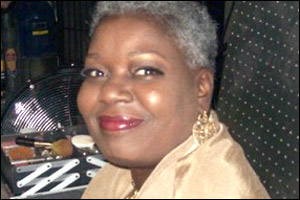
Through My Eyes: Patricia Kelly
In 1985 I was incarcerated at the Women's Correctional Institution in Columbia, South Carolina, for writing bad checks. There I learned that I was infected with the AIDS virus. I had been heavily addicted to drugs and had used anonymous sex to feed my habit. Back then, very little was known about HIV/AIDS. I'll never forget that the prison doctor wore a mask, gloves and a gown; from the other side of the room he told me that I had AIDS and was going to die. He warned me not to tell anyone because they would be afraid of me. I didn't comprehend what he was telling me. Yet I kept thinking that I was marked and damaged, I would never get married, I would never have sex again and I was going to die soon. The prison staff whispered behind my back and acted as if they didn't want to come near me. I received minimal medical care. I was reluctant to take any medication because I knew very little about HIV. I did, however, receive some brief counseling and literature. For years I kept my diagnosis a secret---only the prison medical staff knew my status. After I was released in 1989, I eventually made my way to Connecticut, where I ended up incarcerated at a women's facility near New London. Surprisingly, the care in Connecticut was better than in South Carolina. They had an infectious-disease doctor and a nurse that worked only with HIV-positive inmates, counseling, examining and dispensing meds. I periodically attended support groups there, an activity I continued throughout the mid- to late 1990s both in and out of various prisons. In support group I learned that HIV was not the automatic death sentence it was once thought to be; that I was not alone; and that help, counseling and treatment were available. In 1998 I discovered that my T-cell count had dropped below 200. I started my first drug regimen. I cannot remember all of the meds that I have been given over the years. Some I tried only for a week or so--I had adverse reactions, including diarrhea, stomach problems and headaches. The doctors frequently had to adjust the dosages or take me off those drugs completely. But I always refused to take AZT. My brother had been on AZT and experienced terrible side effects--vomiting, night sweats and so on. He died of AIDS in 1990, right before his 41st birthday. I think his death, at least in part, increased my strength to continue living. Eventually I started to really believe that there was a chance I was going to survive. Many new treatments were becoming available, and people were starting to live longer. I started receiving regular counseling. Before, I was waiting to die; now I was determined to live, despite having had the virus for nearly 20 years. I married in 2000 and then moved back to South Carolina. I have three supportive children and six grandchildren, with the seventh expected in April. I am grateful to still be here to enjoy my family. I'm taking meds--Intelence, Viread and Ziagen--and doing great. I have never had illnesses due to HIV/AIDS; my T-cell count is 367, and my viral load is undetectable. I am educating people about HIV/AIDS and letting them know that they can live a healthy, productive life. A few ex-inmates and I are creating a curriculum to share life experiences with HIV-positive inmates. I am a founding member of the U.S. Positive Women's Network, a national support group of HIV-positive women working to change federal AIDS policy. I also travel and lecture. I am positive and victorious. As told to Glenn Townes, an award-winning journalist based in New Jersey, who writes for Essence, Black Enterprise, Upscale and POZ magazines, among others.
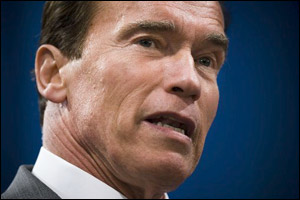
Recession Forces States to Slash AIDS Drug Assistance Programs
In February, coalitions of North Carolina HIV/AIDS service providers, gay activists and health-care advocates met in Charlotte and Raleigh. The topic: fighting recent budget cuts in the state's AIDS Drug Assistance Program (ADAP). State officials also recently capped ADAP enrollment, and budget cutbacks still loom. "If that happens," says Jason Pauley (name changed), an HIV-positive Charlotte-area resident who depends on ADAP, "I could lose my benefits and my life." Federal- and state-funded AIDS Drug Assistance Programs pick up the cost of expensive antiretroviral drugs and other medications for the low-income HIV-positive. Without these lifesaving pharmaceuticals, the virus can multiply, making the person not only sicker but also more contagious. ADAPs reach approximately one-quarter of all people with HIV/AIDS; approximately 60 percent are people of color. But with soaring state deficits nationwide and rising HIV caseloads--particularly among Black people--budget reductions are hitting HIV programs and ADAPs especially hard, from North Carolina to California. Lives in the Balance in North Carolina Black, gay and only 29 years old, Pauley was diagnosed with HIV in 2006. He was approved for ADAP in 2008. "I'm working two jobs, and my insurance doesn't cover all my meds," he explains. "Without ADAP, just one bottle would cost more than $700 a month. I couldn't afford that." Yet in September 2009, North Carolina's HIV/STD Prevention and Care Branch cut $3 million from its budget by slashing its AIDS-drug inventory--a move that it claims will not affect ADAP-patient care. In January it froze ADAP enrollment at about 4,400, according to the Greater Raleigh News & Observer, even as unemployment has spiked and thousands have lost health benefits, thus increasing demand for ADAP services. A year ago about 4,000 people had relied on ADAP, and state legislators had allocated $11 million for the program. But that was only about half of prior years' budgets. If not already enrolled, Pauley would have been placed on a waiting list, which North Carolina GLBT publication qnotes reports already has 120 names on it. The budget rollbacks come at a critical time. Newly reported HIV/AIDS cases have jumped some 54 percent in Charlotte-Mecklenburg County, home of Charlotte, the state's largest city. The seroconversions are overwhelming Black men who have sex with men, according to qnotes. Pauley says he recently received a letter from the state about potential cuts in funding and is worried. "ADAP is a lifeline," he says. "Cutting people at this time...man, that's like a death sentence." California Struggles to Provide HIV/AIDS Services But North Carolina's challenges pale in comparison with those of the nation's largest state, California, where ongoing battles over the budget and threatened lawsuits have played out like a soap opera. In the summer of 2009, the Golden State faced a $24 billion deficit. To meet the shortfall, Gov. Arnold Schwarzenegger's health-care budget reductions targeted "everything [AIDS-related,] from housing and medical treatment to access to drugs and prevention services," wrote the Bay Area Reporter. The governor's original proposal chopped $68 million from state HIV programs and $12.3 million from ADAP. Such decreases would have had a domino effect, causing the state to lose some, if not all, of its grants from the federal Ryan White HIV/AIDS Program as well as from the Centers for Disease Control and Prevention. Thirty-five thousand Californians, many of them Black or Latino, would have lost access to HIV medications. Thousands rallied in Los Angeles, Sacramento and San Francisco against the proposed cutbacks. AIDS Project Los Angeles (APLA) and California Senate president Darrell Steinberg announced plans to sue the governor. Finally, in January, Schwarzenegger announced that ADAP would be nearly fully funded after all. But the ax did fall. Schwarzenegger sliced $9.5 million from ADAP funding for medications for the HIV-positive who are incarcerated in county jails. That figure is in addition to $85 million gutted from other HIV/AIDS services, such as testing, prevention, home health care and housing. "Sacramento should restore those cuts as soon as fiscally possible," says APLA executive director Craig E. Thompson. Rod McCullom, a writer and television news producer, blogs on Black gay, lesbian, bisexual and transgender news and pop culture at rod20.com.
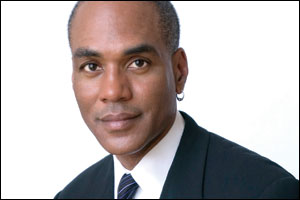
Opinion Editorial by CEO and Founder Phill Wilson
In This Issue: Devastating State Budget Cuts
As legislators on the federal, state and local levels attempt to deal with distressing realities associated with balancing their recession-ravaged budgets, all too often they look to make cuts that affect the most vulnerable among us. Whether those decisions involve closing community libraries in Philadelphia; shutting down schools in Kansas City, Mo.; or implementing furlough days at the Employment Development Department in California, they devastate the lives of poor and working-class people. One line item currently at risk in many states is AIDS Drug Assistance Program (ADAP) funding. Without ADAP, low-income people cannot afford AIDS medications, which can easily cost more than $1,000 each month. Slashing ADAP makes no sense. Not only is cutting people off from their meds deadly for those people directly affected, but it also raises the HIV viral burden in communities and runs counter to our nation's goal of ending the AIDS epidemic. Public health officials know that 40 percent more people get infected with HIV each year than previously believed. With that frightening reality, you would think that preserving AIDS funding would be a priority. In this issue we take a look at ADAP cuts in North Carolina and California, the state where I live and where some of the most severe AIDS-related budget cuts were threatened and, thanks to AIDS activists, mostly rebuffed. Cuts were implemented in ADAP funding to HIV-positive inmates, however, which isn't surprising, since they cannot speak for themselves. In "Through My Eyes" you can read the first-person account of one woman who learned that she was HIV-positive while she was incarcerated, and her journey to receive proper medical care. Finally, if you are in Dallas or Los Angeles in April, look for the TrumpAIDS National Bid Whist Tournament and HIV/AIDS Health Fair on the 17th and 24th respectively. And, if you live in Ohio, keep your eyes open for the Test 1 Million celebrity tour in Akron, Cleveland and Cincinnati from April 21 through 24. Yours in the struggle, Phill

Black Celebrities come out to support Greater Than AIDS
This is Greater Than AIDS,” a new monthly column that will run in conjunction with the national Greater Than AIDS movement. Our goal is to inform Black people about activities our community is already engaged in—and to enlist your support in what we still need to accomplish—to overcome HIV/AIDS and bring the epidemic to an end.
Last week was the academy awards—Congratulations to Mo’Nique. But for some Black celebrities, figuring out who was wearing what designer or preparing their acceptance speech was not the only thing on their minds. Some celebrities were willing to party with a purpose and lend their star power to raise awareness about the HIV/AIDS epidemic in Black communities.
Black people have been greater than any challenge we’ve ever confronted. We were greater than the Middle Passage. We were greater than slavery. We were greater than Reconstruction. We were greater than Jim Crow. And, we will be greater than AIDS as well.
Yet each year more than 56,000 Americans contract HIV—almost half of whom are Black. Black people account for two-thirds of infections among women and 70 percent among youth. About half of Black gay and bisexual men have HIV by the time they are 30 years old. And the AIDS rate in our nation's capital rivals that of many African countries.
We confront these issues at a unique time in history. One year ago we celebrated the inauguration of Barack Obama, America’s first Black president. In 2006, then-Senator Obama spoke about the power of Black people to come together to be greater than this disease. Presidential candidate Obama promised to focus on the country’s HIV/AIDS epidemic, in particular reducing the disproportionate impact on communities of color.
And, over the past 12 months, much progress has been made. Last April, the White House and CDC launched "Act Against AIDS," the first national HIV/AIDS social-marketing effort the government has undertaken in 20 years. The Administration is also working to create the first-ever National HIV/AIDS Strategy, enabling federal and state health departments to work more collaboratively to fight AIDS.
The President has also lifted the ban against syringe exchanges that replace injection-drug users' dirty needles, as well as laws barring people with HIV from traveling to our country. These changes bring the United States in line with global human rights and HIV policy standards.
At the same time, however, our nation's economic crisis is forcing state funding to be cut to organizations that treat and support people with HIV and AIDS, and waiting lists for those who need governmental subsidies for AIDS medications are lengthening.
As we mark another Black HIV/AIDS Awareness Day, I’m reminded that governments can only do so much. Each of us has the power to make a difference in response to AIDS – in our relationships, in our families, and in our communities.
Today, Black people are educating themselves about HIV/AIDS, getting their annual or semi-annual HIV test, increasing their involvement in the movement to end the disease and seeking treatment if they need it. But we must not become complacent; for our community, every day presents a new opportunity to respond to this disease, to protect ourselves, to challenge stigmas, and to embrace our brothers and sisters who are already living with the virus.
Against this backdrop, we start this Greater Than AIDS conversation. I invite you to go to www.GreaterThan.org to learn the facts, listen to real talk from real people, and find out where you can get tested and how to become involved. While you're there, don't forget to share your comments. I look forward to hearing from you and exchanging thoughts on how you are greater than AIDS.
Phill Wilson is President and CEO of the Black AIDS Institute.
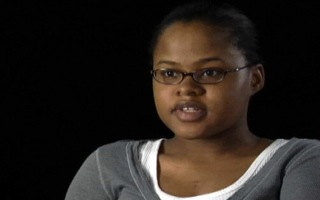
Young People Help Make a Movie About Blacks and HIV/AIDS
Four years ago, Tamira Noble was sitting in her high school biology class when a smiling woman with dreadlocks invited students to participate in a film project dealing with HIV. Tamira, who considered herself a nerd, had dreams that reached beyond her struggling, all-Black Westinghouse High School, located in one of Pittsburgh's poorest neighborhoods. Scores of her peers declined to take part in the film, fearing it would be just "another project about everybody Black having AIDS." Tamira shared their concern and also worried that she would be teased and stigmatized if she got involved. But she didn't say no; she took home a permission slip to share with her mom. After the two of them talked it over, Tamira decided that she should participate. The smiling woman in the classroom turned out to be former ABC News journalist Claudia Pryor, who produced the 90-minute film, Why Us? Left Behind and Dying. Tamira ended up becoming the narrator--"the voice" of inner-city young people--and also helped write and produce the documentary, an innovative effort to explore why HIV disproportionately affects Black people. In total, twenty students braved the stigma to become researchers, speaking to scientists, public health workers and people living with HIV/AIDS about the deadly intersection of race, science and culture. Although Black Americans ages 11 to 25 are only 16 percent of the U.S. population, they account for 65 percent of new HIV infections. By the time the project was finished, Tamira was a junior in college. Since working on the film, she has traveled to the Bronx, New York, and other communities to spread the word about the documentary. We spoke with her at a Pittsburgh screening. When did you first meet someone with HIV? Did other students know you were participating? What did you learn? What about HIV surprised you most? At first you were concerned about being labeled "one of the AIDS kids." Why? Why is the stigma so harsh among Black teens? At the end you got an HIV test. Why? How have you changed as a result of your experience? What's next for you now? Ervin Dyer is a writer who covers the African diaspora.
Once in JROTC class, an HIV-positive woman visited. When she talked, the class sat in dead silence. She touched my desk, and I remember thinking, "I am going to die!" I felt so bad. I think that Claudia and I just had a connection. Even before she hired me, I really liked her. I was just really amazed that there was a woman who was well spoken and intelligent and in charge of something about us, about Black people. And I was very curious about what would come from my involvement in the project. But I don't know if that had any influence on Claudia choosing me. Claudia told me that she wanted the film's voice to come from a young person. She said she wanted it to be in my voice, and I said okay. I was not sure if I would do a great job, but I knew I would try. I think it makes the documentary more accessible to young people to hear me speak. And we wanted to avoid sounding like a bad health-class video.
Yes; they thought it was weird and that I was crazy for lining myself up with anything that had to do with HIV.
I learned that I can be a listener and a speaker. That everyone has a story, and to be careful when listening to someone tell their story. I also learned not to judge people so quickly.
I was astounded by how much denial there is in the Black community. We don't affirm ourselves, or each other. If you are having relations with someone, you should want them to know you and your status. But some people with HIV [that we interviewed] denied that they had the disease. I think they didn't want to admit that they were infected.
Because of the stigma that surrounds HIV. I didn't want to get caught up in it.
It's almost like we need a way to hurt each other--like we've been oppressed and hurt for so long that we don't have any power or know how to get it or be powerful. When someone has a disease that is considered embarrassing, that's just another way to tease them. Because if you can hurt someone, you have power over them. It's sad, but I really believe this is true.
I had met so many people with HIV and had heard their stories. It hurt me to think that I could be in their position. So I needed to know where I stood.
I'm more informed, and I feel like I understand my people better than ever. I also feel that I'm really becoming okay with all the issues we have in our community. I think we have the power to change individually and collectively, if we try.
My plans are to continue to go to screenings wherever we have them and to keep talking about this, because if we don't talk about it, people can't get the knowledge they need to protect themselves.