News 2016
Global Network of Black People Working in HIV Convenes at AIDS 2016
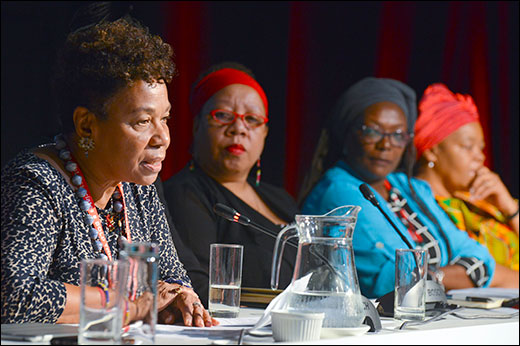
Congresswoman Barbara Lee (D-Calif.) speaks during the panel on the Global Network of Black People Working in HIV during the 2016 International AIDS Conference in Durban, South Africa. Photo: Freddie Allen
I first attended the International AIDS Conference in 2002. I traveled to Barcelona at the height of the HIV/AIDS epidemic in the African-American community with a delegation of other journalists of color from around the world, excited to cover the global gathering and share, learn and find common ground with others from Africa and our diaspora.
Read more: Global Network of Black People Working in HIV Convenes at AIDS 2016
HIV Rapidly Becoming A Disease of Young People
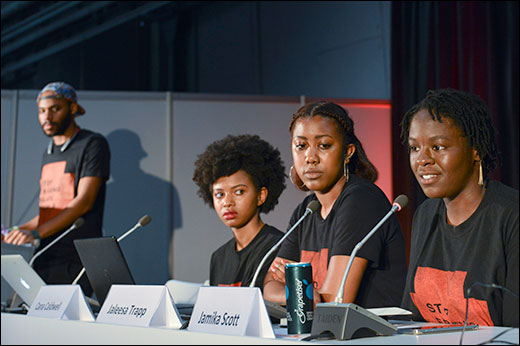
Tacoma Action Collective leaders Jamika Scott, Jaleesa Trapp, Cana Caldwell, Christopher Jordan discuss social protest and the erasure of Black people in the history of AIDS activism in the Global Village at the 2016 International AIDS Conference in Durban, South Africa. Photo: Freddie Allen
While all other demographics are in decline, more and more young people are being diagnosed with the disease. Globally, 11.8 million people ages 15-24 are currently living with HIV/AIDS, with this demographic also accounting for more than half of new infections. In the U.S., young Black, gay and bisexual men make up the largest population of people who are infected, and young women of color bear the largest burden of the disease among women in the U.S. Globally, adolescent and young women are fast becoming the most at risk: in Sub Saharan Africa, women ages 15 to 19 make up two thirds of the population of infected adolescents.
Another Missed Opportunity
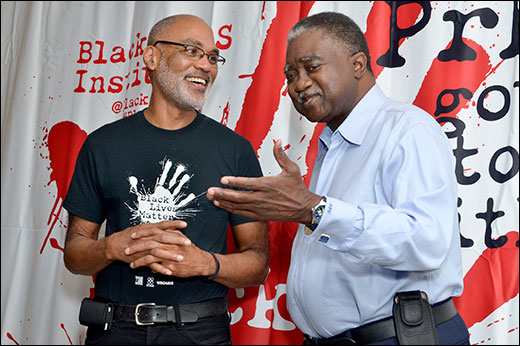
Phill Wilson, President and CEO, Black AIDS Institute and George Curry, founder and editor-in-chief of EmergeNewsOnline.com at the 2016 International AIDS Conference in Durban, South Africa. Photo: Freddie Allen
DURBAN, South Africa – On my first night here to cover the 26th International AIDS Conference, I had dinner with Phill Wilson, president and CEO of the Black AIDS Institute, and three other members of our delegation. During the course of our wide-ranging conversation, Phill mentioned the unusual circumstances under which we had met in 2003.
This Issue
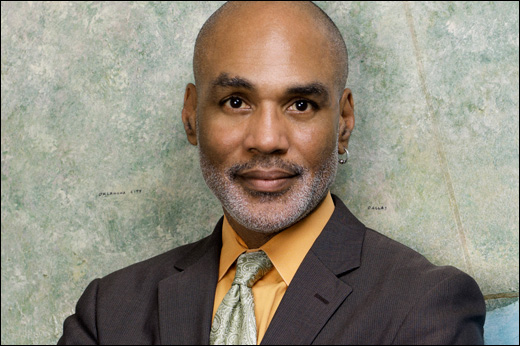
So today marks the next to the last day of AIDS 2016. We've had a remarkable week so far. The science has been powerful; and the community response has been inspirational. There have been encouraging comments from heads of State, dignitaries and celebrities. Earlier today, I was having a conversation with Michael Ighodaro where he shared with me the need for Black Men who have sex with men in the US to strengthen our solidarity with MSM in Africa. "Whenever there is a bad bill in Nigeria or Uganda or some other part of Africa, we hear from the White gay organizations in the US, but not the Black ones."
The Black Church and the Response to HIV/AIDS: Where Faith Meets Advocacy
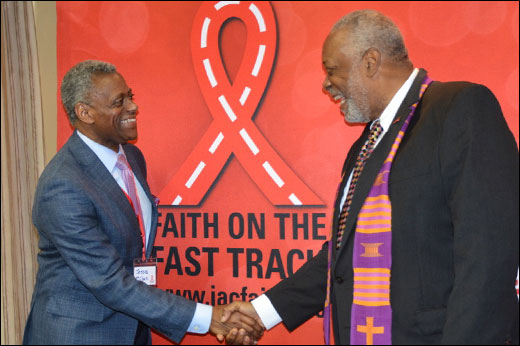
Jesse Milan and Rev. Edwin Sanders at the AIDS 2016 pre-conference on religion. Photo: Ann Ragland
It's no secret that HIV/AIDS advocates and the Black church have not always seen eye to eye. However, a new faith-based initiative could create more collaboration between those groups than ever before.
Read more: The Black Church and the Response to HIV/AIDS: Where Faith Meets Advocacy