News 2007
Prevention
PARIS/GENEVA -- WHO and UNAIDS are recommending that male circumcision be recognized as an additional important intervention to reduce the risk of heterosexually-acquired HIV infection in men.
The decision was released from an international expert consultation held March 6-8 in Montreux, Switzerland. Participants representing a wide range of stakeholders, included governments, civil society, researchers, human rights and women's health advocates, young people, funding agencies and implementing partners.
Related links:
http://www.who.int/hiv/topics/malecircumcision/en/index.html
http://www.unaids.org/en/Policies/HIV_Prevention/Male_circumcision.asp
"The recommendations represent a significant step forward in HIV prevention," said Dr Kevin De Cock, director, HIV/AIDS Department in WHO. "Countries with high rates of heterosexual HIV infection and low rates of male circumcision now have an additional intervention which can reduce the risk of HIV infection in heterosexual men. Scaling up male circumcision in such countries will result in immediate benefit to individuals. However, it will be a number of years before we can expect to see an impact on the epidemic from such investment."
There is now strong evidence from three randomized controlled trials undertaken in Kisumu, Kenya; Rakai District, Uganda (funded by the U.S. National Institutes of Health); and Orange Farm, South Africa (funded by the French National Agency for Research on AIDS) that male circumcision reduces the risk of heterosexually acquired HIV infection in men by approximately 60 percent.
This evidence supports the findings of numerous observational studies that have also suggested that the geographical correlation long described between lower HIV prevalence and high rates of male circumcision in some countries in Africa, and more recently elsewhere, is, at least in part, a causal association. Currently, 665 million men, or 30 percent of men worldwide, are estimated to be circumcised.
Procedure as comprehensive HIV prevention package
Male circumcision should always be considered as part of a comprehensive HIV prevention package, which includes:
• the provision of HIV testing and counseling services;
• treatment for sexually transmitted infections;
• the promotion of safer sex practices; and
• the provision of male and female condoms and promotion of their correct and consistent use.
Counseling of men and their sexual partners is necessary to prevent them from developing a false sense of security and engaging in high-risk behaviors that could undermine the partial protection provided by male circumcision. Furthermore, male circumcision service provision was seen as a major opportunity to address the frequently neglected sexual health needs of men.
"Being able to recommend an additional HIV prevention method is a significant step towards getting ahead of this epidemic," said Catherine Hankins, associate director, Department of Policy, Evidence and Partnerships at UNAIDS. "However, we must be clear: Male circumcision does not provide complete protection against HIV. Men and women who consider male circumcision as an HIV preventive method must continue to use other forms of protection such as male and female condoms, delaying sexual debut and reducing the number of sexual partners."
Need for quality and safe services The risks involved in male circumcision are generally low, but can be serious if circumcision is undertaken in unhygienic settings by poorly trained providers or with inadequate instruments. Wherever male circumcision services are offered, therefore, training and certification of providers, as well as careful monitoring and evaluation of programs, will be necessary to ensure that these meet their objectives and that quality services are provided safely in sanitary settings, with adequate equipment and with appropriate counseling and other services. Male circumcision has strong cultural connotations implying the need also to deliver services in a manner that is culturally sensitive and that minimizes any stigma that might be associated with circumcision status. Countries should ensure that male circumcision is undertaken with full adherence to medical ethics and human rights principles, including informed consent, confidentiality and absence of coercion. Maximizing public health benefit A more rapid public health benefit will be achieved if age groups at highest risk of acquiring HIV are prioritized, although providing male circumcision services to younger age groups will also have public health impact over the longer term. Modeling studies suggest that male circumcision in sub-Saharan Africa could prevent 5.7 million new cases of HIV infection and 3 million deaths over 20 years. Experts at the meeting agreed that the cost-effectiveness of male circumcision is acceptable for an HIV prevention measure and that, in view of the large potential public health benefit of expanding male circumcision services, countries should also consider providing the services free of charge or at the lowest possible cost to the client, as for other essential services. In countries where the HIV epidemic is concentrated in specific population groups such as sex workers, injecting drug users or men who have sex with men, there would be limited public health impact from promoting male circumcision in the general population. However, there may be an individual benefit for men at high risk of heterosexually acquired HIV infection. More research needed •the impact of male circumcision on sexual transmission from HIV-infected men to women; • the impact of male circumcision on the health of women for reasons other than HIV transmission (e.g. lessened rates of cancer of the cervix); • the risks and benefits of male circumcision for HIV-positive men; • the protective benefit of male circumcision in the case of insertive partners engaging in homosexual or heterosexual anal intercourse; and • research into the resources needed for, and most effective ways, to expand quality male circumcision services.
Health services in many developing countries are weak and there is a shortage of skilled health professionals. There is a need, therefore, to ensure that male circumcision services for HIV prevention do not unduly disrupt other health care programs, including other HIV/AIDS interventions. In order to both maximize the opportunity afforded by male circumcision and ensure longer-term sustainability of services, male circumcision should, wherever possible, be integrated with other services.
A significant public health impact is likely to occur most rapidly if male circumcision services are first provided where the incidence of heterosexually acquired HIV infection is high. It was therefore recommended that countries with high prevalence, generalized heterosexual HIV epidemics that currently have low rates of male circumcision consider urgently scaling up access to male circumcision services.
Experts at the meeting identified a number of areas where additional research is required to inform the further development of male circumcision programs. These included
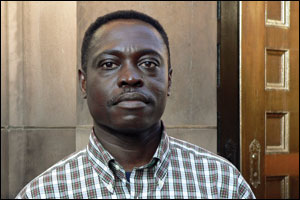
By Sharon Egiebor
Samuel Agyemang is delving into the secret sex lives of black men. Agyemang, a doctoral candidate at Columbia University’s Teachers College in New York, is conducting a survey men who are African American or of African descent who have sex with men and women. “There is a controversy as to why black, heterosexual women are getting infected with HIV/AIDS. There are people like author J.L. King who assert that men are on the down low and they are spreading HIV disease among black heterosexual women,” said Agyemang, who is conducting the survey for his doctoral thesis. “Somebody like [author] Keith Boykin has a different opinion. Unfortunately, there hasn’t been much scientific research in this area. Most of what we know is from an anecdotal point of view.” Agyemang, is conducting the survey online at www.surveymonkey.com/s.asp?u=52223067900. The site, Agyemang, said was created just for the study and will be taken down upon completion, probably sometime in May. “I thought I could come out with research that would get some information from people who actually do have sex with men and women. I want them to come out with their own story,” he said. Men who are said to be on the “down low” are married or have girlfriends but have sex with men. They hide the fact from the women in their lives. The rate of HIV infections in African American women is continuing to rise and according to the Centers for Disease Control and Prevention, most of the infections are from heterosexual contact. AIDS is one of the leading causes of death for African American women, who represent nearly 70 percent of all new HIV infections in females. King, who does not identify himself as gay, wrote the book “On the Down Low: A Journey into the Lives of ‘Straight’ Black Men Who Sleep with Men.” Boykin wrote “Beyond the Down Low: Sex, Lies, and Denial in Black America,” to refute King’s book and what he described as the implicitly racist and homophobic undertones of the media's coverage. Boykin, in the book, accuses King of serving up another "stereotypical image of black men as pathological liars, surreptitiously satisfying their primitive sexual cravings by cheating on their wives," according to Publishers Weekly. Boykin says in the book that the media should be focusing on the opportunity to responsibly discuss the realities of sexuality, gender, race and AIDS. Donald Powell, Health and Wellness Coordinator for the Gay Men of African Descent (GMAD), based in Harlem area of New York, said African American gay men are frustrated with the down low discussion. “A lot of African American men are still concerned with the stigma of being associated with HIV,” said Powell. “Men who have sex with men (MSM) have been seen as vector’s of the disease, and that is the only identification that they have been given. There is also the stigma of being black MSM in a community that really, really holds masculinity up as a banner of what a black male should be.” Teachers College’s Department of Health and Behavioral Studies is sponsoring the confidential survey. It is exploring condom usage; secrecy, described as self-containment; whether keeping secrets cause, identified as distress disclosure; and psychological well being, Agyemang said. For survey purposes, high-risk behavior is considered sexual contact without a condom. Many of the statements and questions deal with how much secrecy an individual maintains throughout his life. They range from “I have an important secret that I haven’t shared with anyone,” to “Some of my secrets have really tormented me,” to “If something happens to me, I keep it within myself.” Agyemang, 44, who moved to the United States from Ghana five years ago to attend graduate school, said he realizes this is a very sensitive subject and that merely participating in the survey could cause emotional distress. Several community service organizations with hotlines are listed for support. They include Gay Men's Health Crisis; gmhc.org; The survey, which should take between 30-45 minutes, does not offer any compensation. However, the first 200 respondents who finish, can choose to have his email address entered into a random drawing for Best Buy gift cards that range from $100 to $250. “If we find out from the survey that such men do not engage in high-risk behaviors, then it could be that they could also transmit the disease to women,” said Agyemang, who took two human sexuality classes at Teachers College. “But if you find out that the men are protecting themselves and the women they deal with, then it may mean they are not transmitting the disease to the women.”
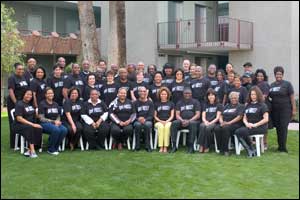
Mobilization
By Dennis Freeman
Read a full list of the participating organizations. SCOTTSDALE, Ariz. -- Black leaders say they are on the move. They have seen enough. They’ve seen enough dying. They’ve seen enough suffering. They’ve seen enough labeling that comes with the stigma associated with the HIV/AIDS virus. During a recent three-day National Black Leader’s AIDS Mobilization Strategic Planning Summit, the leaders said they are ready to put an end to the AIDS epidemic in Black America. Leaders representing 16 national civil rights, social, media, political, and faith-based organizations discussed strategies for decreasing HIV infection rates, increasing the percentage of Blacks who know their HIV status, increase the percentage of HIV-positive blacks in appropriate care and eliminating the stigma attached to the disease. The organizations, including the NAACP, the National Urban League, 100 Black Men of America, Rainbow/Push Coalition, the Congressional Black Caucus Foundation, the National Coalition of 100 Black Women and the National Newspaper Publisher’s Association, came together to strategize and plan ways to end the AIDS epidemic in Black America in five years. “This strategic summit is a response to a national call to action issued by Black leaders last August at the International AIDS Conference in Toronto,” said Phill Wilson, executive director of the Black AIDS Institute, a national HIV/AIDS think tank focused on Black people. “AIDS in America today is a Black disease. “The goal of this meeting is to develop strategic action plans for these organizations. These groups have taken a huge step toward following thru on their commitments to end HIV/AIDS in our communities. I know our goal is an ambitious one, but anything less than that is immoral,” said Wilson, from his office in Los Angeles. Panel discussions covered women and HIV, the role of the faith-based community and media organizations. The leaders identified three goals: reduce the HIV rate among black people over the next five years, increase the number of African Americans who know their HIV status and improve medical care services for those infected. Of the estimated 184,991 adult and adolescent HIV infections diagnosed during 2001—2005 in 33 states, more than 51 percent occurred among blacks. Blacks accounted for 48 percent of the new diagnoses of persons between 25 and 44 years of age. Most of these individuals were diagnosed with the disease when they were between 13 and 24 years old. And African American women are becoming the statistical leader, representing nearly 70 percent of new HIV cases diagnosed in females. Getting significant members of the Black community involved in the solution is the only way to solve the problem, speakers and participants said. Grazelle Howard, first vice president of the National Coalition of Black Women, said it is imperative that black women get out in front on this issue. “Black women are the moral and conscious voice of our community,” said Howard. “Black women are the grapevine in our community. But there seems to be a reluctance to accept our role. We need to start telling stories about ourselves. Black women are knowledgeable about every other subject in the black community except this one. If black people, in particular black women, do not pick up the bale of HIV/AIDS, we will be extinct. HIV/AIDS in America is domestic Darfur.”
Pernessa Seele, who in 1989 founded the New York-based Balm in Gilead as a way to involve the black church in the HIV prevention movement, said the faith-based community should be leading the charge as well. Seale said if the church does not take a leading role on this cause the black community will suffer. “The church must be at the forefront of this movement,” Seele said. “Without the church there is no movement. Churches weren’t having conversations about [HIV/AIDS] testing in 1989. The church is coming around because the black community is coming around.”
The summit was convened by the Black AIDS Institute, the Balm in Gilead, the Black Leadership Commission on AIDS, and the Magic Johnson Foundation. Civil rights advocates committed to developing HIV/AIDS policy statements for their organizations and mounting a national joint billboard campaign to further the message. AIDS advocates are planning to sponsor briefing sessions to educate all the presidential campaigns about the AIDS epidemic in Black America. Faith leaders, philanthropists and members of the media, suggestions ranged from launching public service announcements, sponsoring town hall meetings, setting annual testing goals, mobilizing Black youth utilizing hip-hop music, and engaging Black men. Tony Wafford, attending the conference on behalf of Rev. Al Sharpton’s National Action Network, said the lack of conversation between straight and gay black men stymies the HIV prevention conversation. “My goal is to get as many heterosexual men as possible to talk about this. Many of them are uncomfortable with men who have sex with other men. That’s just one part of this problem,” said Wafford, who has been working in HIV prevention since 1998. ”We need to have a family conversation. But unless we have real conversations about this, we’re going to die.” Wafford said he hopes to generate that conversation by getting black men in barbershops talking about the issues. Bev Smith, an on-air personality on American Urban Radio Networks, said by and large, the black media has failed its own community when it comes to reporting on HIV/AIDS, despite a recent upheaval of stories focusing on the disease. Smith, who led a panel discussion on “AIDS and the Black Media,” along with journalist George Curry, said black media is still falling short today on its HIV/AIDS coverage. “We have to be the voice to start the action,” Smith said. “I think that we [black media] are too reactionary. It should be our job to report the story. AIDS is something we don’t want to talk about. The black media has an opportunity to put a real face, to humanize this issue. The black media did not report the story, and we are still not reporting the story.” Curry, editor-in-chief of the National Newspaper Publishers Association, which disseminates information and news to more than 200 black newspapers across the country, said the black media has to personalize HIV/AIDS stories, which would draw in more readers, he said. “I think we’ve turned around, in terms of the black press,” Curry said. “But we have to tailor this message, take this story to the people. We’ve got to humanize it.” Dr. Nicole McCann, who serves as director of counseling services at The Potter’s House, which is presided over by Bishop T.D. Jakes, said the church community has come around to take on a more active role in the fight against HIV/AIDS, despite its initial slow response. The Potter’s House, McCann said, has had an HIV/AIDS program at the Dallas, Texas-based church for the past 11 years. “I think the faith-based communities, especially the black community, are stepping up its efforts against HIV/AIDS,” McCann said.
The summit began with actor Danny Glover, a longtime AIDS activist, addressing conveners as a reception host. Glover said he has seen people all around him die from AIDS. Whether it is friends, fellow actors or a child in Africa, Glover, has seen their misery. And what he sees is the black community being ravaged by the HIV/AIDS virus. Glover said the urgency to get something done is imminent.
"I approach this fight on a couple of levels, and they all have some personal implications," said Glover,who has a brother afflicted with the disease. "You're able to participate or become more adamant about something when you're able to connect it to yourself personally. First of all, I've lost many friends from this pandemic. The second thing, the pandemic has had enormous ramifications in my community. My community extends beyond the artists I have performed with, but particularly with African Americans." Sixteen national black organizations participated in a three-day summit at the Hotel Valley Ho in Scottsdale, Ariz., from March 22-25 to develop strategies to end the AIDS epidemic in Black America in five years. The organizations were: African Methodist Episcopal Church, Women's Missionary Society
National Black AIDS Mobilization Strategic Planning Session
American Urban Radio Networks
Congressional Black Caucus Foundation
Metropolitan Interdenominational Church
National Action Network
National Association for the Advancement of Colored People
National Black Caucus of State Legislators
National Black Justice Coalition
National Coalition of 100 Black Women
National Coalition of Pastors’ Spouses
National Council of Negro Women
National Newspaper Publishers Association
National Urban League
100 Black Men of America
Rainbow/PUSH Coalition, Inc.
The Potter’s House and T.D. Jake's Ministry
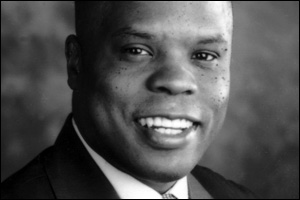
Youth Prevention
By Sharon Egiebor
Click Here to listen to “What Are You Waiting For?” Stephen Logwood believes a song can influence individuals to change personal behavior. Logwood and his business partner Keith Holland create songs and lyrics as part of a social marketing campaign to change individual health behavior. Their latest song focuses on HIV prevention, which the producers say is targeted toward young African Americans. “[Music] makes the information more consumable,” Logwood said. “It helps with the retention and the ability to use melody. The message recycles itself. People will hear the message, and then want to hear it again.” Logwood said he believes using music to change behavior works better than the tried-and-true public service announcement or highway bulletin boards. “After a 30-60 second spot, no one is saying, ‘I really want to see that 30-60 second spot again, particularly on radio. You don’t catch people recycling radio PSAs [public service announcements] or brochures. Yet, people are spending a $100 million a year on brochures, print products and the like. Those resources are going to public relation firms and ad agencies,” he said. “In the area of behavioral change, there are only so many things that motivate and music happens to be one of them.” According to the Centers for Disease Control and Prevention, young people represent 13 percent of all new HIV infections. Of those infections in 2004, African Americans were disproportionately affected, accounting for 55 percent among persons aged 13-24. Community organizations, schools, churches and non government agencies are all seeking ways to reduce the rising HIV infection rates in young people 13-24 years old. The prevention message and the method, sociologists say, have to change with each new generation at risk. Some groups use music in the prevention method. Others encourage poetry, plays and essay contests. “What Are You Waiting For?” encourages young people to follow the ABC’s of HIV prevention. Lyrics urge abstinence, faithfulness and condom use. It provides statistics on HIV infections in African Americans and then tells listeners to get tested for the disease. Logwood said this particular song is a mix of soul and hip hop. Other songs may be adapted for different audiences with different formats and could include rock, heavy metal and opera. “I generally produce the style of music that I like,” he said. “I’m 46 and my influence was Stevie Wonder and jazz. I like to hear good music, rich harmony and rich instrumentation.” Holland and Logwood formed Positive Records, a multimedia development company, 15 years ago. Their pilot program was Groovy Pyramid, a Music-based Health Literacy and Health Promotion Project, which tackled obesity prevention and encouraged adherence to the U.S. Department of Agriculture’s food pyramid. Since then, the duo added HIV, diabetes and smoking cessation. “One of the production techniques is to make the song a singable song so that people will relate to different parts,” Logwood said. “That is my calling -- to use melody to deliver this kind of communication.”
Voices ....
By Sharon Egiebor
The Women’s Collective, a support program for women who are HIV positive, in Washington, D.C., provides services to several women who live in area shelters. Angela spoke with Black AIDS project editor Sharon Egiebor about her experience in area homeless shelters. The federal Housing and Urban Development Department reported in February that on any given night an estimated 754,000 persons are living in homeless shelters, transitional housing or on the streets throughout the U.S. Resulting in about 300,000 more people then shelter beds in the U.S. Studies indicate that the prevalence of HIV among homeless people is between 3 percent and 20 percent. Case managers say too often homeless HIV clients are exposed to extreme weather, nutritional deficiencies and violence. Angela, 40-year-old Virginia native, is transitioning from homelessness and shelters to her very own apartment through public assistance. At the time of this interview, she had been drug free for six months. The bumpy journey taught her many things. This is her story: My boyfriend was violent with me. I left him and went to stay with my mother. But I couldn’t stay. My mother drinks and is emotionally abusive. I’m a recovering alcoholic. I went back to my boyfriend, but that still didn’t work out. I went back to my mother. Now, I am in transitional housing. I can’t disclose my HIV status easily. I have disclosed and people have been like “uggh!” It is more of a problem with the other clientele in the shelter, not particularly with the staff. I’ve been HIV positive since 2004. One girl got out of the group when I disclosed. So I’ve stopped disclosing because I don’t know whom I could trust. They act like people did when the disease was first discovered and no one understood how it was transmitted or who was at risk. There are things said about you and people perceive that they can’t touch you. I have three children. The oldest is 19 and living in Georgia. My 12-year-old son is with his father. My goal is to regain custody of my 10-year-old daughter, who has lived with an aunt for three years. My relationship with her is good. She doesn’t know about my HIV status. I went down when I was drinking and drugging. My T-cell count was down to 90 an back up to 420. But once your cells get that low, you have AIDS. Living in a transitional house is difficult. You have to be out by 6:30 a.m. every day to attend a meeting. By 7 a.m., you can be in the building but not in your room. The staff needs more training on HIV and AIDS. They need to know that things are not like they were before.