News 2007
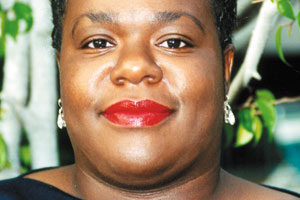
Privileged Gardner
By Deneen Robinson
One of the challenges in the last couple of years has been the looming concern that people with HIV are ageing out of treatment options. What does that mean? Well as people are living longer with HIV and developing resistance to the current drugs, there is concern that treatment options will cease. The news from the International AIDS Society Conference on HIV Pathogenesis, Treatment and Prevention certainly relieves some of my fears about treating HIV. I am a highly treatment-experienced patient. I am fortunate to have reached this point after more than 10 years of being on treatment. I know others who have reached the point of limited or no treatment options in a much shorter time. The biannual conference was held in Sydney, Australia and is dedicated to providing information on global HIV disease and prevention issues. I can tell you that reading through the information from this year’s conference, I was so excited. This is the first time in quite a while that a conference has yielded so much “new” news. I just want to jump up and down and scream. YEAH! I can plan. There are options ahead. I know I am not the only one who feels like this. One of the biggest challenges living with HIV is the dreaded conversation with the healthcare provider about switching regimens. And perhaps even more of a dread is the conversation when the doctor says, “We need to keep you on this regimen while we wait for something else because there are not drugs that you have not already exposed to your virus.” This conversation is only necessary because the drugs used to treat HIV are not a cure and the virus eventually figures out how to work in the presence of the medications. This process is called resistance. Mutations – changes in the way the virus looks- develop and the medications can no longer successfully control the virus. Also, while we have more than 20 drugs to treat HIV, there are not 20 treatment regimens. With the current options, one may have three regimens that are unique. It is one of the many challenges of successfully managing HIV. There were three categories of information discussed at this meeting. New drugs on the horizon for treatment experienced patients. A. Selzentry – maraviroc is a CCR5 inhibitor. This drug belongs to a new class called Entry Inhibitors. On Aug. 9, maraviroc was FDA approved as a treatment option for treatment experienced patients. At present, naïve patients cannot use this drug. Entry Inhibitors stop HIV from entering the CD4 cell. There are challenges because physicians have to administer a specialized test to determine if this drug is going to work in the patient. This test is expensive – about $2,000 per patient. Also, we do not have any long-term data on the development of resistance since this is a new class of drugs. The promise for patients that the development of this drug does ensure that CCR5’s can be created and this drug holds immediate promise because there is no risk of cross-resistance to current treatments. B. Rilpivirine (www.tibotec.com) - TMC-278- data was presented at IAS about the NNRTI that showed it may have an edge over Sustiva. This drug is currently in clinical trials and is looking to begin large Phase III trials this fall. The 96-week study – C204- comparing three once-daily doses of rilpivirine to Sustiva in combination with either Combivir or Truvada showed that rilpivirine demonstrated minimal changes in lipids vs. Sustiva. C. Etravirine -TMC-125 – Etravirine is an experimental drug used to treat HIV. This drug is a NNRTI – non-nucleoside reverse transcriptase inhibitor. It is designed to work when HIV has become resistant to the currently available NNRTI’s. It is exciting because this drug gives patients options in the NNRTI class once they have become resistant to Sustiva or Viramune. D. Isentress -- raltegravir - MK0518 – Isentress is an experimental drug being developed to treat HIV. It is in a new class called integrase inhibitors. Merck & Company is developing it. The drug is before the FDA and is expected to be approved by the end of October 2007. New treatment tools to manage HIV infected patients • Scientist have discovered the gene HLA-B*5701 that can predict the abacavir Hypersensitivity Reaction (AHR) to abacavir (www.glaxosmithkline.com). In a clinical trial performed by Dr. Simon Mallal of the Royal Perth Hospital in Perth, Australia. – PREDICT – 1 on 1, 956 European HIV+ patients looking to use abacavir as part of their therapy, the physicians found that 100% of those that were administered the test did not have the reaction. Abacavir is a nucleoside used to treat HIV. Finding this gene is important because AHR can be fatal reaction. Secondly, determining whether someone will have the reaction saves a drug that can be used by someone living with HIV. For more information on materials presented at IAS, please visit www.ias2007.org. I hope you, like me, are pleased with the news from this meeting. Knowing that there are future options helps make my commitment to continue planting seeds all the more possible. August 30, 2007 Ms. Robinson, First, I want to tell you thanks for having the courage to share your story with others about being positive. Like you I am too, found out May 9, 2005. That is a day I will never forget. I read your article in the Sentinel, and that is what made me want to share my story with you. See, I've been afraid to tell anyone, besides a few family members about my being positive, and with me being in prison makes the situation that much harder to deal with. Yes, I am in prison, been down 19 years now. I am doing a 30-year sentence for drugs, and to be positive in prison is more difficult to deal with than you would expect because you cannot share this with anyone, or people will treat you differently. People think that the only way you can become positive is by having sex with other men and that is not true. I have been down 19 years and have never even thought about it once. I contracted it from using drugs and I did not start that until I have been down about 15 years. The situation started taking its toll on me and I used the drugs as a way to cope, not realizing that I was killing myself in the process. Yet, that is no excuse to try to justify my mistake. It is just the best answer I can give at this moment. How I found out was I kept getting these ear infections that kept coming back and then pneumonia. At first the nurse thought I was just trying to get out of work, or was just on some bullsh--, but then I had her check my medical life and she noticed that I hadn't been sick the entire time I had been in prison. That is when she asked me if I have been involved in any kind of risky behaviors like sex or drug use and I told her yes ? to the drug use. I told her that within the last couple of years I started to use to deal with my situation. That is when she asked me if I would take the test, which I did. The rest is what I have to deal with because of my stupidity. I got very sick in 2003 and the prison had to put me in a regular hospital ? not a prison hospital. Like you, I was in there for a month, and for two of those weeks I was in a coma. In addition, I had a stroke, which left me with numbness in my feet. I had never felt so devastated in my life. For a while I was ready to die so I would not have to face this, but because I had taken care of my body all my life, my health started working for me as well as the medications. I also could not let my family see me give up, not when they have been there for me through these last 19 years. So, with that, my will to live has become greater than ever and to die in her would be an embarrassment to me as well as my family, and to any other person that has to live with this. Life has not stopped, it is just the beginning and I expect to have many years to come. I hope that one day, they will find a cure to help me and you and the others just like us. Thank you, Ms. Robinson for inspiring me to want to tell my story because I have been wanting to for so very long. Respectfully and sincerely, *BlackAIDS.org is withholding the name of this individual who is in prison in California. Deneen Robinson is the Privileged Gardner. She is the owner of the Savant Consulting Group. Savant Consulting Group provides educational presentations, motivational speaking, staff in-services, curriculum development and other services as needed by the client. She lives in Dallas, Texas with her family. Deneen volunteers and acts as a minister at her local church. She can be reached via email at
Statement:ll
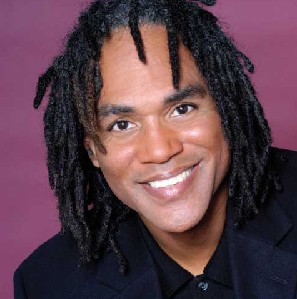
By Phill Wilson
The Bush administration revealed Sunday that it will use part of its $15 billion-a-year global AIDS program to promote male circumcision in sub- Saharan Africa as an HIV prevention tool. The news is a welcome development that, for once, puts science at the forefront of the administration's response to this epidemic. However, both abroad and here at home, educating people about circumcision as a way to slow HIV's spread is a necessarily sensitive endeavor. Everybody involved will have to abandon old bad habits if we are to have a sober dialogue about reducing risk for HIV. Public health must respect communities' traditions and individuals' choices; communities and individuals must discard reflexive distrust of public health. The facts are today hard to dismiss. Study after study has found that HIV transmits far less easily through the skin of a circumcised penis than it does when the foreskin is still intact. Circumcision is a procedure in which the foreskin covering the tip of the penis is removed. The most widely reported studies establishing the prevention benefits of circumcision come from Kenya, South Africa and Uganda, completed in 2005 and 2006. Researchers tracking groups of circumcised and uncircumcised men in those countries found the rate of HIV infection among men who had their foreskins removed to be anywhere from 51 percent to 76 percent lower. Those are big numbers, and they're just the latest studies to come up with such striking results. Why does circumcision make such a difference? There are many theories. Laboratory studies have however established that the foreskin's inner lining has a high density of the cells that HIV targets. Researchers also believe circumcised skin is both less porous and less likely to tear during intercourse, and thus provides fewer openings through which HIV, or other pathogens, can pass. More studies should pursue the question. Meanwhile, public health must begin to make people aware of the dramatic difference circumcision appears to make in HIV risk. In doing so, however, the Bush administration must respect the justified concerns both communities and individuals may present. Too many years of abuse at the hands of pseudoscience have left communities of color around the world distrustful of health officials. Any outsider- driven, top-down campaign urging men to have skin removed from their penises will no doubt deepen that skepticism. So as the Bush administration gears up its response to the compelling data on circumcision, it will be well advised to help local leaders do the leading, which is something its AIDS program has proven reluctant to do in the past. That includes investing in raising the HIV-science literacy among local leaders and supporting culturally appropriate venues where communities can develop the tools needed to interpret the science. At the same time, people of color around the world no longer have the luxury of allowing other folks' mistakes to hold us captive. If we're going to survive this epidemic, we must begin taking responsibility for our own lives. That means, no matter what the Bush administration does, and no matter what any local health department does here in the U.S., we must learn the facts about circumcision and HIV. It is an entirely appropriate choice for any individual to opt against circumcision as a method of HIV prevention. But he must make that choice based on the facts, not as a self-defeating reaction to fears about government abuse.

Program Feature
By Sharon Egiebor
DALLAS - A Sister’s Gift is holding its third annual 2K run on Sept. 8 in Reverchon Park in Dallas. The nonprofit organization was founded in memory of Ronald D. Lewis, the brother of Edwards said the agency provides 11 different core services, ranging from HIV testing and education to case management, support services and emergency assistance for women and youth. “We organized the walk to raise money but also to increase awareness so that more women can access our services,” Edwards said. “Women are not being tested because they are unaware of their risk factors.” Registration is $15. The walk is from 8 a.m.-11 a.m., and includes additional activities such as face painting, jazz music, vocal artists, dance teams and other family-oriented events. Deneen Robinson, a board member for the organization, said businesses are welcome to participate in the walk and bring their company banners as advertisement. This year’s goal is 320 participants, double from 2006, Edward said. For more information, contact Edwards at 214-421-4274 or
Solution
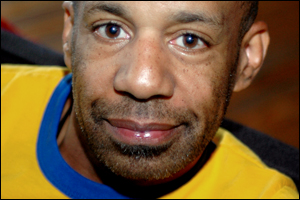
By Sharon Egiebor
ESPN Sports commentator Kevin B. Blackistone is training to run in the Marine Corps Marathon to benefit children impacted by HIV/AIDS in South Africa. Blackistone, a panelist on “Around the Horn,” said he wanted his first marathon run to be for a good cause. “I decided to do the marathon and there are always charities associated with a marathon. I went through their list [and found 25:40] ... I thought to myself, wow, helping orphan, black kids in a developing country from a third world situation, I’ve got to do something for them. I immediately signed up.” Blackistone is one of 56 runners that will be raising money for 25:40, a nonprofit agency that helps children in rural South African villages. The 32nd Marine Corps Marathon, a 26.2-mile run starts in Arlington, Va., goes through Georgetown and the National Mall monuments, and eventually back into Virginia and finishes at the Marine Corps War Memorial. The race will be held Oct. 28. The marathon is in partnership with 40 charities, that support causes ranging from AIDS to leukemia to Marine scholarships and Tourette Syndrome. Blackistone, 47, a contributing columnist on Politico.com, and a former columnist for The Dallas Morning News, said HIV/AIDS has been a special concern. Several of his friends and associates have died from the disease, including his favorite professor in college died, a childhood friend’s partner and a neighbor. “It is just another malady that the black community suffers from unnecessarily. We can through education, prevention and treatment, stop the spread of HIV or arrest the horrible health defects of HIV,” said Blackistone, who returned to his hometown of Hyattsville, Md., to be closer to his family after he left the Morning News last year. ”Medical science is looking for a cure, but we already have ways to stop the spread of it and to give people who have HIV the opportunity to live with it. I think since there is something that we can do about it, let’s do something about it. There are some things that we struggle with because there are no answers. This is something we clearly have an answer to. That’s why I thought it was important.” Unlike some people who have a traumatic experience or are experiencing a life-threatening illness, Blackistone said he is running the marathon because his fiancée Marilyn Farinre challenged him. Farinre participates in several runs from the 5Ks to half marathons. They both ran the Houston Half Marathon Her time was 2.28:15 in 2006 and 2:33 in January. His time in 2006 was 2.15, 15 minutes slower than he wanted and 20 minutes behind Texas Gov. Rick Perry, whose official time was 1:55:53, according to race officials. “I’m following the Jeff Galloway training regiment, which this group is basically following. I’m running two or three times during the workweek. On Saturdays is when you put in your big mileage,” he said. “This Saturday, I’ll be running 18 miles for my training. I’ll be running around White Rock Lake [in Dallas, Texas]. It will be two loops around to make the 18 miles.” This weekend’s run will push him further than the 14-16 miles he’s comfortable with and he has a ways to go toward the 26.2 miles. “This particular training regiment will only take you up to 22 miles. I can add on to that if I want. The idea is that once you acclimate your body to so much mileage, you’ll be able to get from 22 to 26.2 miles,” said Blackistone, who will be co-hosting a sports show on XM satellite radio soon. “Anybody who has every done a big race, half marathon or marathon, knows that adrenaline on race day plays as big part in your ability to finish.” Blackistone, when asked, said he’s not overly concerned about the potential feedback from his fellow sports columnist or the individuals he interviews about his race participation. “I really don’t tell anybody. The only reason people know about this is because I am raising money for a worthy cause. I’ve been active in sports competitively and recreationally. I don’t tell athletes I cover or the coaches that I interview. It is what I do in my private life.” September 29 Thomas J. Fahey Jr. Memorial AIDS Walk & Fun RUN 30 October 14
9
Seventh Annual Sacramento Valley AIDS Run/Walk
AIDS Walk Sioux Falls, South DaKota
San Diego AIDS Walk/Run 2007
6
21st annual AIDS Walk Washington
Indiana AIDS Walk & Ride 2007

By Sharon Egiebor
A nonprofit agency that provides support to South African children impacted or affected by HIV/AIDS will be one of the beneficiaries of the 32nd Marine Corps Marathon. The agency, 25:40, based in Burke, Va., is expecting to raise $25,000 from the Oct. 28 event, said Alec Zacaroli, who operates the foundation with his wife, Amy. The Zacaroli’s founded the agency in 2003 after being introduced to the work of Nazareth House and HOKISA, two organizations in Cape Town that care for children orphaned by AIDS. “We work with AIDS orphans. But these are not orphans in the traditional sense that you might see in China,” Zacaroli said. “Oftentimes, these are children whose parents die or disappear and the children will go to a extended family member. One of the beautiful things that come out of this is that AIDS has not broken the family unit in Africa.” The programs are focused in the Peddie District, a very poor, rural community in Ciskei, a former homeland created under apartheid on the Eastern Cape. “We work with doctors and other people in the community to put in a health care infrastructure,” he said. “We do this on a village by village basis. We target children who are impacted by poverty and by AIDS.” The organization's name is based on a scripture in the New Testament of the Christian Bible, Matthew 25:40 that says "I tell you the truth, whatever you did for one of the least of these brothers of mine, you did for me." Last year 25:40 had five runners in the marathon. This year, 25:40 invested about $2,000 in registration fees and wick-away T-shirts for the 56 people who signed in under their name. Zacaroli said each runner is asked to raise a minimum of $500 in pledges. “If you’re doing something like a marathon, which is a lifetime experience, it really helps to do it in association with a cause,” said Zacaroli, who has run the marathon seven times. “Everybody has been assigned a child. They’ll each have a child that they are running for. I ran for a child, and his picture kept me going the last few miles.”