News 2005-Older
From Ledge magazine
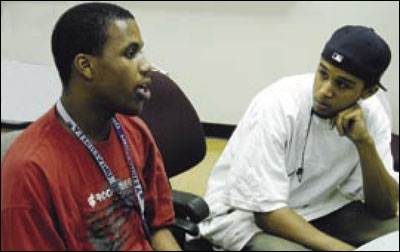
In the spring of 2004, Caya Lewis, senior policy analyst for the Kaiser Family Foundation, visited Howard University and got the real deal on HIV/AIDS on campus, using condoms, and what scares students the most about unprotected sex. The group of students included: Makebra, print journalism major from Los Angeles; L. Michael, a print journalism major from Chicago; Freddie, a print journalism major from Royal Palm Beach, Fla.; Stacey, a public relations major from Atlanta; Shannon a biology major from Georgetown, S.C.; Donavin, a psychology and economics major from Brooklyn, N.Y.; and Chris, an undecided freshman from Cheverly, MD. The candid conversation revealed many disparities between what we know and what we do in the heat of the moment.
Caya: Do you guys see it as a threat to people in your age group?
Stacey: The only thing is that the realness of [AIDS] hasn’t really touched us. We know it’s around us, but we just don’t think about it. There’s a lot of denial.
Freddie: Most of us don’t know people, at least on campus, that are infected with HIV. It doesn’t really affect us the way you might think it would, knowing that D.C. has the highest AIDS rate of any state or district in the country.
L. Michael: We remember when Magic got it and when Easy E died from it, but you never really thought that it was that serious. Now it’s becoming more like cancer or hypertension. In a few years it’s gonna be like Chris Rock said, people are going to be talking about their AIDS acting up like it’s just arthritis or something. It’s gonna be real common.
Stacey: For me it would take someone that looked like me, my same age, in college to get infected. It would take someone like that, going to class, going through their normal day-to-day routine living with AIDS, to make it real for me.
Caya: Half of the new HIV cases are in people under the age of 25. You’re not going to know just by looking at someone. People aren’t going to come out and say they’re positive. Statistics show that it’s actually people that look like you—young and African American—that have HIV.
L. Michael: Everybody has sex and you have to use protection, but I don’t know a whole lot of people that are thinking about HIV when they’re having sex.
Caya: What about other STDs? Has anyone been through the testing process or been scared that they had something?
Makebra: Unless it’s something that you can have forever, people just look at it like, well at least it’s not [AIDS]. I can get this fixed.
Caya: But don’t you think, once somebody gets a STD, it clicks in their head that I got this, I could get HIV?
Stacey: Maybe for the first couple of months, but after that you fall back into your same routine.
Makebra: It’s like, when you have a hangover you say, “I’m never gonna drink again.” But after a month… (Everyone laughs.)
The Condom Question
Caya: Let’s talk about the condom issue. Who buys the condoms? The guys? The girls?
Makebra: Both should.
Caya: Both should. Do both really buy the condoms?
Stacey: No. Not really.
Caya: Who usually buys?
L. Michael: The guys.
Caya: So the guys usually take responsibility for buying the condoms?
Chris: That’s a lot of pressure, right? (Everyone laughs.)
Caya: Buying the birth control pill is pressure. So do people feel comfortable buying the condoms?
Freddie: Nah, not really. I feel like, well, in the Health Center they’re free, right? They have free condoms in the health center. I go there like, “let me get some condoms.” (People in the group start giggling.) And people are in there looking at me like I’m crazy. But [condoms] are “free.” (Everyone starts laughing.) I’m thinking “why go to the drug store and pay $7.99 when they’re free?” I’m just in here trying to get condoms. It’s people sitting in the waiting room waiting on prescriptions—maybe they’re in there because they didn’t use condoms.
Makebra: I think if you want to make sure the condom is right, like no holes no nothing, you provide your own condoms. I think everybody should take responsibility for themselves. It should never be an excuse like, “I ain’t got no condoms.”
Caya: That’s good, because there was a time when mostly girls were responsible for birth control.
L. Michael I wouldn’t take no chances with these girls. Shannon: Vice versa.
Caya: When it comes to safe sex, how does the conversation get initiated about using a condom or not? Does it happen by chance, or does it not happen at all?
Makebra: I think it’s like second nature now. We always talk about it.
Caya: Ya’ll just said that everyone knows someone that got burned once, but now you’re saying everyone uses condoms and everybody has them.
Shannon: Nah, they may have them, but…
Caya: But that doesn’t mean everyone’s using them. So why do you think that is?
Shannon: They always have an excuse.
Caya: Like “let’s keep going and I’ll put it on later.”
Makebra: Not thinking, just being in the heat of the moment.
L. Michael I was in the health center this past week and I saw this freshman girl in there, that I had seen a lot walking from the Quad to the [upperclassmen’s dorm] and back to the Quad. I saw her pick up this HIV/AIDS pamphlet and start reading it, and I thought, “ah, this chick got AIDS.” (The group laughs.)
Caya: Hold on: Freddie goes to the health center to pick up condoms, and people look at him strange. You see this girl reading the flier and you assume that she has AIDS. What’s going on?
Makebra: There’s a stigma about going to the health center.
Freddie: College students don’t go to the doctor regularly. So if you’re in the health center you gotta be really, really sick. So you’re gonna wonder…
Shannon: It all goes back to the myth that you just don’t think it can happen to you. You don’t realize the person with HIV looks just like you. You just think that you’re in a relationship, you know this person, and it’s just me and him.
Caya: Did you guys hear about the outbreak of HIV in the colleges in North Carolina? It got everyone’s attention, because researchers didn’t understand why people in college, people that had so much going for them, would be putting themselves at risk. Also the young men in that study were having sex with other men, but a certain amount of them were having sex with girls, too.
Shannon: The worst problem is men who have sex with other men and don’t think that they’re gay.
Freddie: Yeah. You gotta choose, man.
Caya: So, you think that you should pick either a guy or a girl, like that’s the biggest problem. What about the guys that pick a girl and another girl and another girl, too?
Donavin: That’s not wrong. (Everyone laughs.) As long as you’re open with the other person and honest, no one really cares. You have to protect your own self.
Caya: Do you think people are more concerned with getting pregnant or getting AIDS?
The Group: Getting pregnant.
Trust is a fourletter word on campus
Stacey: How do you tell your husband that you want to get tested?
Caya: You’re talking about your husband, but really, people that are entering into a sexual relationship—the two of you need to get tested, look at each other’s results, and then decide whether or not to have sex. That’s really the way to have safer sex and to make sure the person you’re sleeping with doesn’t have an STD. Yeah, you can use condoms, yes they can protect you, but it is important to know your HIV status and your partner’s status, too.
Makebra: Do you think that if you’re in a monogamous relationship and you ask your man or woman to take thetest, are you saying you think that person is cheating on you?
Caya: Well, what do you think? I don’t think that way, but do you feel people would react that way? Stacey: I think that might offend some people. (With a questioning glare) Like, “you’re askin’ me to get an HIV test?”
Caya: Even after everything we just talked about?
Freddie: Of course if you’re running around or you’re scared you might have it, of course you’re not gonna want to get the test. But if you’re confident in yourself, you know that you don’t have anything to be worried about.
Caya: This is something that starts from the jump. It’s not like you’ve been having sex and all of a sudden you say, “I think that we should get tested.” If you start this in the beginning, if someone acts funky, just be like “look, I’m just trying to be safe.” Come out with your statistics. (Everyone laughs.) Just say, “AIDS is the number one killer. People have it. I want to be safe. I want you to be safe. I just want to know.” If you start off from that standpoint, it’s a lot easier. But even later you have to do it. HIV is too much of a risk for you all—you guys are the people, your age group—that is most at risk for HIV. It’s true. It can be scary, but it’s true.

By Kai Wright
Ever hear the one about some psycho who rigs theater chairs with needles containing HIV-infected blood? You sit down in the dark and, boom, you got “the monster”—as AIDS is known to many on the block.
Every few years, a new AIDS conspiracy theory like this one pops up. A recent survey of African Americans found one in four believe the feds created the AIDS virus and more than half think government is hiding a cure. Whether it’s men-in-black or a lone wacko, we’re always looking for the culprit who set this monster creeping. Blacks account for more than half of all new HIV infections each year—among people under 25, it’s more like two-thirds. So some rightly ask: How can that be?
As one researcher put it, conspiracies aren't just crazy talk; they stem from public health's own betrayals. Take the recent news that New York City enrolled foster kids—mostly black—in clinical trials for new AIDS drugs without their parents’ consent. Getting into these trials is actually a good thing; not enough blacks get cutting-edge treatments. But city officials could have involved the biological parents. After all, many foster kids are only temporarily separated from their birth families. Instead, the city made the decision on its own. As a result, there’s now renewed skepticism in New York’s ‘hoods about valuable medical treatments.
That said, to deal with AIDS, folks are going to have to separate their imagined enemies from their real ones.
Here’s the 4-1-1 on some of the most lasting AIDS ‘spiracies.
The feds created it. Probably not. This theory, started by Soviet bloc scientists in 1987, has been largely discredited. Most scientists agree HIV’s ancestor is a virus found in African chimps. But how’d it jump to humans? The mainstream view is a “natural” transfer through hunters eating the chimps’ meat. Other research, though, suggests it happened during American experiments for a polio vaccine, which was tested on millions of central Africans in the late 1950s and early 1960s.
It’s a tool for genocide. Close enough. Government may not have made HIV, but it sure helped the spread. As the epidemic started, states began outlawing the possession of syringes, as part of the “war on drugs.” That just encouraged addicts to share needles. Nearly 40 percent of black AIDS cases to date trace directly back to shared syringes.
AIDS drugs are poison. Pretty much. In order to stop HIV’s spread, the drugs break into your cells and block its reproduction cycle. That process keeps you alive—no small victory—but also causes ugly side effects. It’s more like getting chemotherapy—every month, forever—than taking insulin shots.
There’s a hidden cure. Not likely, if for no other reason because patenting a cure would make some drug company serious bank. Still, infected blacks are seven times more likely to die from HIV than whites. There’re a lot of unknowns about why. We do know far more blacks than whites learn they’re infected only when they get sick, at which point treatment is less likely to work. This low-rate of HIV testing in black neighborhoods may be our most clear enemy.
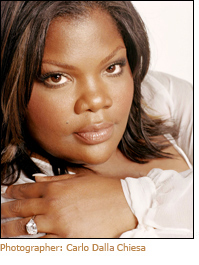
Yes, I did lose my best friend to AIDS and I don't want you to lose yours. As Black women and as a community we need to start speaking up and speaking out on HIV/AIDS. It’s chilling to think that over half of all new HIV cases are a result of heterosexual sex, and Black women account for 72% of new HIV/AIDS cases among women in the U.S.?
We must protect our lives and to do this, we have to use protection every time we’re involved with a man sexually. It’s not about letting it slide this one time either because every time we’re intimate with someone, we put ourselves at risk for contracting HIV/AIDS — a deadly disease that has many faces and doesn’t discriminate. You can be any age, make any amount of money, have an extremely successful career, look gorgeous and still contract HIV and die. If a sexual partner doesn’t want to use protection, then we need to simply move on because our bodies, our health and our well being are worth so much more than a few moments of passion. Our bodies are our temples and we must honor them as such.
Let's say you meet a guy and you really like each other, but he says, "Hey, I’m bisexual." What are you gonna do? You two haven’t had sex, but you’re not ready to deal with the honesty. Do you really want to be lied to? Do you really want him to tell you that you’re the only one, when you know in your heart he has another life and you’re exposing yourself to all of the sexually transmitted viruses and diseases he might have contracted from his multiple partners? If we'd just open ourselves up to hearing the truth, brothers wouldn’t have to be on the down low (DL).
I also think we need to go back to being courted by a man, like they did in the days of old-fashioned romance. Today when we first meet a guy, we want to label him as a potential husband — and we don’t even know if he’s worthy. That’s such a trap. Lets not give our special relationships with men a title early on. Instead, why not just concentrate on being friends first.
I also notice that when a woman stops being a man’s friend and becomes his wife, expectations change. Society gets involved. God forbid he gives her flowers on February 10 and none on Valentine’s Day. We can’t let people define how someone loves us. A woman shouldn’t make her life about her man or his life about her. When I’m in a man’s space, I don’t worry about when I’m not. And don’t be in a hurry to have somebody love you, because when you come from that desperate place, you wind up sacrificing an important part of your life. I did that. I dated someone I didn’t know was a drug user. Now when I play the record back in my head, I think, My God, did I put my children through that for love?
This column was originally published as part of an Institute fundraising campaign sponsored by Essence magazine. During the 2004 holiday season, Essence gave 100% of proceeds from gift subscriptions to the Institute's work.

From BlackPressUSA.com
By Makebra M. Anderson, NNPA Washington Correspondent
While much of the public’s attention is focused on young people contracting almost half of all new HIV and AIDS cases, there is a growing HIV/AIDS problem developing among the elderly, a problem that will only grow worse as baby boomers reach retirement.
“I don’t think older people think of HIV at all except as something affecting young people and few places are trying to build up an information base and let them know that this affects everybody. We have to understand that everybody is liable to become infected,” said Bill Rydwels, a 73-year-old man that has been living with HIV for 20 years.
According to the Centers for Disease Control and Prevention (CDC), there were 1,039,987 reported AIDS cases in 2003 of which, 315,509 (30 percent) were in people over 45.
In 1999, the CDC reports that there were 11,056 reported AIDS cases in people 45 and older. In 2001, an estimated 12,176 people over 45 were living with AIDS and in 2003, approximately 13,825.
People of color are still disproportionately affected.
Fifty-two percent of older Americans living with HIV/AIDS are either African-American or Hispanic, reports the CDC. Among men over 50 living with HIV and AIDS, 49 percent are of color. Among women, 70 percent are of color.
The continued increase in HIV among those over 50 can also be attributed to their living longer, thanks to advanced HIV therapy. According to Rydwels, who works with the Chicago Forum on HIV and Aging, the perception that people over 50 aren’t sexually active is one of the leading causes of high rates of HIV and AIDS among this group.
“People over 50 come from a generation where the discussion of sex was an under the table thing. You may have discussed it with your mate or you may have discussed it very lightly with a close friend. It’s something that professionals didn’t discuss and still aren’t comfortable discussing with older people,” he said. “Nobody wants to discuss the sexual habits of older people. It’s the concept that older people stop having sex and it’s just not a reality. We all need that approval that sex gives us—that we’re wanted and loved.”
According to a study by the University of Chicago, 60 percent of men and 37 percent of women 50 years old and above report engaging in sexual intercourse a few times per month.
Rita Strombeck, a physician with Healthcare Education Associates, a group that has recently developed a continuing medical education program for doctors and nurses to recognize HIV/AIDS as a problem among older people, agrees.
“It has to do with the fact that they [older people] don’t consider themselves at risk and they are. One of the problems with doctors and primary care providers is they don’t recognize it’s a problem with older adults, either,” she says.
According to Patricia Hawkins, associate executive director of the D.C.-based Whitman-Walker Clinic, the popularity of medications such as Viagra has also contributed to the surge of HIV and AIDS among this group.
“Viagra has contributed a lot to this because there is so much more sexual activity among seniors and yet they are not often using contraception because they aren’t worried about pregnancy,” she said. “I don’t think that our medical community has caught up to the impact of Viagra. Sometimes medical professionals think that older people aren’t that sexually active, but what’s really happening is people are much more sexually active now than they were 10 years ago – much more.”
Because of a general lack of awareness in older adults, they have been omitted from research, trials, prevention and intervention efforts. Nonetheless, because of their age, they may be more at risk than young people. For older women, the use of condoms becomes unimportant after menopause.
Not only are older people at risk, the symptoms of HIV are hard to detect because of aging. Sometimes it’s difficult for physicians to determine if a person has the flu or is infected with the virus. Many of the early symptoms such as night sweats, chronic fatigue, weight loss, dementia and swollen lymph nodes mimic the natural aging process.
The National Association on HIV Over Fifty (NAHOF) says that there are specific ways to target older people.
“Specific programs must be implemented for older adults who need to be informed about the transmission and prevention of HIV, more research is needed to study seniors’ sexual and drug-using behaviors to determine HIV disease progression and treatments and programs aimed at reaching health care and service providers should cover misdiagnoses,…treatments, ….support groups and more.”
There is also an education program in Kansas City called HIV Wisdom for Older Women that is dedicated to the prevention of HIV in older women and to life enrichment for those who are infected.
Hawkins, who runs the Whitman-Walker clinic, says a few programs here and there is not enough.
“HIV/AIDS hasn’t been part of their life experiences. Younger people have been learning about HIV ever since they’ve become sexually active. Gay men are different, but for the heterosexual population they are really stunned and often don’t have the same sort of peer support groups that the other communities have.” Rydwels agrees, but doesn’t want older people to get discouraged.
“Twenty years ago everyone was dying all around us, but because of government intervention and drugs I was able to so far beat it. I want people to realize there is a life after becoming infected. It doesn’t mean it is the end. It’s just you have to adjust your way of living,” he said. “If you take care of yourself, eat properly, take your medication and try to live as good a life as possible you can have longevity.”
Makebra M. Anderson is the Washington Correspondent for the NNPA News Service. This article originally appeared onBlackPressUSA.com as "HIV/AIDS will Boom with Baby Boomers" on May 16, 2005.
A Black AIDS Institute Report
December 1, 1999
Friends,
In 1998, the Congressional Black Caucus (CBC) asked the Secretary of Health and Human Services to call a "State of Emergency" regarding AIDS in African American communities. In response to that "State of Emergency," dozens of African American AIDS activists, educators, and health professionals have joined forces with other African American leaders and institutions to develop a strategic action plan to stop HIV/AIDS in our communities.