LeRoy Whitfield, a pioneering young AIDS journalist who lived with the virus for 15 years, died from AIDS-related illnesses on Sunday, Oct. 9. He was 36 years old. Whitfield had for years been among the most recognized journalistic faces of the epidemic. He wrote for publications ranging from Vibe magazine to the Institute's suite of publications about the epidemic as it impacts African Americans. He had been a columnist and senior editor at POZ magazine, and at the time of his death wrote a monthly column, called "Native Tongue," about living with the virus for HIV Plus magazine. The Associated Press, in its obituary for Whitfield, described his writing as having "linked AIDS among blacks with public housing, poverty and violence, which he said contributed to the rise of HIV in the black community." His Native Tongues column was among HIV Plus magazine's most popular features, editor Michael Edwards said in the New York Times' obituary for Whitfield. Whitfield's final column -- commenting further on his fateful decision not to take antiretroviral medicines -- appeared in HIV Plus just days after his death. Until 2003, Whitfield had been among those commonly called "long-term non-progressors," or someone who has been positive for many years without the virus advancing in his body. During that time, he wrote and spoke regularly about the oft-overlooked nuances of AIDS treatment. He was among a minority of voices who questioned whether doctors and AIDS service providers pushed people to start taking the demanding meds too quickly, disregarding their legitmate concerns about the difficulties of side effects and the emotional weight of the decision. When Whitfield developed an AIDS diagnosis, he faced those choices himself. By his own reckoning, he never found a compelling answer. With his t-cells spent and his viral load climbing, he succumbed to a series of opportunistic infections before he resolved the matter. At the time of his death, Whitfield was a finalist for a National Association of Black Journalists' magazine writing award, for a February 2004 article on the challenges that people living longer with HIV present for the AIDS care safety net, which he co-authored with BlackAIDS.org editor Kai Wright. His family held memorial services in his hometown of Chicago, Ill. on Saturday, Oct. 15. A memorial in New York City, where Whitfield lived and worked, is planned for this Thursday, Oct. 20, at 7 p.m. The service will be held in Harlem, at a venue that will be announced later this week. Memorial statements from Institute director Phill Wilson and author/activist Keith Boykin are on the following page. From Phill Wilson, executive director of the Black AIDS Institute The email was direct, to the point, matter of fact—blunt actually. “LeRoy passed away this morning”. It took me back to another time, when the deaths of young gay men were commonplace, a time that was supposed to be over. LeRoy Whitfield was just over 30 years old when he died of “complications from AIDS” on Sunday. He was among a very small fraternity of Black journalists who cover the AIDS epidemic in the African American community. I met him in 1997 when he and I were both on a workshop panel at a conference in Baltimore. He was one of the first people I hired in 1999 when we started the Black AIDS Institute. He was the editor of the first issue of Kujisource, the Institute’s prevention and treatment newsletter. He was smart, AIDS educated and connected to the HIV treatment world, and he died yesterday from AIDS —- not twenty years ago, not ten years ago, yesterday. His death is yet another reminder that the AIDS epidemic is not over for Black folks in America. LeRoy’s life and death with AIDS is a commentary of how complex HIV/AIDS in “Black Face” really is. Diagnosed with HIV in 1990, LeRoy, like many African American’s, was not on treatment. I keep struggling with the question why wasn’t he on treatment. LeRoy was not an AIDS dissident. I remember speaking with him about this many times. He would often point to the potential side effects to justify his reluctance. I would always shoot back, “AIDS has an enormous side effect that trumps the side effects of ARVs any day.” But I don’t believe LeRoy resisted going on treatment because he was afraid of the meds. LeRoy may have been afraid, but if so his fear was of all the things young, poor, Black gay men are afraid of —- rejection, loneliness, disappointment, marginalization, the invalidation of their lives. As fearless as LeRoy was as a journalist, as open as he was about living with HIV, perhaps LeRoy was never able to escape the demons that haunt us all. And how can we, when those fears are confirmed everyday? In his last column for HIV Plus magazine, LeRoy wrote of his home health aide, George, “I can help you, brother, but I can’t save you.” Maybe we can’t “save” all the brothers. But I can’t help believing that we should be able to help more of us. From Keith Boykin, author and activist Just days after he published an article about his experience with AIDS in HIV Plus magazine, my longtime friend and journalist LeRoy Whitfield passed away this morning. A native of Chicago, LeRoy moved to New York in 2000, where he became one of the nation's leading journalists reporting on AIDS among African-Americans. A frequent contributor to Vibe magazine, he formerly served as associate editor at Positively Aware and later served as senior editor of POZ magazine before becoming a freelance journalist. I had not seen LeRoy in several months, but I remember his infectious smile, his beautiful locks (which he later cut) and his engaging personality. He was unusually committed to exposing the truth about AIDS in the black community, and he was unafraid to challenge conventional wisdom. I remember sitting with him over coffee in New York and talking about the state of black America, and I remember lounging with him on a friend's sofa in Los Angeles as we talked about the politics of sex parties. Roy even traveled to a South Dakota prison to interview Nikko Briteramos, a young black man who was the first person convicted under that state's HIV transmission law. LeRoy was very candid in writing about his life as an HIV-positive black man. He wrote about moving into a convent, looking for an apartment, hiring a caretaker and his decision not to take HIV meds. Diagnosed with HIV in 1990, LeRoy lived without drug treatment for the rest of his life, a decision he struggled with in his last years. In August of this year, LeRoy reflected on the wisdom of his decision to refrain from medication. "My T-cell count has plummeted to 40, a dangerously all-time low, and my viral load has spiked to 230,000. I?ve argued against taking meds for so many years that now, with my numbers stacked against me, I find it hard to stop. I keep weighing potential side effects against the ill alternative?opportunistic infections?and I can?t decide which is worse to my mind. I just can?t decide." A working journalist to the end, LeRoy wrote in the October issue of HIV Plus about his recent decision to get someone to take care of him. "After weeks of feeling conflicted about it, I finally came to terms with the fact that I need the assistance of a home health aide to help me manage my unwieldy life with AIDS. Someone to help out with household chores, for example, which because of my fatigue might slide for weeks on end. Someone to answer my calls when my harried friends grow tired of me speed-dialing the numbers to their cells in order to phone in a favor. I knew I had to do something." LeRoy wrote about his personal life but also saw how his life experiences fit into the larger issues around HIV and AIDS. In a February 2001 interview with the New York Times, LeRoy explained "there is no black gay Mecca, no black Chelsea. And because the community is so decentralized, prevention and outreach efforts are even more difficult." He also offered a critique of the AIDS establishment. "I don't think the larger AIDS groups give the voice to the black gay community," he told the Times. "A lot of these men don't have a grip on what they are feeling sexually, and I don't think many of the organizations have a grasp on how to communicate with them." He also saw the connection between AIDS and public housing, poverty and violence, all of which he said contributed to the rise of AIDS among African Americans, LeRoy wrote in the September 1997 issue of Positively Aware magazine. "Widespread violence, for example, is not a reality in upscale gay communities. Gay white men do not overpopulate public housing. Gay communities have no shortage of HIV services nearby." In contrast, he explained that black neighborhoods have ample liquor stores and drug alleys. "AIDS is the gripping issue of the gay community," he said. "For African Americans, it?s the atrocity du jour. Keith Boykin has posted a number of LeRoy´s recent articles on his website.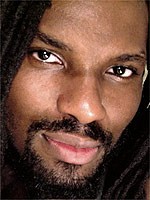
BlackAIDS.org Reports
By Kai Wright
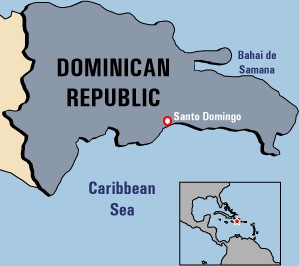
SANTO DOMINGO, Dominican Republic -- Maria has seen worse days, to be sure. Three years ago, she was all but certain to become one of the estimated 35,000 Caribbeans killed by AIDS each year. Her now 175-pound frame had wasted down to a flimsy 90 pounds. “She’s one that, without the drugs, would almost certainly be dead today,” says Dr. Ellen Koenig, who directs the Santo Domingo AIDS clinic where Maria now gets healthcare. Maria tested HIV positive in 1993. Her husband found out first -- and waited four months to tell her. “I couldn’t believe it,” she recalls. She was only 27 years old, she remembers thinking, hadn’t had any children, and now her life was over. “Dios mio.” But Maria was one of the Dominican Republic’s lucky ones. Maria and her husband found Dr. Koenig, who kept them alive by cobbling together a supply of the donated and diverted medicines that make their way into the island’s capitol city, largely through individuals and organizations in the United States. Maria’s mother wasn’t so fortunate. She died of AIDS four years ago, before the family discovered a way to get her treatment. “She liked to drink a lot and didn’t take care of herself,” says Maria, though the clinic they took her to couldn’t offer much more than vitamins and healthy food anyway. “That’s why I’m so lucky. I had the opportunity that my mother never had.” Americans are now well versed on the daunting challenges of sub-Saharan Africa’s AIDS epidemic. But the similarly acute condition just off our southern shores is much less discussed. The Caribbean has the world’s second highest HIV infection rate -- 2.3 percent of the population, or nearly half a million people, is infected -- topped only by sub-Saharan Africa. In the Dominican Republic, UNAIDS estimates 1.7 percent of the population is infected, but studies in poor, rural areas have put infection rates there as high as 12 percent. For the vast majority of these people, the difference between life and death remains mere chance. In the Dominican Republic, the wealthy travel to Miami or New York City for care. Some middle and working class folks find ways to buy meds through family and friends in the States. The poor – particularly Haitians who toil for pennies in the D.R.’s sugar cane batays – simply pray they don’t get sick. A complex web of international aid programs is working to reshape this reality. Indeed, the global movement to bring AIDS drugs to poor people is well represented in the Dominican Republic. But if the experiences of people with HIV/AIDS here is any indication, that hodge-podge movement remains a woefully inadequate response to the still building crisis. Help Comes, But Slowly In 2001, the world’s wealthy nations established the Global Fund to Fight AIDS, Tuberculosis and Malaria. The idea was to amplify individual donor efforts by bringing them together under one agency, which would then work one-on-one with poor nations. The lion’s share of the money has been targeted at AIDS. From the first, controversy gripped the Global Fund as stakeholders wrestled over where and how to spend its resources – and over who should make such decisions, the donors or the countries getting the aid. Not the least of the controversies surrounded the U.S. contribution. The Bush administration established its own unilateral effort and was reluctant to pump money into the Global Fund as well without guarantees of accountability. Its own program gives help with far more strings attached – not all generic drugs are approved; prevention money comes with restrictions on work with prostitutes, among other things. Dr. Koenig remembers when she and her colleagues in the national laboratory turned up the D.R.’s first diagnosed HIV infection back in the mid-1980s. It was the late-1990s before she could actually treat anyone, by recruiting studies of new drugs to take place here. But in January 2003, the Global Fund approved the Dominican Republic to receive $48 million in aid. The challenge, say local activists and service providers, has been translating that promise into actual drugs for dying patients. Not until May 2004 did the Global Fund finally sign an agreement with the national body that was established to administer the money. By this June, two and a half years after the initial approval, the Fund had only released $5.3 million of its pledge. The country’s heated 2004 presidential elections held up progress, says the United Nations, one of the Fund’s key players. And the Dominican government struggled to establish systems for administering the money that met the Fund’s standards. Local observers also question the national government’s motives, pointing out the long history of rampant corruption in Dominican politics. While patients and doctors awaited action on the Global Fund pledge, former President Bill Clinton’s foundation orchestrated a deal that brought Indian-made generics into the country beginning in late summer 2003 for around 800 people. Some drug manufacturers have also negotiated special, lower prices for the country. Clinical trials have offered others a route to care. But all of these efforts added up to treatment for just a few hundred people. Still Not Enough Local care providers say things have changed suddenly in recent weeks. The money pipeline seems to be finally open. “The last couple of weeks have been really wonderful,” gushes Dr. Carlos Adon, who helps Koenig run her Santo Domingo clinic. Today, he says, all of his patients are in treatment, largely through the national program, paid for by the Global Fund. Ironically, Koenig says the problem now is that the national program is pressuring the clinic to accept more patients than it has capacity for. But even with the Global Fund money flowing, serious challenges remain. As of September, only 2,000 people were getting drugs, and the plan still calls for only 6,000 people to ultimately get them. Eugune Schiff, the Caribbean coordinator of the AIDS treatment watchdog group Agua Buena, also notes that 17 of the country´s 26 treatment sites are in the capitol, which makes them virtually useless to the truly poor in the vast, rural areas that make up this island. Even at those urban sites, crucial services remain out of reach. Tests used by doctors in the U.S. and elsewhere to determine what kind of treatment each patient needs cost more than even most working families make in a month. And some of the key medicines used to fend off infections that pray upon the weak immune systems of people with AIDS are simply unavailable here – at any cost. Dr. Adon says he can do nothing for a patient with encephalitis, for instance. “They will die from it,” he somberly concedes. The necessary drugs just don’t come into the country. “There is no way we can treat them.” That’s why Maria, though now healthy, is blind in her right eye. While sick a few years ago, she got an infection that causes blindness. It went wholly untreated because there were no drugs available – and there still aren’t. She lost her sight slowly over the course of a year. “I really didn’t know what was happening,” she recalls. She soon discovered her doctors could do little to help. “There is medicine, but it hasn’t come to this country. And it is very expensive.” So, like poor Blacks wrestling with HIV throughout the Caribbean, she learned to live with less. “I don’t see out of that eye anymore,” she shrugs. “I have one eye, not the other.”
Column: Dispatches from Black America
By Phill Wilson
Post-Katrina, everyone’s obsessed with whether George Bush cares about Black people. Kanye West thinks he doesn’t; Laura Bush insists he does. After all, the first lady said, “I live with him. I know what he believes.” Maybe Laura is right. Maybe W loves him some Black folk. But who cares? It’s the wrong question. The President is not our father. The role of the government is not to be our friend. It doesn’t matter if they care about us. What matters is their competence. Are they capable, for example, of mounting an immediate and effective response to a natural disaster that hits Black folk especially hard? In the case of Katrina, the answer is a resounding no. Dying people were left stranded –- and worse. With guns blazing, the police in Gretna, Louisiana, actually forced hungry, thirsty, and desperate people back into the flooding city. Most of these people were Black. So what matters is not whether W. loves us or hates us. What matters is that he didn’t deliver. As former President Clinton said in an ABC interview, "This is a matter of public policy, and whether it's race-based or not, if you give your tax cuts to the rich and hope everything works out all right, and poverty goes up, and it disproportionately affects Black and Brown people, that's a consequence of the action made.” But Hurricane Katrina is merely this administration’s most spectacular failure. Under George Bush’s watch, the number of poor people in this country has surged by 4.5 million. There are now 37 million Americans – 13 million of them children—who are living in poverty. A lot of people said Bill Clinton liked Black folks, and maybe he did. But again, wrong question. Under the previous administration, poverty rates fell from 15.1% of the population at the start of Bill Clinton’s presidency to 11.3% at the end of it -– still way too many, but moving in the right direction. The Bush administration has announced an estimated $500 billion in post-Katrina reconstruction plans. How does the President propose to pay for it? Canceling some of the tax cuts for the rich? Nope. Rethinking the $5 billion a month we’re spending in Iraq? Wrong again. Instead, he wants Congress to cut spending, which means further shredding the already threadbare safety net. Bush has acknowledged the housing crisis the storm created. But one of his administration’s longstanding legislative priorities has been to scale back rental assistance to poor families nationwide. In keeping with that goal, Bush’s relief plan hasn’t even nodded in the direction of distributing rental aid. Meanwhile, apartment vacancy rates in undamaged areas of New Orleans were at 20 to 40 percent before the storm even hit. Analysts say we could house as many as a third of those made homeless without constructing a single new unit, but to do so we’d have to make those landlords take Section 8 vouchers -- and properly funded them. The reconstruction plan also keeps continuity with the administration’s scorched earth attack on the healthcare safety net. The budget currently before Congress would strip $10 billion from Medicaid over the next five years anyway. Medicaid is one of the few resources African Americans living with HIV have been able to turn to for treatment; weakening the system will make the already awesome racial differential in survival rates among people with AIDS grow even larger. It was policies like these that totally ignored the needs of the poorest among us that exacerbated the devastation of Katrina. And that brings us to the other natural disaster that the Bush administration has willfully ignored. The stats are now familiar to everyone accept the White House: There are more people living with HIV/AIDS today than ever before, and nearly half of them are Black. Black people represent over 50% of all new cases in the United States, over 56% of the new youth cases and 72% of new female cases. What has Bush done about this carnage? He’s cut funding for federal HIV prevention programs, recommended changes to the Ryan White CARE Act—the primary federal funding vehicle for AIDS services—that would drastically restrict what services are available to the poor Black folks, and cut comprehensive sex education that has proven effective at slowing the epidemic, in favor of unproven abstinence-only curricula—which forbids any discussion of how to use a condom or avoid STDs. We can spend all day speculating about whether or not these measures are being implemented out of some racist intent. That’d be a mistake. If you go to a car mechanic who disconnects your brakes and you are killed in an accident, you are no more dead if he did it because he didn’t “care” about you or if he was just plain incompetent. Natural disaster or public health disaster, mechanic or president, we need someone who can deliver. Competence matters.

Column: In Times Like These...
By 'Rolake Odetoyinbo
It saddens me to see how HIV can break not just bodies, but spirits, hearts and souls. We all carry around some form of pain, but for those of us living with HIV, there’s so much pent up anger, pain and regrets. We can’t forgive ourselves for getting infected and causing our loved ones so much worry. We see fear and concern in their eyes each time we fall ill even with something as common as malaria, and we feel guilty just watching them care for us and fret over us. So I want us to spend this new week trying to forgive. First on that long list is ourselves as individuals. None of us willingly and knowingly went out to acquire HIV. Some of us were careless and misplaced our priorities, some were out rightly stupid and some totally ignorant. A good number however got infected just loving. We need to come to an understanding of this, so we can let go of the guilt and just pat ourselves on the back, hug our fat, slim or frail bodies and say: “Body, I forgive you for getting HIV” A lot of us also just can’t stop blaming the person who infected us. But until we forgive them and stop apportioning blames, we won’t ever move forward. It’s really sad if that person is a dead spouse who left you with children to raise all by yourself and, worse still, if it’s an ex who’s still in denial and keeps going on like all is well. You want to tear their eyes out so they can protect other people, but you have no control over them seeing, as everybody must take responsibility for their own lives and health. Remember you’re not Voltron--Defender of the Universe, so all you can do is lend your voice to the campaign against the spread of HIV and against the stigma that makes people hide and deny their HIV infection. We need mending in our hearts and souls. We need to allow God to forgive us as we forgive those who sinned against us. For those of us who have been stigmatized and unfairly discriminated against, carrying the pain and being afraid to open up again won’t make things better. We must come out of our shells and face the world again. Living in shame and fear would do us no good, so take life head-on, forgive people for their ignorance and stupidity and show them a fresh face of HIV. Teach them people living with HIV can and do have a meaningful and productive life. I know this isn’t the easiest thing to do, but we must LIVE with HIV, not die from AIDS and its complications. We must forgive so we can move on with our lives. I have found peace because I’ve forgiven God, forgiven myself, forgiven a couple of loved and once-loved ones and I’m still daily learning to forgive some more people I come in contact with. Most importantly, let us forgive God. I had a running battle with Him for a long time, because He not only sat by and allowed HIV into my life, He iced the cake by not healing me as soon as I knew my status and asked Him to take this virus away. It wasn’t until I made peace with God that my heart got mended and He gave me a new extraordinary life. Now I have life in abundance and I can tell you without blinking an eyelid that this sickness is not unto death. My dear friends, please ignore those hyper-spiritual brethren who have set themselves as God’s special advisers; they make you feel miserable because your healing hasn’t come. They add guilt to your pains by saying you lack faith. But all God requires from you is faith like a mustard seed, not like a mountain. That you sought God out is proof that you believe in Him. Sometimes, these senior brothers of God insist there is a sin in your life stopping your prayers. Just know that as far a God is concerned, your sins were forgiven and forgotten the day you asked. Don’t allow anybody to take you on a guilt-trip again. Any and every question they have about your healing should be directed to the Healer! Rolake Odetoyinbo is the project director of Nigeria’s Positive Action for Treatment Access. Her column appears monthly on BlackAIDS.org.

By Craig Washington
It has been almost three months since the Centers for Disease Control and Prevention (CDC) reported the alarming findings of a study in which 46% of Black homosexually active men surveyed in five major cities tested HIV positive. Phill Wilson, executive director of the Black AIDS Institute, expressed outrage at the lack of outrage about this astounding statistic in a recent column. He is most troubled by hearing no response from Black gay men themselves. As a fellow poz Black man, I share Wilson's anxiety. I do not know if this sample is completely accurate, but I do know that the infection rates of Black gay men are not going down. This is just the latest in a litany of CDC reports indicating that our prevention efforts are failing. I doubt that this study will move us to take to the streets, but maybe the buzz will at least cause us to pause and reflect before we act, to back up before we try it again. Sexual behavior is as complex as it is primal and cannot be policed by billboard messages or sex-negative directives. Black gay men need the support of viable and affirming communities to maintain their well being, so HIV prevention must be incorporated into a larger context of Black gay community development and multi-issue activism. Two crucial realities are articulated by this national silence. One is that Black men are not valued enough by our society to merit any public alert regarding their condition. The other is the dearth of infrastructure and capacity among Black and gay or same gender loving men. Too few of those who are not Black and gay give enough of a damn about those who are for this to be truly appreciated as a crisis. And not enough of us who are Black and gay are either willing or able to mount the kind of response this crisis demands. These two realities shape, and are shaped by our political and social climate as surely as the ocean feeds and is fed by the rain. The majority of Black heterosexuals have made it resoundingly clear that their HIV-related concerns are reserved for women and children. Many Black gay men feel isolated and disconnected, having no evidence of a legitimate Black gay or same-gender-loving community among them. We cannot dismiss the achievements of our public leaders and organizations, as well as the unheralded triumphs of everyday people. But nor can we deny that they are still not enough and that we have to find the means and motivation to do more. We have not yet amassed the resources required to grow strong communities and mobilize a viable movement that can take on a full range of issues, including but certainly not limited to HIV. Consider, for example, Atlanta -- the now so-called Black gay Mecca. We have no media or bookstores owned and operated for or by openly gay Black people. We have no history center to which I can refer a young man to see an exhibit on Black LGBT history, to learn about Essex Hemphill or Pat Hussein, and thereby learn about himself, his purpose. With the exception of the new Urban Tea Party, we have no place to come together outside of the clubs -- none of which are Black-owned, in none of which can we commune in the daylight. I am by no means a club hater, but clubs are designed to meet specific popular demands. They are not equipped to serve as sites for our cultural enrichment and political autonomy. The same reality exists in chocolate cities across the country. There exist few places where, on any given day, Black LGBT people can enter and expect to see others like us, and thus find refuge and sustenance. Such public facilities would enable us to expand our interconnection and reciprocal support far beyond our immediate sexual and social circles. We need a diversified host of Black queer cultural, political and media institutions in order to create a self-loving, extended community that is, as Hemphill might say, "capable of whatever, whenever" the call to action is sounded. Surely we can secure enough Black gay capital to fund our organizations and own the buildings they occupy. Those of us who possess the vision have to convince those who possess the means that the vision is worth their investment. This level of development will take years, perhaps decades. We must determine what can be done right now, as well as in the ensuing days, weeks and months to come. I believe that, as always, it all comes down to the individual. I must take stock of my own commitments to my brothers “in the life.” When I am about to do-the-do, will my desire for raw pleasure obliterate my resolve to not infect my partner? When I encounter someone whom I do not find attractive on the street and we clock each other, how do I interact? Does he have to be cute in order for me to speak? How do I talk to brothers at the workshop who live for Internet sex sites and are hooking up 24/7? Do I lecture or do I listen? Ultimately, the personal norms and values we choose to honor as well as the revolution we build will make the difference if one can be made.