How the ACA Will Affect People Living With HIV/AIDS: The Act's Potential to Transform the AIDS Response

The second in a series that examines the Affordable Care Act's impact on people living with HIV/AIDS.
In contrast to our current health-care system, which makes it difficult for PLWHA to obtain the care and treatment they need, the Affordable Care Act (ACA) has the potential to sharply increase health-care access for PLWHA. In 2012 Jeffrey Crowley, former director of the White House Office of National AIDS Policy, and Jen Kates of the Henry J. Kaiser Family Foundation surveyed the ACA's key provisions for PLWHA (pdf). The pair wrote: "The passage of the ACA provided significant, new opportunities for expanding access and coverage to millions of people in the United States, including people with HIV."
AIDSVu Maps Depict Impact of HIV in America
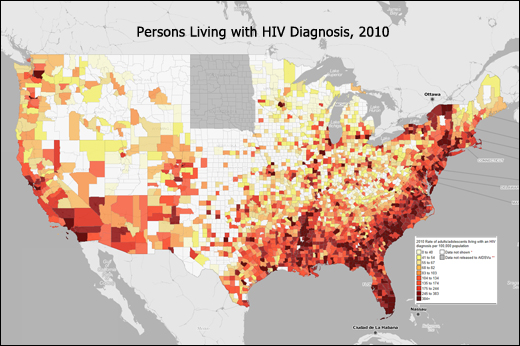
National HIV Testing Day marked the third annual update to AIDSVu, an interactive online tool that maps the HIV epidemic across the United States.
Highlights from the 7th International AIDS Society (IAS) Conference Opening

June 30, 2013, was the opening plenary of the 7th International AIDS Society (IAS) Conference on HIV Pathogenesis, Treatment, and Prevention in Kuala Lampur, Malaysia.
Read more: Highlights from the 7th International AIDS Society (IAS) Conference Opening
What the DOMA Ruling Means for LGBT Families of Color

The Supreme Court’s Defense of Marriage Act decision is a major victory for the economic justice of LGBT Americans of color. That’s because LGBT couples of color have higher rates of poverty and are more likely to have children in their household than white LGBT couples. Consequently, LGBT couples need the financial shot in the arm that the legal recognition of marriage can give. Today’s ruling will help to ensure that some of America’s neediest couples receive it.
Read more: What the DOMA Ruling Means for LGBT Families of Color
Black Gay Men Have a Right to Exist
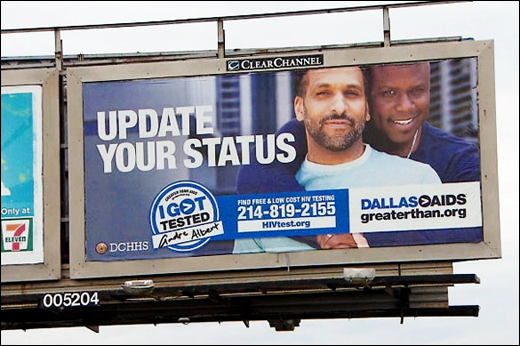
In recent news a Greater Than AIDS billboard encouraging Black gay men to know their HIV status triggered the anger of many Dallas commuters who complained that it supported homosexuality. The ad did not feature sexual suggestion or any of the other visual cues typical of gay-focused marketing. Instead, it showcased two men embracing each other in a warm and loving way that celebrated relationship building, peer accountability and community support. The billboard outraged many commuters despite this conservative approach.