Black Gay Men Have a Right to Exist
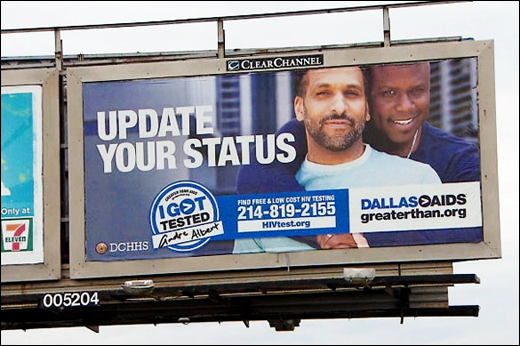
In recent news a Greater Than AIDS billboard encouraging Black gay men to know their HIV status triggered the anger of many Dallas commuters who complained that it supported homosexuality. The ad did not feature sexual suggestion or any of the other visual cues typical of gay-focused marketing. Instead, it showcased two men embracing each other in a warm and loving way that celebrated relationship building, peer accountability and community support. The billboard outraged many commuters despite this conservative approach.
According to The Dallas Morning News, Dallas County has the highest concentration of HIV infections in all of Texas. Throughout the city, the Greater Than AIDS campaign features many billboards, most highlighting heterosexual women. But as the outrage over this billboard indicates, the discussion of gay-related issues gets undermined by the rigid and stigmatizing views of homosexuality that still grip a large portion of this country. The consequent lack of attention may well be linked to the consistent rise in infections within Dallas County.
For Black gay men, normalizing the conversation around HIV-related issues and encouraging healthy behaviors requires a more transparent type of advocacy than many of us have exhibited in the past. Having more Black gay men coming out about being HIV positive--not to the world at first, but to other men within their social networks--will create additional intimate opportunities for men to support one another, especially within difficult environments.
Black gay men also need to take a more active role in our health care and stop allowing ourselves to be confined to silent, secret and shameful existences. Great strides have been made in the area of advocacy, but our community is still very fragmented and disjointed. Many HIV-positive Black gay men still need to seek care, engage the resources that are available to them and benefit from recent treatment advances.
As the HIV-treatment cascade depicts, strategies to increase testing have been successful, but efforts to retain individuals in care have been far less successful. With greater support from our peers, internal obstacles, societal barriers and stigma will not feel so burdensome. Honest, peer-driven conversations encouraging people to become actively involved in care will reduce the isolation and marginalization that many Black gay men who have been diagnosed with HIV face.
We must take ownership of our obligations to one another when it comes to fighting this epidemic--despite the negative environments that we may live in. There are two types of environments we can live in: those we thrive in and those we merely survive in. We have the power to create environments we thrive in, but it takes buy-in from everyone. Let's continue to fight for our right to exist.
In this issue we kick off the first in a series of stories that will examine the impact that the Affordable Care Act will have on PLWHA. We also provide you with information about the consumer-friendly Healthcare.gov site and toll-free number--800-318-2596--that the Department of Health and Human Services has launched to help Americans prepare for open enrollment in the health insurance marketplaces come October.
Our friends at Kaiser Health News report on how Blue Cross and Blue Shield is leading the charge when it comes to participating in those marketplaces, as well as on how both public officials and the private sector alike are preparing for the biggest health insurance open-enrollment season our nation has ever seen. Finally, we run a Colorlines analysis of the recent Supreme Court decision on affirmative action.
Yours in the struggle,
Rig Rush
BTQ National MSM Engagement Coordinator