News 2010

Cleared for Takeoff: What Ending the HIV Travel Ban Means for Black Americans
In October 2009 the Obama administration announced its decision to end the ban prohibiting HIV-positive people from traveling and immigrating to the United States. The highly celebrated change took effect January 4. We asked Frank J. Oldham Jr., president and chief executive officer of the National Association of People With AIDS (NAPWA), for his thoughts on how this important policy change might affect Black America's fight against AIDS. Why was ending this ban so important? How will this change impact Black people--both HIV-positive and HIV-negative--particularly in the United States? What possibilities exist now for Black people that didn't exist before? What do Black Americans stand to learn from Black people fighting AIDS around the diaspora? What are the implications for Black Americans now that the International AIDS Conference will be held in Washington, D.C., in 2012? Does holding the conference in D.C. have implications for D.C.'s beleaguered AIDS-prevention efforts? What should members of the AIDS community, particularly its leaders, do to continue the momentum of this decision?
A civil rights issue has been addressed for minorities, gay people and women of all colors with HIV. It's long overdue. It was a completely backward policy.
When someone dies of AIDS, they're really dying of poverty, racism, homo-hatred, stigma around substance abuse and no health care. African Americans make up 13 percent of the U.S. population and [almost] 50 percent of the AIDS population. Lifting the ban helps remove stigma and saves lives. NAPWA represents 1.1 million Americans living with HIV, over 50 percent of them Black, and we don't want them to progress to AIDS, [but they can] if they don't get care. Lifting the ban ensures that we can learn from people overseas how to best get people into care and keep them there.
The ban said that HIV is so horrible that if you [have HIV and] have family in other countries--whether it's Trinidad, Jamaica or a country in Africa--and you left this country, you could [have trouble] getting back in. If you had your meds and they saw them at the airport, you could be stopped. It's a total outrage. They were increasing AIDS stigma. The ban was an obvious injustice and violation of civil rights.
We can learn so much, for example, from countries in Western Europe, where the AIDS epidemic has not grown like ours. When you look at the infection rate in Washington, D.C., and compare it to HIV infection rates in London, Paris, Copenhagen and other Western European capital cities, we should be totally ashamed. There is also a lot to be learned from Africa, and a lot that we can offer in terms of controlling and ending their epidemic. Letting HIV-positive people from other countries into the U.S. who can present us with HIV interventions that are effective and have been evaluated, [helps us make] a stronger case to [encourage] the CDC to develop and implement similar interventions in the United States. Banning people with such experience and expertise has erected an iron curtain of fear, and it has been deadly. This is especially true for gay men of all colors. I think that we should take every opportunity possible to learn more about access to care and how to stop HIV so that people don't progress to AIDS.
I think it's a dynamic and powerful statement. The District, which is 80 percent Black, has the highest HIV infection rate in the country. It is an example of the African American AIDS epidemic at its most tragic. With Washington being the capital of the U.S., having other countries come here can energize the domestic agenda. We have people of color in powerful places--African American people who understand the epidemic. We have those allies, and we need to work with them.
AIDS activists can help with health care reform and ending poverty and [can] support the Obama administration. We don't need to be so critical of the administration that we shoot ourselves in the foot. The AIDS community should embrace a new AIDS activism--a constructive and positive engagement with our allies in government. Rather than picking apart their decisions, we should work with and support them to get the best care and programs for people living with HIV/AIDS. It's a once-in-a-lifetime opportunity.
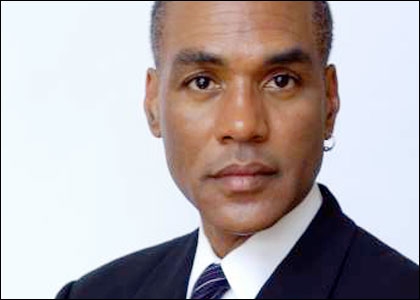
Opinion Editorial by CEO and Founder Phill Wilson
Young Black Men Are Precious, Too
My recent op-ed piece entitled "Precious, and a Princess" kicked up a firestorm.
Some readers were offended because I compared the lives of some young Black women to the life of Claireece "Precious" Jones in Lee Daniels's film Precious: Based on the Novel Push by Sapphire--even though many Black females live under the burdens of poverty, domestic violence, molestation and, yes, HIV infection. One reader was upset that I talked about teaching our daughters how to use condoms rather than merely encouraging abstinence. I agree we should encourage our daughters to abstain from sex until they are in healthy, stable relationships. But there is a large (and growing) body of research indicating that teaching our children only abstinence--rather than comprehensive sex education that includes abstinence as well as clear safer-sex guidelines--leaves them in greater danger of having unprotected sex and becoming infected with HIV and other sexually transmitted diseases. HIV/AIDS is deadly. We have a responsibility to ensure that our children have every possible weapon to protect them from infection. Another reader attributed Black women's struggles to their embrace of feminism rather than to structural issues such as racism, failing public-school systems and the declining availability of manufacturing jobs that pay livable wages to men who have a high school education or less. But the most provocative comment came from a man who chastised me for focusing on the plight of Black girls and women, because Black men are in far worse shape than Black women. And by almost every measure, he's right. However, this is not an either-or proposition. "Black women fare badly" and "Black men fare worse" are not mutually exclusive facts. Raising Black women up does not mean pushing Black men down. Suggesting that we take better care of our daughters does not preclude the need to take better care of our sons. But having said that, I want to say a few things about the condition of Black boys and young men. Recent data show that 10 percent of white men are unemployed, compared with more than 18 percent of Black men. And these statistics reflect only those who are still looking; the actual unemployment rate for Black men is considerably higher. For example, while Detroit's official unemployment rate is 27 percent, its mayor estimates that the city's real unemployment rate is approaching 50 percent. Among young Black men without a high school diploma, the data are catastrophic: By official counts, nearly half of them have no jobs or even prospects for employment. And these rates are based on labor-force numbers that exclude those in prison. Given that there are five times as many Blacks behind bars as whites, including the incarcerated would make the terrible unemployment gap even worse. Black boys and young men are 40 percent of the male U.S. prison population but only 13 percent of the male population in the United States. On the sexual-health front, if research shows that half of Black girls ages 14 to 19 have an STD, the rate must also be high among our boys. In 2006, Black youth ages 13-19 accounted for 69 percent of new AIDS cases among teens. Research also shows that the HIV rate among urban gay and bisexual Black men under 30 is in the range of 50 percent. Recently the Kaiser Family Foundation and the Black AIDS Institute conducted focus groups on attitudes about HIV/AIDS in Black communities. One of the panels involved only Black men. In addition to asking their perspectives on a host of AIDS-related issues, we inquired about the state of their lives. Some of the answers we heard were sobering. We learned, for example, that young Black men don't just feel isolated from white America--in fact, many of them have written off white America and have long given up on being accepted by the larger society. The real problem is that they feel isolated from Black adults, leaders and institutions, from the community that they would traditionally turn to when mainstream society rejected them. Many young Black men believe that Black America has rolled them under the bus--that the oppression they face is not coming only from white people. White women, they say, aren't the only ones clutching their purses and crossing to the other side of the street when they seem them coming; Black men also feel that Black institutions have abandoned them. Phill Wilson is founder and CEO of the Black AIDS Institute.
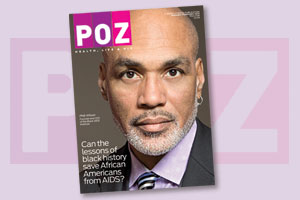
Institute CEO and Founder Phill Wilson is Interviewed by POZ Magazine
Can the Lessons of Black History Save African Americans from AIDS
POZ Magazine graces its cover with our own Phill Wilson.
Phill Wilson, CEO and founder of the Black AIDS Institute, calls on members of his community to remember their past—in order to spare future tragedy. As part of the team behind a new, national AIDS awareness and testing campaign, “Greater Than AIDS,” Wilson reminds the world that black Americans are greater than any challenge they have ever faced—including HIV/AIDS. Click here to link to the POZ Magazine interview.

South Africa Implements New HIV/AIDS Strategy
South African president Jacob Zuma may seem like an unlikely advocate for HIV prevention. Earlier this year it was revealed that he had fathered a child out of wedlock, even though he has three wives (and a new fiancé, who is not the mother either). And before he was acquitted in 2006 of raping an HIV-positive woman, he said he hadn't used protection during sex, choosing instead to shower in a misguided attempt to ward off HIV.
But despite his controversial personal life, Zuma is at the helm of South Africa's shift to an ambitious new AIDS-prevention-and-treatment plan.
On December 1, 2009, he announced that the country would be scaling up its fight against AIDS in order to meet the goals of its national strategic plan: to reduce the rate of infection by 50 percent by 2011 and to provide antiretroviral (ARV) treatment to 80 percent of those in need. South Africa intends to expand the pool of HIV-positive people eligible for treatment, offer comprehensive HIV services at all health facilities, and increase access to HIV-counseling-and-testing services.
And in March, minister of health Aaron Motsoaledi announced a national campaign to dole out 2.5 million condoms over the next year and test 15 million people for HIV/AIDS by 2011.
"I think this indeed indicates strong government commitment to fighting the epidemic," says Jonathan Berger, a senior researcher at South Africa's AIDS Law Project.
For years South Africa's AIDS policy seemed intractably muddled, largely because of former president Thabo Mbeki, who announced in 1999 that the drug zidovudine (AZT), which helps prevent mother-to-child transmission, was toxic and that therefore the government would not be providing it.
Later he questioned whether AIDS was caused by HIV; restricted the use of donated nevirapine, an AIDS medication; and delayed the implementation of a national ARV-therapy program, all while employing a health minister who became known as Dr. Beetroot for espousing the AIDS-fighting benefits of garlic, lemon and beetroot over ARVs.
Between 2000 and 2005, more than 330,000 lives were lost as a result of South Africa's inability to implement a feasible, timely ARV-treatment program, according to researchers at Harvard's School of Public Health.
The national strategic plan was developed in 2007, during Mbeki's second term of office, but the government did not truly focus on implementing the plan until Mbeki was recalled from office in 2008, according to Berger. The appointment of a new minister of health "signaled a decisive break with the past," he says, and Zuma's election and appointment of Motsoaledi "have been central to the new commitment."
Still, experts doubt that South Africa will be able to fulfill its ambitious new goals. The country just doesn't have the ability to thoroughly implement its new AIDS plan, observes Kevin Kelly, director of the country's Centre for AIDS Development, Research and Evaluation. HIV-prevention efforts so far have been "dismal" on the municipal and community levels, where the local organizations that support people living with HIV have not mobilized their fragile network to integrate prevention into their message.
Although South Africa has seen some success in its efforts to encourage youths to use condoms and to be wary of riskier sex practices, it must improve the way it teaches strategies for wellness and prevention to people already living with HIV, Kelly says. In addition, he explains, it cannot just latch onto relatively easy-to-implement strategies like HIV testing and male circumcision without developing counseling and treatment frameworks around those approaches.
But Kelly believes that by judiciously considering how to implement different interventions on a community level, instead of blindly hoping that the strategies in place will take root, South Africa will be in a better position to meet its prevention and treatment goals. "There's a good chance of creating a foundation for a new type of response, where people actually get more intense and more confident about the possibility of preventing HIV," he says.
As for Zuma's personal drama, Berger doubts that it will have much power to undermine the fight against HIV/AIDS. "I'm not convinced that people will follow his example and not use a condom just because he's the president," he says. "But having said that, [I will also say that] he has weakened his stature as a leader and as someone who walks the talk." Tina Peng is a New York-based freelance reporter who has covered health issues for Newsweek and for South Africa's Business Day Weekender.
In this issue we feature two stories that speak to the power of Black leadership. We are very excited to publish a Q&A with longtime AIDS advocate and activist California congresswoman Maxine Waters. Nearly 25 years ago Rep. Waters was among the first members of the Congressional Black Caucus (CBC) to step up regarding HIV/AIDS. Her personal leadership has been integral to Black America's fight. In fact, the Minority AIDS Initiative funding AIDS services in communities of color was created while she chaired the CBC. Under the leadership of its president, Jacob Zuma, South Africa has overhauled its AIDS policy. We have long awaited this change and, therefore, welcome it. Not only does it speak to the power of tenacity and not giving up, but it also reminds us that you can't prejudge people. Indeed, HIV/AIDS is such an important issue that we don't have the luxury of writing anybody off. Unlikely allies exist the world over. Our job as advocates and activists includes uncovering what, in a leader's experience, will help him or her understand why addressing HIV/AIDS is of vital importance. Finally, Black Hollywood stars flock to Ohio this week to participate in the Test 1 Million Ohio Celebrity Tour. Celebrities Danny Glover (Death at a Funeral and the Lethal Weapon series), Rockmond Dunbar (Prison Break and The Family That Preys), Lamman Rucker (Meet the Browns and Why Did I Get Married Too? ), Vanessa Williams (Showtime’s Soul Food) and Tony Award nominee Sheryl Lee Ralph (the original Broadway production of Dreamgirls) will visit Dayton, Oxford, Cleveland, Cincinnati and Columbus, Ohio, to fight AIDS stigma, raise awareness about the magnitude of HIV/AIDS in Black communities and encourage people to get tested for HIV. The tour--which kicks off on Wednesday, April 21, at HBCUs Central State and Wilberforce universities--features a rally, a celebrity speaker, spoken-word performances and a step teaser by Alpha Phi Alpha Fraternity, Inc. On Thursday, April 22, the tour stops at Miami University in Oxford, Ohio, where representatives of Delta Sigma Theta Sorority, Inc., will host a Q&A and issue a call to action. In Cleveland on Friday, April 23, the Department of Public Health will partner with Radio One station 107.9 WENZ-FM to host the theatrical HIV/AIDS and STD-awareness play Secrets, performed by students from the Cleveland School of the Arts. Ms. Ohio, Ashley Miller, will make an appearance and speak to the youth participants. The last day of the tour sees events in two cities. On the morning of Saturday, April 24, Cincinnati's Queen City Alumnae Chapter of Delta Sigma Theta will host its fourth annual walk. That afternoon the African Heritage Festival will be held at Ohio State University. As always, HIV testing will be available at all tour events. Yours in the struggle, Phill