News 2010
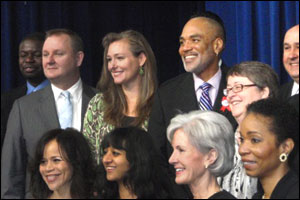
President Obama Names HIV/AIDS Advisory Council
With the appointment of 24 new members to the Presidential Advisory Council on HIV/AIDS (PACHA), the Obama administration took one more step toward fulfilling its promise for a national strategy on HIV/AIDS, The council, which advises the White House on its HIV/AIDS policy, will provide input for the national HIV/AIDS strategy. The diverse group of appointees is made up of researchers, service providers and community leaders, including people living with HIV. They were sworn in on February 2 in the Eisenhower Executive Office Building, next to the White House. "We often speak about HIV/AIDS as if it's only going on somewhere else, but we face a serious HIV/AIDS epidemic in America," said President Barack Obama in a released statement. "Today I'm pleased to have a new group of experts joining PACHA, and I look forward to hearing from the council about our continued efforts to prevent the spread of HIV infections in the United States, and to provide care and treatment to people living with HIV/AIDS around the world." Voices from Black and Brown communities will be heard on PACHA. Dr. Helene D. Gayle, who heads the humanitarian group CARE USA, was named as PACHA's chair back in August 2009. Among PACHA's new members are the Rev. Calvin O. Butts III of the Abyssinian Baptist Church in Harlem, Malika Saada Saar of the Rebecca Project for Human Rights, Douglas M. Brooks of the Justice Resource Institute and actress Rosie Perez. The Black AIDS Institute is represented on PACHA by executive director Phill Wilson and board member A. Cornelius Baker of the National Black Gay Men's Advocacy Coalition. Each PACHA member can serve for up to four years. More information about the council's membership and staff can be found at here. Here are the new PACHA members: Chair Membership Praveen Basaviah, HIV/AIDS advocate; Bay Area, Calif. Dawn Averitt Bridge, founder and president of the board, the Well Project; Nellysford, Va. Douglas M. Brooks, vice president for health services, Justice Resource Institute; Boston. Calvin O. Butts III, D.Min., pastor, Abyssinian Baptist Church; New York, N.Y. Humberto Cruz, director, AIDS Institute, New York State Department of Health; New York, N.Y. Ernest Darkoh, M.D., M.P.H., chairman, BroadReach Healthcare, LLC; Washington, D.C. Kevin Frost, chief executive officer, the Foundation for AIDS Research (amfAR); New York, N.Y. Patricia Garcia, M.D., associate professor, department of obstetrics and gynecology, Northwestern University; Chicago. Robert Greenwald, managing attorney, the WilmerHale Legal Services Center, Harvard Law School; Jamaica Plain, Mass. Kathie Hiers, chief executive officer, AIDS Alabama; Birmingham, Ala. David R. Holtgrave, Ph.D., professor and chair, department of health, behavior and society, Johns Hopkins Bloomberg School of Public Health; Baltimore. Michael A. Horberg, M.D., director, HIV/AIDS, Kaiser Permanente; Oakland, Calif. Ejay Jack, graduate assistant, multicultural affairs; the University of Nebraska at Omaha. Jack Jackson Jr., principal, the Agassiz Group, LLC; Phoenix. Naina Khanna, director of policy and community organizing, Women Organized to Respond to Life-threatening Disease (WORLD); Oakland, Calif. Jim Yong Kim, M.D., Ph.D., president, Dartmouth College, Hanover, N.H. Anita McBride, former assistant to President George W. Bush and chief of staff to First Lady Laura
Helene Gayle, M.D., M.P.H., president and chief executive officer, CARE USA; Atlanta.
A. Cornelius Baker, national policy adviser, National Black Gay Men's Advocacy Coalition; Washington, D.C.
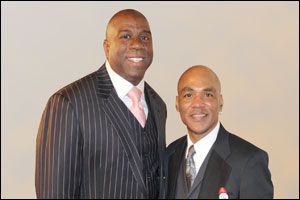
Magic Johnson and Phill Wilson
New Partnership Focuses on Economy of Scale and Maximizing Resources
Black AIDS Institute and The Magic Johnson Foundation Announce New Collaboration to Fight Black HIV
The Institute and the Magic Johnson Foundation (MJF) announced today a new long-term collaboration to fight HIV/AIDS in Black communities. The new partnership will focus on advocacy efforts related to the National AIDS Strategy, expansion of HIV awareness under the Greater Than AIDS campaign, expansion of HIV testing thru the Test 1 Million campaign, collaborative fundraising opportunities, and joint programming activities in conjunction with the 30th anniversary of HIV/AIDS in 2011.
“It is a true privilege to partner with the Magic Johnson Foundation, an organization that has provided over $1.1 million in lifesaving HIV/AIDS interventions in the past few years,” said Institute President and CEO, Phill Wilson. “If we are serious about ending the AIDS epidemic in our community, we have to consolidate our efforts.” Today in the United States, more than half a million Black Americans are living with HIV/AIDS – far surpassing any other racial or ethnic group. From the outset, Blacks have been disproportionately affected by this disease – accounting for nearly half of all new HIV infections occurring every year in the U.S. while representing just 12 percent of the population. While AIDS remains a serious disease – indeed a deadly threat, especially for Black Americans who are more likely to die as a result of AIDS compared to other groups – HIV is preventable. Although no cure yet exists, HIV/AIDS is treatable. Advances in treatment can dramatically improve and extend the lives of those infected. And by confronting the misconceptions and stigma that keep people from taking actions – such as using protection, reducing numbers of partners, getting tested, accessing treatment, and talking openly – it is within the power of each individual to stop AIDS. “HIV/AIDS is detectible, preventable, and treatable,” says Wilson. “The bottom-line is the Institute and MJF are stronger, better and more effective at ending AIDS in our community. What else needs to be said?” The Institute and MJF will engage in mobilization efforts to ensure that the needs of Black Americans are addressed in the National AIDS Strategy, a first-of-its-kind initiative by the Obama Administration to craft a comprehensive plan to address the country’s HIV/AIDS crisis. the Institute and MJF will work together to ensure that the voices and specific needs of Black Americans are included in the development of the National AIDS Strategy by mobilizing Black institutions, individuals and media through trainings, community updates, news, social media, and entertainment. A formal document is also planned for release that outlines recommendations for including Black Americans in the National AIDS Strategy. The two organizations will also collaborate to raise awareness, fight stigma, and promote HIV testing within Black communities as part of the Greater Than AIDS movement. Jointly organized by the Kaiser Family Foundation and the Black AIDS Institute, Greater Than AIDS is a national media campaign to mobilize Black Americans in response to the AIDS crisis within their community. As a new partner to Greater Than AIDS, the Magic Johnson Foundation will promote the campaign at events, leverage the power of celebrity to build visibility for the campaign, and work with the Institute and its partners to develop special promotions that will help spread campaign messages across the country. As a first effort, the two organizations will partner with the Texas state health department and the Houston Urban League to offer free HIV testing in conjunction with NBA All-Star Weekend, on February 13 in Dallas, TX. The Institute and MJF will also work together to help raise funds to address AIDS in Black America, including at this year’s The Magic of Heroes in the Struggle, an annual fundraising gala held in honor of individuals and corporate “heroes” in the fight against HIV and AIDS. This year’s event, to be hosted by Magic and Cookie Johnson in Los Angeles in June, will feature key leaders who have made a special effort to mobilize Black Americans and corporations that have made an exceptional commitment to fighting stigma and mobilizing Black Americans in response to AIDS. Past recipients include: Dr. Helene Gayle, Patti LaBelle, Maxine Waters, Bishop T.D. Jakes, Julian Bond, Danny Glover, and Hill Harper. “On behalf of the Magic Johnson Foundation, we are excited to work more closely with the Black AIDS Institute – an organization that continues to be on the cutting edge in the fight against AIDS,” said Towalame Austin, President of the Magic Johnson Foundation. "We are excited to work with the Black AIDS Institute and its partners to spread the word about Greater Than AIDS, reinforcing the importance of community mobilization and individual action in response to the epidemic.” The Urban League of Dallas in partnership with the Black AIDS Institute and the Magic Johnson Foundation (MJF) will sponsor an HIV testing event as part of the NBA All-Star Weekend. Meet NBA Stars, Get Free Prizes & Get Tested for HIV For more information please contact Lesa Sweeney with the Urban League of Dallas by e-mail About the Magic Johnson Foundation About the Black AIDS Institute About Greater Than AIDS
Come join Magic Johnson and other NBA Stars this Saturday from 10-4 at the Big T Bazaar for an exciting event with plenty of prizes and free giveaways. Be the first 200 hundred to arrive for a chance to enter the raffle for a free cruise. Also you can become part of the Test 1 Million campaign and join the Greater Than AIDS movement. This weekend will be a truly special event.
The Magic Johnson Foundation was established in 1991 as a single-disease organization that worked to raise funds for community-based organizations dealing with HIV/AIDS education and prevention programs. The Foundation has since expanded the mission to focus on developing programs and supporting community-based organizations that address broader educational, health and social needs of ethnically diverse, urban communities. Learn more at: www.magicjohnson.org
Founded in May of 1999, the Black AIDS Institute is the only national HIV/AIDS think tank focused exclusively on Black people. The Institute's Mission is to stop the AIDS pandemic in Black communities by engaging and mobilizing Black institutions and individuals in efforts to confront HIV. The Institute interprets public and private sector HIV policies, conducts trainings, offers technical assistance, disseminates information and provides advocacy mobilization from a uniquely and unapologetically Black point of view. For more information, please visit Black AIDS Institute.
Greater Than AIDS, developed by the Kaiser Family Foundation and the Black AIDS Institute, is a public information campaign of the Black AIDS Media Partnership (BAMP), a sustained commitment among major U.S. media companies to work together to address the AIDS crisis facing Black Americans. The Partnership is part of Act Against AIDS, a broader communications response by the U.S. Centers for Disease Control & Prevention (CDC) to refocus attention on the domestic epidemic. For more information, visit: www.greaterthanaids.org
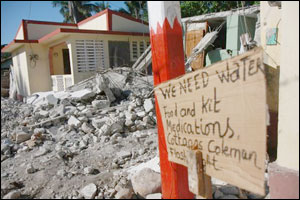
After the Earthquake: Haiti's HIV/AIDS Infrastructure Is Devastated
Haiti must now rebuild from the catastrophic 7.0 earthquake it suffered on January 12. Most of its citizens lack access to basic health care services, and the nation will have to reconstruct hospitals and clinics.
But the conditions may be even more disastrous for an already vulnerable community: Haitians living with HIV/AIDS. Many of the clinics that were destroyed were HIV/AIDS clinics, and many of their staff members were killed. According to reports, almost no one seems to have access to antiretrovirals (ARVs). Much-Needed Services Are Gone Haiti's HIV/AIDS caseload is dramatic. UNICEF estimates that 5.6 percent of the pre-earthquake 15- to 49-year-old population was HIV-positive, including about 19,000 children. HIV/AIDS is the nation's leading contagious cause of death, making the loss of AIDS services particularly dangerous. SEROvie, Haiti's largest organization serving gay and transgender people with HIV, was devastated, reports The Advocate. The majority of the staff were killed. Director Steven La Guerre describes the chaos: "We were having our usual support-group meeting on a quiet Tuesday afternoon when the worst happened. The sound is unforgettable. I can't even describe the horror as the ceiling and the wall started to fall." "At least half of Port-au-Prince's AIDS clinics appear to have been destroyed," says Charles King, CEO of Housing Works, the New York City-based AIDS service organization (ASO) that finds housing for people living with HIV/AIDS. King traveled to the disaster zone to deliver ARV medication and supplies. His blogging offers a compelling snapshot of post-earthquake life for people with HIV/AIDS. In one dispatch, he writes, "On the way to the airport, we passed CEPOZ, an HIV/AIDS clinic and support center. The two-story building was completely flat. Anyone who was there when the quake struck never had a chance….We later passed a second AIDS clinic. This one is still standing but clearly not for long." AIDS Clinic Becomes "Tent City" Founded in 1982, GHESKIO (Haitian Group for the Study of Kaposi's Sarcoma and Opportunistic Infections) is Haiti's leading HIV research and training center. Its two campuses, both located in Port-au-Prince, suffered structural damage, but most of the staff have been accounted for. After the disaster, the center opened its gates and became a field hospital and tent city for thousands. Jean William Pape, M.D., GHESKIO's director, told NBC Nightly News, "We have no choice. They lost their only home and their hope." Dr. Pape also told NBC that approximately 5,000 people were living at the main campus, which could shelter twice that many and perhaps even more. An Emergency Plan Pays Off Dr. Pape hopes to coordinate medical services and HIV care with local providers. "We need to know how many hospitals are working, how many operating rooms they have," he says. There is some good news. GHESKIO has been providing lifesaving ARVs to hundreds of HIV-positive patients. The center had a hurricane-emergency plan in place, and it remains "fully operational"--even with the influx of thousands of residents--administering up to 900 ARV doses daily. Medications Remain Scarce But the people GHESKIO is reaching are just the tip of the iceberg. Up to 50 percent of Haiti's estimated 130,000 HIV-positive citizens are on ARVs. Nobody knows how many patients cannot get to their meds. "Antiretroviral drugs are extremely scarce," UNICEF says. Missing doses can cause blood levels of the virus to surge, which could lead to treatment resistance and may increase the person's ability to infect others. Many are leaving Port-au-Prince for rural areas, which will also disrupt treatment. AIDS Orphanages in Peril Pregnant women and infants are also at considerable risk. The closing of so many hospitals makes it more difficult for HIV-positive pregnant women to receive their meds--and increases the chances that their fetuses will become infected. It's been difficult to find reliable information about the country's AIDS orphanages. One of the larger facilities, Kay Angel (Kreyol for "Angel House"), located in Jacmel in southern Haiti, was hard hit by the quake. (A Flickr album documents the town's destruction.) Luke Montgomery, one of the orphanage's founders, reported that all of its charges made it out alive but were now on the streets "surrounded by rubble with no food, water, blankets or medicine. Two are handicapped and cannot walk." Building a Bridge to the Future With every tragedy there are opportunities. International ASOs are helping to rebuild Haiti's HIV/AIDS infrastructure. One example: Housing Works is raising funds to build an HIV/AIDS clinic in Port-au-Prince. (Broadway Cares/Equity Fights AIDS has already donated a generous $25,000.) "There are many people in Haiti who are determined to save as many lives as they can and to rebuild their own country," says King. "We are making this commitment for the long haul." Rod McCullom, a writer and television news producer, blogs on Black lesbian, bisexual, gay and transgender news and pop culture at rod20.com.
Black AIDS Conference Cancelled
We are disheartened to report that the 2010 National Conference on African Americans and AIDS (NCAAA) has been cancelled due to inadequate funding. NCAAA is the only nationwide conference on Black people and HIV/AIDS. Historically, financial support has been provided by pharmaceutical companies. This year, only one company agreed to fund the event, TheBody.com reports.
"If [pharmaceutical companies] are going to expand their markets exponentially, their corporate responsibility needs to keep pace--especially supporting U.S.-based organizations in the market that made all the profit possible," says K. Mary Hess, who founded and directed both the NCAAA and the National Conference on Latinos and AIDS (NCLA), to TheBody.com. NCLA, which usually takes place during the summer, is being postponed indefinitely also. "At a time when Black people are increasingly disproportionately impacted by HIV/AIDS, we need more opportunities for Black AIDS-service providers to come together and share best practices," says Phill Wilson, founder and president of the Black AIDS Institute. "It is critical for Black AIDS leaders to cooperate to ensure that there are venues for us to address HIV/AIDS issues from a uniquely Black point of view."
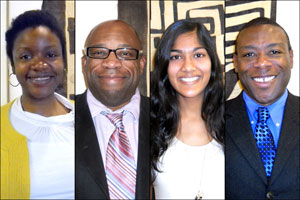
The Institute is Growing by Leaps and Bounds
Welcome New Institute Staff
The Institute is rapidly expanding to keep pace with the urgent need for Black HIV/AIDS training, information dissemination and mobilization. Our newest employees bring with them a diverse wealth of information.
Meet the staff: CFO, Sid Porter Mobilization Manager, Chris Bland Program Associate, Gopi Shah Mobilization Coordinator, Natasha Moise
Sid, a person living with HIV, has more than 20 years of professional experience, specializing in local government and non-profit finance, accounting, management, auditing and consulting. He is recently retired as the City of Inglewood’s Finance Director and Fiscal Officer and a Certified Public Accountant (CPA). Sid carries with him considerable background in municipal bonds, investments, banking, real estate and insurance. He has a strong computer and information systems background with significant knowledge of Civil Service Rules and Regulations and union contracts.
Chris brings a zest for life, a great sense of humor and more than 25 years of personal, professional and educational HIV/AIDS experience to the Institute. He is originally from Virginia and remains a Southerner at heart. He has worked for a variety of national non-profit organizations – National Task Force on AIDS Prevention (which was originally founded by our own Phill Wilson), San Francisco AIDS Foundation and now the Black AIDS Institute. He identifies as a Tarheel (UNC-Chapel Hill Alum), a Bruin (UCLA graduate school MBA/MPH), a Virgo (Sept. 18), a tennis player (Go Venus/Serena), and a burgeoning thespian (stand-up comedian, actor). He has been a fan of the Black AIDS Institute for many years and is excited about lending his talents and expertise to getting 1 Million Black Americans tested for HIV and mobilizing Black communities to fight HIV/AIDS.
Gopi Shah graduated from Tufts University with a BA in Architectural Studies and Community Health in May 2009. Her professional interests include public health, social justice issues, recycling and waste management, and city/urban planning. As the Program Associate for Black AIDS Institute, she supports the Capacity Building and Mobilization teams to ensure access to and utilization of HIV prevention and education services. Prior to The Institute, Gopi worked at Environmental Health Fund and Physicians for Social Responsibility-Los Angeles on environmental health and social justice issues such as the Bhopal Disaster, chemical security and reproductive disorders. In her free time, she enjoys ceramics and glasswork, long bike rides and dessert sampling.
Natasha received her BA from Northeastern University (Boston) with a dual major of International Affairs and Art History. She began her career as a paralegal and spent over a year working in London and then in Washington, D.C. She also worked at Planned Parenthood Federation of America as a Public Policy Associate and served as the Volunteer Coordinator in Wisconsin during the 2008 Presidential election for President Obama. Prior to coming to the Institute, she was Associate Director of Development for the I Have a Dream Foundation here in Los Angeles. The foundation empowers children in low-income communities to achieve higher education and fulfill their leadership potential. Natasha believes working within the community is where real change and progress happens. She is thrilled to be apart of the Black AIDS Institute and Test 1 Million.