News 2007
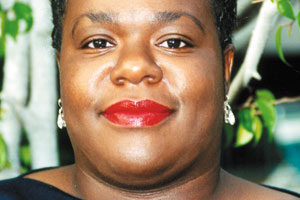
Privileged Gardener
By Deneen Robinson
I’m been thinking a lot about the last 15 years of my life. I wonder what my life would have been like if I had not learned that I was HIV+ on Aug. 30, 1992. I realize there are a few things that would have been different. I am not sure, however, that those differences would have made my life any better than it is at this moment. The doctors gave me six years to live. In this reflection, I realize that while I was planning to be here past the six years they originally gave me to live, it was only in my head. It was never in my heart. I did the practical things to be here so I could take care of my children. I was focused on being here to raise my children. I was not focused on being here for me. That works for a while, but at some point the children grow up. My children are now young women - 18 and 19. They are off and living what I taught them. How ironic. Now, I have to do the same. The difference, I now have to feel it. I have to want to live past HIV. So what is living past HIV? Living past HIV is many things. This article will be the first in a series on the topic. I have realized in the last years that it takes lots of courage to live. This virus is so exhausting --the medicine, the doctor visits, the thousands of ounces of water, the numerous bathroom visits, sleep apnea, exhaustion and so on and so on --all because of the virus. At least we believe these sudden additions to our life are because of the virus. I confess. This is something to share. I have been an advocate since I can remember. I believe I have done a good job in helping us adjust to living with HIV. I have also been a proponent for moving on, making adjustments, etc... There is something to be said however for looking past HIV and simply living. Just like everybody else. Waking up every day, doing what you do and also having HIV. The difference in this outlook is that HIV is not the focus. Living is the focus. Your dreams are the focus. Your career is the focus. Getting that degree is the focus. Building that business is the focus. Even if; like me what makes you get up every day is helping others learn and master HIV. With all the accomplishments in HIV in the last 10 years, we have to work toward living past HIV. Understand, it is a process, but a necessary step in what has become the “Living Cycle of HIV.” Step 1 - Grieve the “perceived” loss. Often most of us get stuck here for years. We spend our time angry, sad because we can’t do all these things. You have to say goodbye to those things you believe you will never be able to do because you have HIV. This is important because if you don’t you will be stuck. And you MUST move to live. Living past HIV takes courage. I have learned this as I raised my children, and, in the process, created a life that now I have to live. I must live with the same passion and courage I used to raise my children. I am excited, because I am continuing to evolve and I realize that I will be here for a while. Those seeds I planted 15 years ago are harvesting a crop that will need to be harvested. As the gardener, I take on that task with honor.
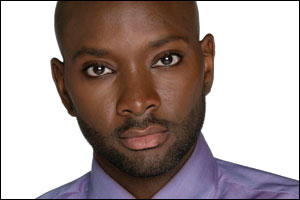
NNPA Commentary Series
By Patrick-Ian Polk
It’s an obvious thing that HIV is an important subject when you’re talking about the black gay community. And I knew it was something I wanted to address in some way. I saw a lack of representation of gay people of color in entertainment media, and being a black gay man, that’s an area that interested me. So I just stopped waiting around for Hollywood to decide to really portray our community and, as a producer and film maker, I tried to make a series on my own terms that explores who we are as black gay men. A few years ago I did a movie I called “Punks,” where we dealt with the HIV issue. One of the lead characters was HIV-positive and was dealing with it. Another character was dealing with getting tested and going to a clinic to get counseling about it. Now as the creator and executive producer of Noah’s Arc,” a television show about black gay men in Los Angeles, I can use interesting ways to incorporate HIV information and messages without being too preachy or melodramatic. My task was to find interesting ways to layer in HIV, so that it’s not just about getting sick and dying. It’s about living with it and dating with it, and dealing with the health system and the medical system and all these things. It’s a hugely complicated issue to deal with, and I wanted to explore that in the show. Instead of having a lead character who was HIV-positive, I decided to have a character who worked in the field of HIV prevention and treatment. I modeled after Phill Wilson and the Black AIDS Institute. One of the main characters, Alex, is working for a more mainstream gay health organization and trying unorthodox ways of getting the messages out there to gay people of color. But his methods are met with resistance from the powers-that-be within this organization, who are trying to toe the line of the conservative administration. And so, frustrated with that experience, he quits his job and opens his own organization called the Black AIDS Institute. And we see the organization from the beginning—when it’s just a dilapidated storefront with rats. He enlists the help of his friends to spruce it up and decorate and help to raise money. And then it’s a fully operational clinic, that’s offering free STD screenings, counseling and advice. Alex has a doctor character whom we introduce later in the season. He helps to facilitate the medical aspects of the clinic’s business, and the doctor ends up in a relationship with one of the other main characters, Ricky. But it turns out that the doctor is HIV-positive himself. So, that was a way to weave in the issue of dating someone who is HIV-positive. In the past, in film and television, characters with HIV/AIDS had this melodramatic, death-sentence story line. Now, due to the medical advancements, it’s become a manageable condition for people who have access to regular health care and follow the treatment regimens. So I really wanted to show that, because we haven’t seen a lot of that. I’m always concerned about being too heavy-handed or being preachy. But I think as long as story lines are presented in a realistic and interesting way, in a way that we don’t expect, then we avoid the dangers of people being turned off. It’s usually when people feel like they’re being preached to or talked down to that they get turned off. Weaving in story lines about HIV can be more affective when you have created characters that the audience can relate to and care about. When you feel like you know someone or you can relate to someone, and you’re suddenly going through something serious with them, then it means more to us as viewers. So that’s what’s nice about being able to weave story lines into a television series. It’s not just about the fact that they’re HIV-positive or that they’re working on HIV; it’s about so much more. And the person who felt like, “Oh, I could never date someone who’s HIV-positive,” might see something differently. When they see Ricky on the show dealing with this situation and falling in love, trying to decide if he can go out with this person he loves but who has HIV—it opens the viewers’ minds too. They might change their minds about it and maybe they can date someone with HIV. Or someone who’s HIV-positive might get the message that, “You know, life is not over for me and I can still have a career and have relationships and be healthy and happy.”
Patrik-Ian Polk is a film producer, director and writer of Los Angeles.
Part of the Solution
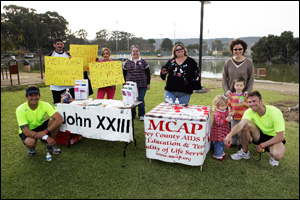
SAN FRANCISCO, Calif. (Dec. 17, 2007) -- Mike Sacco and Lejon Boudreaux finished running a minimum of a marathon a day for 14 days, withstanding bone-shattering pain, reckless drivers and tons of highway debris to get a message across. View the Multimedia News Release. "We want 1 million African Americans to get tested by June 27, 2009, which is National HIV Testing Day," says Sacco, 26, who came up with the idea to combine his love of running with the need for HIV/AIDS awareness. "Run in a Million," as this quest is called, is a part of a larger "Test 1 Million" campaign sponsored by theBlack AIDS Institute in partnership with the Screen Actors Guild, the American Federation for Television and Radio Artists, the Black AIDS Institute, Artists for a New South Africa, Palms/AACDI, and the Beverly Hills/Hollywood branch of the NAACP. The Institute sponsored the Run in a Million that started Dec. 1 at the San Francisco Golden Gate Bridge and ended at NIKETOWN in Los Angeles on Dec. 14. Nike provided all running gear and accessories for both men. "When Mike told me about his idea, I thought, 'that is awesome,'" said Boudreaux, 30, who is in the Air Force. "I couldn't think of anything better than to combine my joy of running and my desire to do something about HIV/AIDS. It seems like these days everyone is waiting for the next big thing. People forget about the power of one. One person can make a difference." HIV/AIDS disproportionately affects African Americans in the United States, according to latest statistics from the CDC. Nearly half of the estimated 1.2 million Americans living with HIV/AIDS are Black and 54 percent of all new HIV infections in the United States are among Black Americans. "When Mike first walked into my office, I thought ,'wow, here is a white guy who understands that the AIDS epidemic is not over and we all have a moral epidemic to do everything in our power to fight this deadly disease until it is over,'" said Phill Wilson, founder and executive director of the Black AIDS Institute. Wilson and an A-list of Black celebrities, who took public HIV tests, kicked-off the Test 1 Million campaign during a news conference this past June at the SAG headquarters. Celebrities included Regina King, Jimmy Jean Louis and Vanessa Williams. Sacco and Boudreaux, like human billboards, wore Test 1 Million T-shirts, and were accompanied by a pace car outfitted with the Test 1 Million logo. "It has been a dream of mine to run from the Bay area to Los Angeles," Sacco said. However, he said, he wasn't aware the dream would come with so many challenges. The men ran anywhere from 26.2 miles, the regulation marathon, to up to 50 miles per day. The trip was arduous and hard on the body, the fellows say in their daily blog myspace.com/runinamillion. Each night, they retired to an ice bath to ease some of the pain in aching limbs. "The usual [daily] self-inflicted torture of bathing in ice came soon after our run. I'm beginning to really despise the ice bath," Sacco wrote on Dec. 4. "In fact, if anyone ever wanted to know any deep secrets, all they would have to do is put me in a tub of ice water and I would tell them anything they wanted to know. 30 plus miles of running is much less painful than 15 minutes spent in the freezing cold bath." After stopping for dinner at a local restaurant, the two men joked about the pain in the fingertips as they hobbled to the car.
Other runners joined the men on various legs of the event. Rounding out the running team on selected days has been world-renowned, ultra-marathoner Dean Karnazes
. Along the way, they encountered growling dogs, drivers speeding 70 mph along curving roads in the rain and tons of debris spewed along the roadside. They also encountered seals and good Samaritans. In some cities, volunteers from local AIDS service organizations greeted the runners. Monterey County AIDS Project met them in downtown Monterey with signs and applause. Beyond the aching bodies, the men talk about the beauty of nature. "Being able to look over the edge of the road at the right moment and watch seals frolic in the waves, a humming bird perched upon a tree, a waterfall flowing onto the beach, walking within 10 feet of a hawk hunting its prey on a bridge, watching the marine layer follow the curvature of the landscape as it flows up and over the road, and being a part of such a massively beautiful area with no one else around," Sacco says in a blog. myspace .com/runinamillion.
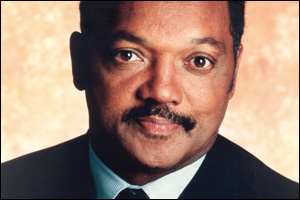
NNPA Commentary Series
By Rev. Jesse Jackson Sr.
When it comes to HIV/AIDS, black Americans have two choices: either gear up and take on AIDS or be taken out by one of the greatest moral and health challenges of our time. I want us as a people to choose life today. I know that unless we are forced to overcome our discomfort with talking about sexuality and deal honestly with this disease, we’re not going to have much of a community in 50 years. Look what AIDS has already done. Because of our inaction, the epidemic has chipped away at lives too young to lose. African-Americans are 12.3 percent of the population, but 61 percent of people under the age of 25 who were diagnosed with HIV/AIDS between 2001 and 2004, according to the Centers for Disease Control. AIDS, which is both treatable and preventable, is now the top national cause of death for African-American women ages 25-34 and is among the top three causes of death for black men 25-54. It continues to creep into our prisons, our schools, our churches, yes, our churches, and into homes rich and poor, snuffing out generations and extinguishing our hopes for tomorrow. We don’t have time for excuses. It doesn’t matter where or how you got infected with AIDS—from a gay relationship or from forced sex in jail. It may have been a monogamous woman with a loose-living man or a beautiful newborn baby who contracted it from her parents. What matters now and what matters most is that we must move beyond the fear of HIV/AIDS to action. We need to get educated; we need to be tested so that we can courageously kill the disease before the disease kills us. The reality is that for many of us, AIDS will eventually hit home if hasn’t shown up already. I will never forget the day I first saw the face of HIV/AIDS. It was the morning that Rae Lewis came to me wearing it. She was a young neighbor girl who had grown up like a member of my own family, a playmate and friend to my children. Rae came to me one morning in the kitchen and said she needed to talk with me. She told me that she had HIV and that it was moving fast toward AIDS. That was more than two decades ago. She is fighting back and today Rae Lewis-Thornton is an HIV/AIDS activist. Because of Rae, AIDS was not some abstract campaign issue for me during my run for the Democratic presidential nomination. Another close family friend also made AIDS a reality for me. His name was Keith Barrow — the son of civil rights leader the Rev. Willie Barrow and a longtime member of the PUSH choir. Keith died of AIDS complications. That was a critical time for me politically, but it was also a turning point in my commitment to focusing attention on the issue of HIV/AIDS. I was running for office, but I was also staying in AIDS hospices. I had to come to grips with this devastating disease at a time when the right wing was preaching about AIDS as a sin, not a disease, and when parents were kicking family members out when they found out they had HIV, the virus that causes AIDS. I want to derail AIDS, but until I can, I will remain on the battlefield and behind every pulpit and microphone I can find until a change comes. Join me in bringing about the change our community needs to stay alive. The first step is to overcome fear of the disease. I did. Second is to take a 30-second antibody test, and the next is the antigen test, which gives you a true status of whether or not you are infected. I took the tests and I know my status. If players in the NBA and the NFL would use 30 seconds to get tested by swabbing their cheeks on television, it would send a powerful message. We must use every platform we can for mass education. African-Americans and all Americans have to get beyond the foolishness of not teaching health and sex education. There are so many ways to get the virus so all that we really need to know is if you do have it, you can get help. People don't worry about how you caught cancer. They don't ask 'Did you catch it by eating meat?' 'Did you catch it because you were living a little too close to electric power lines?' People aren't questioning how you caught cancer. If someone has cancer, you say, 'Is it operable?' This disease is bigger than all of us, but I’m comforted in knowing that God is in control. But we must also come together and we must act. Combating AIDS takes early detection, good medicine, and changing our behavior and lifestyle. Do your part so that people can live.
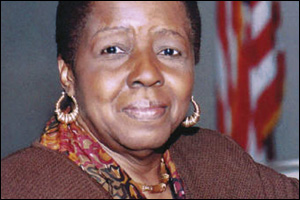
NNPA Commentary
By Alabama State Rep. Laura Hall
It was 1988 when my son was diagnosed with AIDS. He was 22 at the time—he died at 25. He had had a nagging cough that he just couldn’t get rid of and my husband and I suspected something. After some time, we got him to go to the doctor. We got the results the week after we had buried my dad, and he was here visiting us. We tried to talk about it, but he just said, “I don’t care what you do. I don’t want to talk about it anymore.” He went through some difficult times after that. He started using drugs, and doing so many things out of character. We kept it a secret for a long time. But when everyone was finally told, it was heartwarming. My uncle said, “You know, we’re family, and families stick together. Families just don’t leave each other.” It was so touching to get that response. The disease reeked havoc in our family. My grandson was also dealing with it. So over a period of three years, we had three deaths, and none of us have talked about it. I’m sad to say, not enough has changed today, because I am very suspicious of another little cousin’s condition. During the period of time my son had suffered with this illness, he had come to insist on openness about his condition. If nothing else, he taught us how to die with dignity. He insisted on an open casket and he made a tape that he asked us to play. In that tape, he asked everybody who was there to put whatever they had in their pockets into a basket because a collection was being made to give to an AIDS agency. There’s a lot of work still to be done, especially in our communities. We’re more sensitive to the fact of AIDS’ existence, and we’re willing to discuss it. But there’s nobody out there saying, “Oh, we need to rally around this.” There’s still that fear factor—the fear of being ostracized. I lived through that fear, so I guess I want to think that 13 years later we wouldn’t have to deal with that. But it is so overbearing. People who are where we were in our family are always worried about what people are going to think, if they are going to be there for you. I have a god-child who is HIV-positive; I know only because her mother has told me. She’s 25. I make sure that I deal with this issue in my role as an elected official. I talk about AIDS and its complications whenever I can, and I try to bring my colleagues together to pass legislation that combats this epidemic. In my last election, Republicans even charged, “That’s all she does is talk about AIDS.” I said I make no apologies for my position. And if you choose not to elect me because I’m very outspoken and upfront about this disease that has impacted my family, then so be it. That means then I’ll just spend 100 percent of my time working on this issue, but I plan on being around in the general assembly for a while. I really do enjoy it, and want to believe that I make a difference. In the Legislature, we all understand the budget constraints with federal funding for the fight of AIDS, but for those who live with AIDS; this is a quality of life issue. It means life or death. I was elected in 1993. We are at the same point as we were 10 years ago.