News 2007
Statement:: National AIDS Plan
By Phill Wilson
Sen. Barack Obama last week became the second presidential contender to show bold leadership by calling for a national AIDS plan to guide America's response to the domestic epidemic. Obama released his AIDS platform on his Web site on Oct. 16 and listed as the top priority the development of a national strategy to target resources, a call that echoes John Edwards' platform, released last month.
The Black AIDS Institute urges every candidate in both parties to join Obama and Edwards in both publishing an AIDS platform and committing to the development of a national AIDS plan if elected president. The United States wisely insists that any country seeking foreign assistance for its AIDS effort first develop an overall plan for directing those resources. More than 26 years into the epidemic, however, the U.S. still does not have its own blueprint for ending AIDS domestically-an epidemic that is larger today than ever, with nearly 1.2 million Americans living with HIV/AIDS, according to federal health monitors. "In the first year of his presidency, [Obama] will develop and begin to implement a comprehensive national HIV/AIDS strategy that includes all federal agencies," Obama's platform vows. "The strategy will be designed to reduce HIV infections, increase access to care, and reduce HIV-related health disparities. His strategy will include measurable goals, timelines, and accountability mechanisms." We couldn't have said it better. As Obama's platform emphasizes, America's AIDS epidemic is uniquely Black. Nearly half of all people living with HIV/AIDS in America and over half of those newly infected every year are African American, though we represent just 13 percent of the U.S. population. And despite an annual AIDS budget of more than $2 billion, America continues to log an estimated 40,000 new infections a year. Thousands of people -- disproportionately African Americans -- continue to die from AIDS every year. Local safety net programs all over the country have collapsed, forced to turn away poor people in search of treatment and care -- at least four people died in South Carolina in 2006 while awaiting access to the publicly-financed AIDS drug insurance program. Meanwhile, racial disparities continue to widen in every corner of the epidemic. Whether you measure infections by gay men, heterosexual women, youth or any other population, African Americans are vastly overrepresented. Clearly, our resources need to better planned and targeted. As a result of all of this, a coalition of traditional African American institutions, ranging from civil rights groups like the NAACP to faith leaders like Bishop T.D. Jakes, have banded together to develop our own community-wide plan of action. Each organization is now crafting a strategic plan for folding the fight against AIDS into its broader work. In the end, Black America realizes it can't afford to wait for others to save us; we're finally working on saving ourselves. But we're also demanding that government support that effort. The first step in doing so is having the same sort of strategic plan that our community is developing for itself. We can't say it enough: If you fail to plan, you plan to fail. Obama and Edwards have gone on record acknowledging that reality and vowing to do something about it. It's long past time that every candidate in every party do the same. Learn More at BlackAIDS.org
NNPA Commentary Series
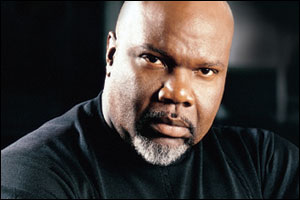
By Bishop T.D. Jakes
Jakes Challenges Black Church to End Silence on AIDS The problem of HIV/AIDS in the African-American community has rapidly progressed beyond just an illness to a massive epidemic that is a national crisis. When reviewing the magnitude of the numbers connected to this deadly disease, you only need to take a glance at a few of them to completely take your breath away. •While only 12 percent of the total American population, African-Americans make up 37 percent of total American AIDS cases. •More than 50 percent of newly reported HIV infections in the United States are among African-Americans. •Among African-American men aged 25 through 44 years, AIDS is the single largest cause of death. These numbers, should give everyone -- not just African-Americans - great pause for concern. I believe that the African-American church, long a symbol and source of information and education to the African-American community, has for too long, remained silent about this challenge. To be sure our churches -- mine included -- have done some notable works individually. The problem remains that this is not a foe we can defeat individually. It will take the collective might of both the church universally committed and the implementation of a comprehensive agenda that includes medical professionals, political might, social services and personal responsibility to overcome this dreaded disease. That collective pool has not been enacted previously and all of us have suffered from it. Recently I was honored to co-chair a national discussion on HIV/AIDS with Dr. Calvin Butts from the Abyssinian Baptist Church in New York. At the African-American Clergy Conclave held in New York October 8-9, a congregation of clergy, government officials, healthcare agencies and leading educators came together to develop policy for legislation to support and aggressively end the spread of HIV/AIDS. This flame of a more comprehensive and unified strategy is fueled by the commitment made by the Congressional Black Caucus to present a bill to fund a program that is designed to meet the unique needs of our community as we have unique challenges and issues, which previous efforts have failed to address. We all must support the CBC in this endeavor to pass the proposed legislation to fund this critical need for efforts aimed at our community. These funds would include all of our tax dollars that have been directed elsewhere while we die. The church was not designed to find cures, introduce legislation, change government policy or produce the kind of financial strength we need for research, care and prevention. But, the church can contribute to the solution and partner with existing institutions to do a much better job than it has done alone. There are many churches who have not responded at all. But I hope they will also be inspired to do something as we all ramp up to do more. Here are a few reachable goals that most churches can accomplish to make up for our late start: •We can be a voice and support advocacy related to HIV/AIDS. •We can challenge the government to set aside more funding for this initiative. •We can challenge our members to get tested. •We can make educational material available through our counseling and medical ministries. •We can dispel the myths and fears. Many pastors are overwhelmed, intimidated and ill equipped to do all that could be done. I also feel grossly under equipped for the daunting task before us. But if we do not stand up, then who will? And, yes, I am saddened that the black community has little more than the church to draw from as a lightening rod to motivate national dialog. I agreed with Sen. Hillary Clinton when asked at a recent debate her thoughts on the fight to end HIV/AIDS. She said, “If HIV/AIDS were the leading cause of death of White women between the ages of 25 and 34, there would be an outraged outcry in this country.” But alas, we are on the roof again. This time we must not wait. We must aggressively develop ways to work together, put aside petty differences, stabilize the loss of lives, reduce the rate of new infections, and disseminate much needed information to areas and groups who do not seem to understand the severity of the crises. I founded the Potter's House on the bedrock of serving as a spiritual hospital. We do not have to agree with people on every detail to help save lives. The vision for the church was and still is to minister to hurting people -- a place where all types and description could find healing and restoration for their souls. I am pleased with the fact that we continually work toward this goal. Our national/international AIDS campaign has been instrumental in educating tens of thousands of our members on the impact of AIDS on men, women, and children. We have provided food, clothing, prayer, counseling, testing, and community agency referrals to those infected and affected by the HIV/AIDS epidemic. We have tested thousands of our members and conference attendees. Globally, we have provided aid and support to many African countries and endeavor to build homes for children orphaned by HIV/AIDS. For World AIDS Day 2007, we will partner with World Vision to host a 2,364 square foot exhibit (The AIDS Experience: Step into Africa) that is a replica of a Malawi village to allow our community to experience the lives of four children impacted by AIDS. Is it enough? Absolutely not. Is it our best? No. I think we can and must all do more and better if we are going to lessen the ever-increasing rate of new infections. I am hoping that people of color will unite. I am praying that non-blacks will help also as we must all realize that we are not safe while anyone is infected. We must work to get all groups to a healthy condition. We cannot care just for those we agree with. We must help all hurting people to safety and then debate later the many complications of our times. I am pleading for us to not allow theological debate nor political maneuvering to cause us to ignore the priority of saving lives. Tomorrow we can lobby, debate, and argue our theology. But while our men and women are dying seven times more rapidly than their white counterparts who are also infected, we do not have the luxury to politicize mercy nor allow our theology to defray the real mission of a state of emergency for which we find ourselves engulfed. Indeed more can be done and more will be done. As for me and my house, we will serve the Lord and we will serve all of His people. Bishop T. D. Jakes is Senior Pastor of the Potter's House in Dallas, Texas.
Privileged Gardener
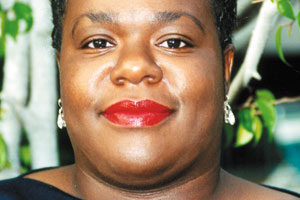
By Deneen Robinson
I remember my first moments after learning I was HIV positive. There was so much to do. I had to figure out what to do with my children, and how was I going to get home to Dallas from Austin. I tried to call home and discovered there was no phone in my hospital room. The hospital staff had removed the telephone on my mother’s instructions. In insisted they put it back. I called home. My mother was not home. When I finally caught up with my mother, she told me the family was planning my brother’s funeral. In the same week I learned I was living with HIV, my brother was murdered. I was devastated. When I spoke to my mother I told her I was so ashamed. I apologized for bringing this shame to my family. My mother said, “You have nothing to be ashamed of. I still love you. Your family loves you, no matter what.” I remember thinking; this kind of thing does not happen to someone like me. I know there are others of you who have felt this way. After all, who expects to learn they have HIV? No one! More importantly, HIV should not happen to anyone. OK, back to the story. Moments after the doctor’s left my room, a social worker came by to visit with me. The social worker was the one of the few people I told I was living with HIV. The social worker explained HIV and how the virus works in the body. She also explained the different medications I would be taking and how the medications would help me fight the virus. Lastly, she made some recommendations on what I should do once I returned to Austin after my brother’s funeral. • Follow up medical care • A place where I could get my daughter’s tested • I join a support group This first experience at sharing my status paved the way for my ability to accept I was HIV positive. When I shared my status with the social worker, she did not treat me any differently than before. She treated me with dignity and respect, and she equipped me with tools that made me feel like I could have a life. After she left, I created a list of priorities. I had to decide if I was going to stay in school. I was attending the University of Texas at Austin, working on my practicum in Social Work. I had to get my children tested. I had to figure out how I was going to get home to Dallas. I had to get to my children. I had to tell my children’s father because I had contacted the health department. I believe strongly in partner notification. I had to find a doctor, and I had to educate myself on the issues surrounding the HIV positive woman. I had so many questions. What kind of life will I have? Who will want a woman living with HIV? What about my church family? I have to admit, I was terrified of telling anyone. I knew though that there were some key people that needed to know because they were my support. I decided who I would tell and when. Remember, I had already told my mother and since she was with my family. She told them too. When you are looking to disclose something like HIV, you really have to be prepared. You have to be prepared for the individuals’ response. You have to know that you will be OK no matter their response. You also have to know the people you are planning to tell. For example, if you have a friend that is judgmental or not very supportive, perhaps that is not the best person to tell. That person may judge you and not be supportive. In other words – tell people that have historically been supportive and in your corner. That sounds like common sense but most often we ignore that basic rule. We are surprised when we tell someone important to us and they are not supportive. Support is so important that you must take the time and look to people that have demonstrated that they are in your corner – even if these people are not your birth family. Don’t destroy your chance at having a good start on your journey by bringing unnecessary challenges to the table. Tell those people in time – give yourself the best chance at a good start. It is going to be hard enough without the extra drama. Choosing to tell anyone is a hard decision it takes courage. So be sure you have thought very carefully about the who, what, when, where and why of it all before you share your HIV status. You have the right to continue your life with dignity. HIV is simply something new that you have learned and does not change you.
NNPA Commentary Series
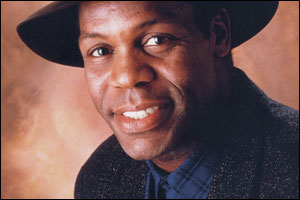
By Danny Glover
I happen to be part of a generation that came up in San Francisco at an important time in the world. We saw ourselves as part of a community with a commitment to ideas that would change the world. That resonated with me as a child and as a young student. I spent six years doing community development work in San Francisco. Those kinds of things you don’t dismiss or put aside. That history drives all of my activism. And it’s certainly what drives my AIDS activism. When people hear about AIDS, a lot of them think of Africa. After all, the media has inundated us with photographs and stories of AIDS orphans, mother to child transmission, the lack of access to drugs, the disproportionate number of persons infected by the HIV virus, and so on. All of this is true and we should continue to fight the AIDS pandemic in Africa, yet we need to realize that the AIDS epidemic is not over in America, and it is especially not over in Black America. AIDS is the leading cause of death for Black women between the ages of 24 and 34 and continues to be a leading cause of death for Black men of all ages. Why aren’t we alarmed? Why isn’t the media reporting this and getting the word out so that we can protect ourselves? People here and around the world think, based on what they hear from our government and the media, that the incidence of HIV and AIDS is considerably lower now than it was in the 1980s. That is true. But lowering HIV incidence and prevalence in some communities is not the same as ending the epidemic in all communities. Nearly half of the estimated 1.2 million people living with AIDS in America today are Black. Fifty-four percent of the new HIV infections in the United States are in Black communities. Yet, the silence is deafening. We’ve got to work on the stigma. We cannot allow so called “traditional values” to allow large segments of our communities to be marginalized. If we want to end the AIDS pandemic, either at home or abroad, we have to confront intolerance wherever we find it. If you open your heart, you open your mind. If you open your mind, you also open your heart. I remember the day that my brother told me that he had AIDS. I was scared and angry. I was even speechless because I didn’t know how I could comfort him. Although I had already lost countless friends to AIDS since the 1980s, there was nothing that could have prepared me to hear those words come out of his mouth. My brother is not gay. I say that not because that would matter to me, but because in our community, we think AIDS is only a gay issue. This misperception has undermined our ability to adequately confront the disease in our communities. Black churches and traditional Black institutions stayed away from even talking about AIDS in the beginning. As a result, it spread like wildfire in our neighborhoods because of drug use, the lack of awareness, insufficient prevention efforts, and an absence of any mass Black mobilization. Today, AIDS in America is a Black disease, and everyone of us has been touched by it in some way. Even though it is a hard subject to bring up with family and friends, we need to talk about it with our children and with each other. A lot of my AIDS work was born out of my work in Africa. The African AIDS pandemic is really a part of the larger systemic social and economic problems facing the planet. In some ways, the HIV/AIDS pandemic is showing us the ultimate result of sustained systemic poverty. If you don’t have enough hospitals, you can’t treat the numbers of people who come to you. If you don’t have enough medical supplies or needles, you will use needles multiple times, increasing the probability of HIV transmission. If the AIDS medications are not made in-country or the prices reduced to make them affordable, the cycle can only get worse. Many Africans get that, and are taking action. One of the things we’ve sought to do with the UN campaigns I’ve worked on is to demonstrate what Africans are doing about the AIDS crisis. They are not sitting idly by. Whether at the local village level or as a part of the national plans, there are countless stories of Africans using whatever they have to fight this disease and to save themselves. If my visibility as an actor creates a kind of space where these kinds of discussions can be out on the table and other people can be part of that dialogue, so be it. That’s what I’ll lend my name to.
Statement ll National AIDS Plan
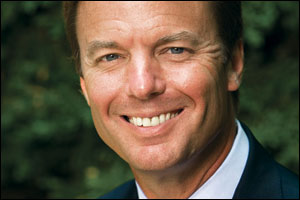
Democratic presidential hopeful John Edwards became the first candidate in either party to substantively address the Black AIDS epidemic on Sept. 24 by publishing a comprehensive HIV/AIDS platform. Black America must now demand that every candidate similarly explain how he or she will end this epidemic. Edwards wisely makes the development of a "National HIV/AIDS Strategy" a priority in his platform. The U.S. government rightly insists that any country receiving foreign aid for HIV/AIDS first craft a national strategy, but 26 years into the epidemic the U.S. shockingly still doesn't have its own overarching plan. Edwards highlights the consequences of this failure in his AIDS platform. "In 2001, the CDC set a national goal of reducing the annual number of new infections in half by 2005," the Edwards platform reads, "but the actual number of infections has barely budged. A 1998 presidential initiative set a goal of eliminating racial disparities in HIV/AIDS by 2010, but disparities are as bad today as they were then. Our disappointments can be explained in part by the failure to create a national strategy, backed by necessary funding and with clear and bold goals, specific action steps, real accountability and broad participation and buy-in from stakeholders both inside and outside of government." Edwards' platform goes on to stress that "any serious effort to end the HIV/AIDS epidemic must begin in the African-American and Latino communities," including addressing the impact on Black gay and bisexual men and inside the nation's prisons. Edwards vows to develop a national strategy with these goals in mind, which will coordinate inter-agency programs and make the secretary of Health and Human Services responsible for publishing an annual progress report. In addition to his call for a national HIV/AIDS strategic plan, Edwards vows to support "fully funding" the Ryan White CARE Act, which is the federal government's primary vehicle for AIDS care programs, and to "put an end to waiting lines for HIV drugs." Every year, state-run AIDS Drug Assistance Programs face massive budget shortfalls, leading to service reductions and hundreds-deep waiting lists. In 2006, at least four people died in South Carolina awaiting AIDS drugs; the state announced this week that it had finally cleared its waiting list. Edwards further stresses the need for science-based prevention policy. Specifically, he vows to lift the ban on federal funding for syringe exchange programs and to promote "comprehensive, age-appropriate sex education." Edwards highlights his broader universal health insurance plan as the primary tool for securing adequate treatment for all, and he promises to support the Early Treatment for HIV Act, which would expand Medicaid to include those who are HIV positive but not yet diagnosed with AIDS. But his platform does not discuss how he'd resolve the ongoing crisis for Medicaid overall. The massively expensive program has forced every state in the nation to consider ways to reign in costs, including restricting services. It may be that Edwards' larger health insurance plan relieves the pressure on Medicaid. But he must tell voters how he'll reform the program to make it both affordable and accessible to all of America's poorest, whether he achieves universal coverage or not. The Institute continues to urge all candidates, in both parties, to publish an AIDS platform. Black journalists have put candidates on notice by questioning them on their response to AIDS, and some have been able to answer with positions on individual AIDS policy questions. But without an overarching plan, those efforts are wasted. Black America's message to any candidate seeking our votes in 2008 must be clear: First, show us the plan.Fail to Plan, and Plan to Fail
[Email This Article To a Friend]