When You Know Better, You Do Better, Part 1
The first in a series exploring issues raised in the recent episode of the Oprah Winfrey Show.
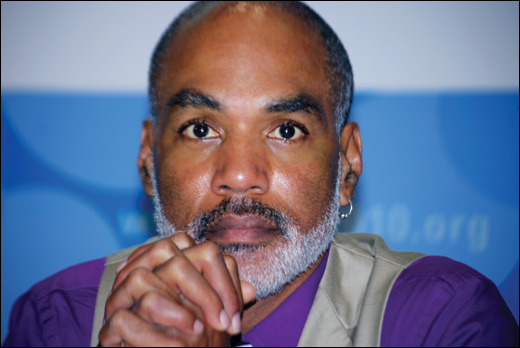
Oprah Winfrey and I share a favorite Maya Angelou quote: “When you know better you do better.” Oprah uses Dr. Angelou's words as inspiration; I use them as a personal challenge. I am constantly asking myself, "What is it that I need to know in order to do better? And what is the evidence that I am, in fact, doing better?"
Six years ago I appeared on The Oprah Winfrey Show. To this day I regret that TV appearance more than almost any other. The episode was on the subject of the down low (DL). The primary guest was J.L. King, author of "On the Down Low: A Journey into the Lives of 'Straight' Black Men Who Sleep with Men". Going into the show I knew there was no data (and there still isn’t) supporting the idea that the DL is either the primary mode of transmission for Black women or even a major engine driving the AIDS epidemic in Black America.
Black Gay Men’s Network Sets Upcoming Agenda

The national leadership of the Black Gay Men’s Network (the Network) met in Los Angeles in early October to set their priorities for the upcoming year. The Network is a community of successful black gay men who unite their collective expertise, vision and creativity to provide leadership within the Black gay community and society at large. The Network is an integral part of the Black AIDS Institute’s Gay Men’s programming. The BGMN currently has more than 740 registered members from across the United States.
ViiV Healthcare Expands Patient Assistance Program, Continues its Patient Savings Card Program, and Joins Welvista Program

Research Triangle Park, NC, October 12, 2010 – ViiV Healthcare will expand its Patient Assistance Program effective January 1, 2011 and continue its Patient Savings Card program to help maintain access to HIV medicines for those most affected by the economic downturn in the United States. Specifically, ViiV Healthcare will launch the ViiV Healthcare Patient Assistance Program with an increased maximum household income level for enrollment and is piloting membership in the Welvista program, a nonprofit program to facilitate access to HIV medications for individuals currently on ADAP waiting lists. Additionally, ViiV Healthcare will extend its Patient Savings Card program for another two years.
Together the patient assistance program and pilot program with Welvista will help maintain access to critical HIV medicines for low-income patients who have now lost access due to changes in ADAP eligibility criteria and ease the difficulty for low-income patients of navigating multiple patient assistance programs. In addition, the extension of the Patient Savings Card program will make it easier for other patients to remain adherent to their prescribed medicines by reducing their out-of-pocket expenses to fill and refill their prescriptions for medicines offered by ViiV Healthcare.
Are Open Sexual Relationships Killing Black Americans?

It's no surprise that people who engage in sex with multiple partners are more at risk for HIV and other STDs than those who are monogamous. But a recent Dutch study found that swingers--couples who trade sexual partners--are more likely than prostitutes to catch sexually transmitted infections!
According to the research, which looked at nearly 9,000 patients who sought treatment at three sexual-health clinics, the STD rate among swingers was 10.4 percent; among female prostitutes, under 5 percent. The high rate of infection among swingers was particularly worrisome because this group is not often the target of safer-sex campaigns, the study authors found. Nor are swingers targeted in the United States.
Read more: Are Open Sexual Relationships Killing Black Americans?
Is the National HIV/AIDS Strategy Good for Black Americans? Part 4: Coordinating Care and Funding

The final story of a four-part series examining the strategy's impact on Black communities.
In July the Obama administration released the much anticipated National HIV/AIDS Strategy (NHAS) (pdf), the nation's first dedicated road map to addressing and fighting the epidemic. At that time, activists with the Coalition for a National AIDS Strategy described it as "one of the most anticipated moments" in the domestic fight against HIV/AIDS. The strategy identified three primary goals (read parts 1, 2 and 3 of Black AIDS Weekly's report). A fourth metric was later identified: creating a coordinated national response.
The administration offers two "critical" steps toward effectively responding to the epidemic:
- Increase the coordination of HIV programs across the federal, state and local governments;
- Develop improved mechanisms to monitor progress and report goals.