Conversations with Federal HIV Leaders from the 2017 U.S. Conference on AIDS [video]

Dr. Jonathan Mermin, Director, National Center for HIV/AIDS, Viral Hepatitis, STD, and TB Prevention, Centers for Disease Control and Prevention; Dr. Richard Wolitski, Director, Office of HIV/AIDS and Infectious Disease Policy, U.S. Department of Health and Human Services; and Dr. Laura Cheever, Associate Administrator, HIV/AIDS Bureau, Health Resources and Services Administration.
HIV.gov shared two more updates via Facebook Live from the 2017 U.S. Conference on AIDS (USCA) in Washington, DC, on Saturday, September 9, 2017. They both featured Federal HIV leaders who addressed conference participants.
Read more: Conversations with Federal HIV Leaders from the 2017 U.S. Conference on AIDS [video]
Could a Monetary Perk Help Keep HIV Patients on Their Meds?

Wafaa El-Sadr, M.D., MPH, MPA, Professor of Epidemiology and Medicine, Mailman School of Public Health, Columbia University
There are mixed results from a new study on the use of monetary rewards to help boost the odds that HIV-infected patients will enter care, and take their meds as directed.
Read more: Could a Monetary Perk Help Keep HIV Patients on Their Meds?
Creating Change 2017
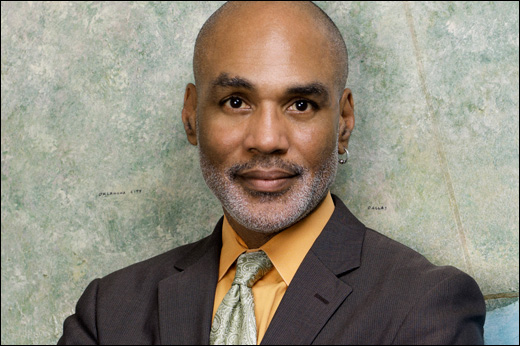
Phill Wilson, President and CEO, Black AIDS Institute
The Following is an excerpt from a plenary speech given by Phill Wilson on January 15, 2017 at the annual National Creating Change Conference in Philadelphia PA.
Criminalization and HIV: A Double-Edged Sword

Isaiah R. Wilson, Director of External Affairs, National Black Justice Coalition.
It is common knowledge that Black people in the United States are more likely to be incarcerated than other populations.
Cultural Humility: An Important Tool for Fighting HIV/AIDS

A core component of cultural humility is introspection symbolized by the webinar's signature image.
Although HIV does not discriminate, race and economic class can affect your odds of being infected, as well as your likelihood of receiving effective treatment. To combat such disparities, cultural humility can help organizations provide more effective care.
Read more: Cultural Humility: An Important Tool for Fighting HIV/AIDS