Solange Knowles: A Personal Crusade Fueled by Art
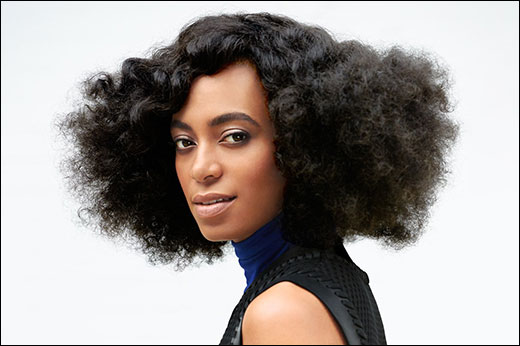
Solange Knowles, not a newcomer to HIV/AIDS activism.
For Solange Knowles, the fight against HIV/AIDS is personal.
"My uncle was actually HIV positive and passed away from AIDS when I was about 9 years old," the Grammy Award-winning singer once told POZ magazine. "You have to be more afraid of the disease than afraid to talk about it."
So it's no surprise that Knowles has made it her mission to talk about the importance of safer sex to anyone who will listen. She has particularly made a point of sharing the message with young women.
While fewer women are being diagnosed with HIV than in years past, the numbers are still troubling, particularly in the Black community. Black women are more likely than White women to be diagnosed. In the United States, more than 280,000 women and girls 13 and older are living with HIV. Of all women in the U.S. diagnosed with HIV at the end of 2014, 60 percent were Black, 17 percent were White and 17 percent were Latina.
Getting Real About HIV
Reaching out to young women about the risks of HIV has meant understanding the pressures that many of them face. Some don't use condoms because their partners don't like them. Others are hesitant to use condoms for fear of alienating a sexual partner. Still others feel pressured to please their partners out of fear that they won't find another one because of a man shortage brought on by mass incarceration.
Some of these reasons came to light during a workshop that Knowles participated in with her sister Beyoncé, where young women between the ages of 15 and 24 talked about the importance of using condoms to protect themselves from HIV. The girls and young women attending the workshop shared how they often felt pressured by their boyfriends not to use condoms and also felt the heat of disapproval if they purchased and were prepared with condoms instead of depending on their partners to provide them.
"What I found most interesting in this workshop was the realness. It takes a lot of courage to share your experience with people you don't know, and they were really bold, so I really respected them for that," Knowles said about the session.
Her activism when it comes to HIV/AIDS spans much of her career.
In 2012, in honor of World AIDS Day, Knowles co-hosted "Everyday People," a brunch and party in New York City. At the event, attendees were introduced to b condoms, a condom line by African American entrepreneurs Jason Panda and Elkhair Balla. In addition to urging attendees to practice safer sex, hosts stressed the importance of HIV testing at the event.
In 2009 Knowles was the face of the Yes, Yes, Yes to Safe Sex Campaign by the Body Shop and MTV's Staying Alive Foundation. The goal of the campaign was to get young adults between the ages of 15 and 24 to make a pledge to always practice safer sex and protect themselves from HIV/AIDS.
The Pinnacle of Artistic Expression
Knowles' career has benefited over the years from her ability to move the world with her voice. Her 2016 album, A Seat at the Table, made it to the top of the Billboard 200 and Top R&B/Hip-Hop Albums charts and produced the hit single "Cranes in the Sky," for which she won a Grammy for Best R&B Performance. In addition to singing, she has made her mark as a model and a dancer. Knowles has also worked as a songwriter, creating songs for such artists as Beyoncé and Kelly Rowland.
When it comes to being a voice for those who may not be strong enough to speak for themselves, it's unlikely that Knowles will ever stop using her platform to shed light on the plights of others.
When asked by Fader magazine whether she thinks musicians have a responsibility to speak out on social issues, Knowles replied: "All that I ask is that people are sensitive to others' truths, even if it's not their own. I don't think everyone needs to be out here with pickets and signs and protesting; maybe their form of that is going into their office every day and standing firm as a person of color. We just have to be sensitive to each other and not criticize people as much as we do because their truth isn't our truth, or they aren't in the same place on the journey as we are—that's kind of irresponsible."
Tamara E. Holmes is a Washington, D.C.-based journalist who writes about health, wealth and personal growth.