Is President Trump a Friend or Foe in the Fight Against AIDS? Activists Skeptically Look for Signals
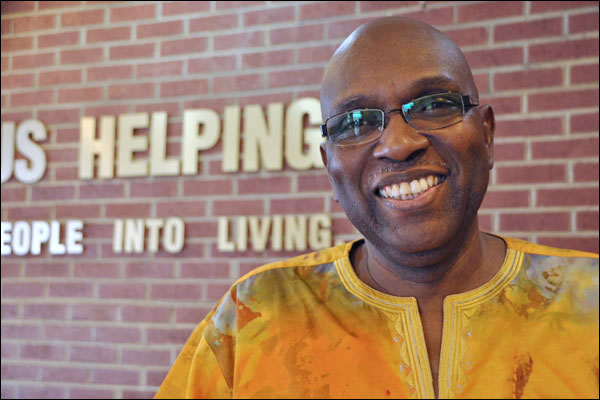
Ron Simmons, Ph.D., former President and Chief Executive Officer, Us Helping Us, People Into Living, Inc.
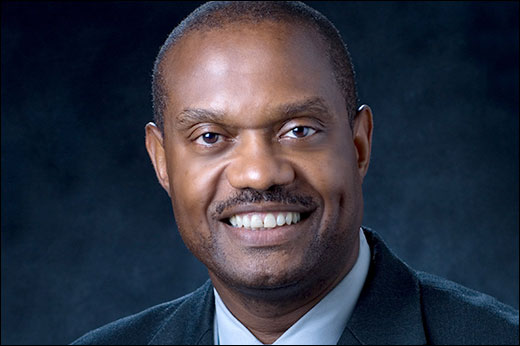
Eugene McCray, M.D., Director, Division of HIV/AIDS Prevention, National Center for HIV/AIDS, Viral Hepatitis, STD, and TB Prevention, Centers for Disease Control and Prevention
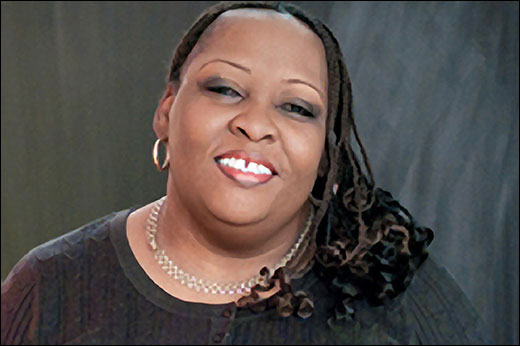
Linda Scruggs, founding member of the Positive Women's Network-USA and the National Black Woman HIV Network
President Donald Trump hasn't said much about his plans to fight the HIV/AIDS epidemic, and maybe that's a good thing, some health-care advocates say. If alternative facts or sudden changes in policy or funding associated with fighting the deadly disease spill out in 142 characters, the progress that the HIV/AIDS community has experienced in recent years could be wiped out completely.
When contacted about the future of the Office of National AIDS Policy, White House officials commented that they're working diligently on "all health-related policies that will improve the lives of all Americans." The official webpage for the Office of National AIDS Policy no longer has any content. Several weeks ago it offered only a stock message that said: "Thank you for your interest in this subject. STAY TUNED AS WE CONTINUE TO UPDATE WHITEHOUSE.GOV." The telephone number that was listed on the webpage in February was disconnected before it was removed from the webpage entirely.
Still, longtime HIV/AIDS advocates and health-care professionals expressed ambivalence about Trump's silence on the AIDS epidemic. "Fortunately, HIV has always been a bipartisan issue," said Ron Simmons, the former executive director of Us Helping Us, an AIDS non-profit group focused on Black gay men. "So we shouldn't assume that that is going to change."
Simmons credited the Obama administration with shining a spotlight on the unique challenges that young Black gay men face.
Simmons continued: "I'm not sure if Trump will have the same focus on Black gay men. [By the end of the first 100] days, we should get an idea about where he's going."
According to the Centers for Disease Control and Prevention (CDC), Black men have a 1-in-20 chance of being infected with HIV in their lifetime, compared with a 1-in-132 lifetime risk for White men.
In 2013, even as new HIV diagnoses plateaued among most groups in the United States, researchers reported that new HIV diagnoses increased by 48 percent among young Black gay men. Further confounding health-care professionals was the fact that Black gay men have fewer partners and use recreational drugs at lower rates than other gay men, according to research reported at the Conference on Retroviruses and Opportunistic Infections in 2013.
In a 2016 statement about the lifetime risk of HIV diagnosis, Eugene McCray, M.D., director of the CDC's Division of HIV/AIDS Prevention, said that the estimates were a sobering reminder that gay and bisexual men face an unacceptably high risk of contracting HIV.
"If we work to ensure that every American has access to the prevention tools we know work, we can avoid the outcomes projected in this study," said Dr. McCray.
HIV/AIDS activist Linda Scruggs, founding member of the Positive Women's Network USA and the National Black Woman HIV/AIDS Network, said that pre-exposure prophylaxis (PrEP) is one of those prevention tools and that officials in the Trump administration should do what they can to increase awareness about PrEP and to expand outreach to heterosexual males.
Scruggs, director of Ribbon Consulting Group, LLC, an organizational development firm that specializes in non-profits, corporations and government agencies providing resources about HIV/AIDS and other chronic diseases, said that when she got involved in the fight to end the AIDS epidemic in the early 1990s, the only voices that were being heard were the voices of gay men, particularly White gay men.
"As a result, many women were suffering in silence and being underserved in their communities," said Scruggs.
Scruggs added that the current administration's HIV/AIDS strategy should include a focus on Black women of childbearing age, a group that is disproportionately affected by the AIDS epidemic. Black women have a 1-in-48 lifetime risk of contracting HIV, compared with a 1-in-880 lifetime risk for White women, according to the CDC data.
Scruggs said that the biggest thing that President Barack Obama did was keep his word when it came to his National HIV/AIDS Strategy (now found on a site that archives whitehouse.gov content from the previous administration), a five-year plan that detailed a collective national response to the HIV epidemic.
"Obama said to America, 'We have to have a plan. We're not going to end HIV in America without somebody creating real sustainable goals . . . and getting the entire government involved,'" said Scruggs. "It was the first time in the HIV community that it was all hands on deck."
Scruggs continued: "The National AIDS Strategy was a huge success under his watch."
Simmons agreed.
"The best thing President Obama did on HIV was develop a National AIDS Strategy that brought gay Black men to the forefront in terms of the epidemic," said Simmons. "Once that happened and they deemed that the money would follow the disease war, community-based agencies for gay men had the resources to do what they were able to do."
Some activists have scrutinized the records of Trump's closest White House allies for clues into how he will address the epidemic. The new secretary of health and human services, Tom Price, M.D., not only opposed same-sex marriage but also fought against the passage of the Affordable Care Act, which guarantees coverage for people with pre-existing conditions, including HIV.
In a press release about Dr. Price's nomination, Planned Parenthood President Cecile Richards said that if he has his way, "millions of women could be cut off from Planned Parenthood's preventive health services like birth control, cancer screenings and STD tests."
The statement continued: "From his plan to take no-copay birth control away from 55 million women [by repealing Obamacare] and allow insurance companies to charge women more for the same health coverage, to his opposition to safe and legal abortion, Price could take women back decades."
As the governor of Indiana, Vice President Mike Pence was criticized for slow-walking his response to an outbreak of HIV infections among intravenous drug users in his state in 2015.
According to the Huffington Post, Jennifer Kates, Ph.D., vice president and director of global health and HIV policy at the Kaiser Family Foundation, said that it's still too early to know how the Trump administration will respond to the AIDS epidemic.
Kates said, "Any cutback in coverage would affect those in the LGBT community, and the stakes are particularly high."
Simmons said that the Black community should know that any cuts to the AIDS Drug Assistance Program would have a significant impact on the fight to end the AIDS epidemic.
"A lot of young people don't remember what it was like before we had medications that helped people survive and thrive while HIV positive," said Simmons. "If the money does dry up, how do we make sure it doesn't go back to the old days? That's the question we have to answer."
Simmons continued: "I remember the old days, and it was not pretty. I hope it doesn't come to that."
Scruggs said that whatever the Trump administration decides to do, Black parents need to make the decision to educate their children about sex and not to depend on schools to teach their children about HIV and AIDS.
"It's a time for us to stay watchful," said Scruggs. "It's time for us to be diligent in continuing to do the good things that we do and not be distracted by threats of the unknown."
Freddie Allen is the senior Washington correspondent for Black Press of America. You can follow him on Twitter.