BTAN Bay Area's Denisha DeLane: Making Black Women a Priority
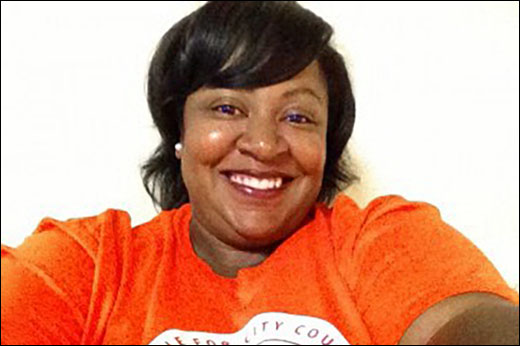
Denisha DeLane, Digital Media and Marketing Professional, Faith in the Bay/In Faith Media
When I was 13, one of the members in the choir at my church passed away and nobody talked about it. It was hush-hush. Years later, I found out he died from AIDS. That was my introduction to the disease. Now, at 37, I am the program coordinator at Allen Temple Health and Social Services in Oakland, Calif., which is part of Allen Temple Baptist Church. I've been working there for six years and handling all of the HIV-outreach programs and services, and I love what I do.
I'm very connected to this field because of my deep and abiding faith that we are supposed to serve those who need it and show love in every possible way.
Working in Oakland, the realities of the neighborhood show up every day. Sex workers at the corner stop by to fill up on condoms, but I make them feel comfortable enough to talk about anything. Five years ago they'd say, "I don't have time to talk to you." But now we talk about their lives. I'll ask, "Are you OK? Do you need support?"
I also talk to them about PrEP (pre-exposure prophylaxis). This medication should be targeted as much as possible to Black women and in our social environments, but it's not. Why are Black people not talking about PrEP? Is PrEP being targeted to women at Afropunk? Or at the sorority conferences in our community? Or the Essence Festival? Those opportunities are not capitalized upon to reach women who are possibly high-risk. We have to say that our mothers, sisters, daughters and aunts matter. This is a holistic opportunity to impact the community and not cherry-pick who gets dealt with now as opposed to later.
I think the slow uptake of PrEP among women is about priority. We're not doing outreach in a culturally competent way. We're still doing blanketed outreach and blanketed education, as if outreach to Black women is the same as outreach to any other cultural group. It's completely different. This picking and choosing between men and women has been detrimental to our community and affects African American women. (Of the total number of women living with HIV at the end of 2014, 60 percent were African American, while 17 percent were White.) How is it that we're not informing straight females as much as we're informing gay men?
In the Bay Area, we're introducing people to PrEP, giving out more condoms and providing information about HIV treatment. Last year we began a program called Prepping for Pride. We have two annual Pride parades in our community, one in San Francisco and in Oakland. Before both, we have a PrEP 101 lunch conversation for HIV-negative people. Most of them, especially women, have no idea there is a pill. I'll ask, "Do you know there is a pill option that prevents you from getting HIV?" And they'll say, "What? When did this happen? Why didn't anyone tell me? Why aren't people talking about it?" These are exactly the people we're trying to reach at Prepping for Pride.
Also, in partnership with our local BTAN (Black Treatment Advocates Network) chapter, which I co-chair, we plan to roll out a local podcast called Fluid Talk for Alameda County and other parts of Northern California to highlight different organizations where people can get a variety of sexual-health screenings and other HIV services.
I'm really excited. In five years our BTAN chapter has been able to do some tremendous work reaching Black communities. A few years ago we started receiving donations of test kits so that when we do community-level engagement, we don't have to drain the resources at the agencies. That is empowering.
I do wish there were more Black women in this field, and I encourage them to become part of it. Especially now. There is space at the table to talk about the needs and the concerns of straight, HIV-negative women who are at risk.
As told to LaShieka Hunter, a freelance writer and editor based on Long Island, N.Y.