AAHU Fellow Yolanda Price: I Will Always Be an Advocate for Women
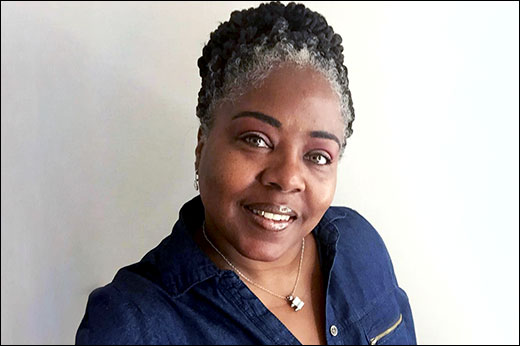
Yolanda Price, a graduate of the African American HIV University
One in a series about recent graduates of the African American HIV University (AAHU).
Yolanda Price, 51, has never had a job in the HIV/AIDS field. Never held any type of position at a non-profit or a public or private sector organization fighting against the disease.
Yet she decided to apply to AAHU because after volunteering for the Black Treatment Advocates Network in Melbourne, Fla., she wanted to increase HIV/AIDS awareness and help educate people—particularly women—about the disease.
"The focus is often on MSM, but some of these men are also sleeping with women and infecting them. So what about these women? It's like they've been forgotten," says Price. "My goal is to educate Black women to advocate for themselves. My passion is to fight for us and stand up for us."
For the past 12 years, the Melbourne native has worked for the Florida city of Palm Bay as an administrative assistant, supervising the administrative staff. But in 2012 she began volunteering with BTAN Melbourne to help her cousin John Curry, who started the chapter after completing the Black AIDS Institute's Science and Treatment College, since there was no BTAN in their city. When Price wasn't at her government job, she was serving food at her cousin's events or helping him clean up afterward.
"I really didn't know much about HIV/AIDS, but I was listening to the speakers and learning about the disease—about reducing the stigma, testing and knowing your status, and hearing these things over and over. I became very interested," Price remembers.
She began assisting Curry in partnering with local churches to provide HIV education, awareness and testing for the community. She enjoyed her volunteer work so much that when Curry mentioned and handed out AAHU applications to her and the other BTAN members, she decided to try her luck. Price was surprised when she got accepted into the program, and was eager to delve further into the HIV/AIDS field.
Trust the Process
For Price, the AAHU training was an eye-opener. She learned the science of the disease, the terminology around HIV/AIDS, about stigma and about treatment. "The training made me understand the origin of AIDS. That was huge for me because I was able to come back to my community more educated," she says. "I learned what was true and what's not true about the disease. Now I can break down some of these myths that are out there. AAHU has allowed me to educate other people."
Most of the people in her AAHU training class had either worked in HIV/AIDS or were HIV positive. She was the only one who had just volunteered as a member of the community. "I was there because I wanted to learn. Yes, the program was rigorous. It was a lot of information and it was all very new to me, especially with me not having a real background in HIV/AIDS. But I had to trust the process, and it was all worth it," she says.
Since graduating, Price has been working with BTAN Melbourne even more and trying to heavily spread the word about pre-exposure prophylaxis (PrEP) in her community. "A lot of people don't know [about] PrEP, especially in the Black community. And I live in a community where there is not a doctor who can prescribe the medication, so we have to tell people to go to a clinic in Orlando because there are a couple providers over there," says Price. "But people need to also educate their doctors about PrEP because many of these doctors don't know about it or, for whatever reason, they don't want to be involved with HIV/AIDS treatment."
Although Price does not plan to leave her career in government for a full-time HIV/AIDS job, she's working toward a master's degree in public health and says that she will continue to be part of BTAN Melbourne and be an advocate for women. "I will always encourage them to take pride in themselves, be healthy and love themselves. I will continue to tell them to be proactive and go to the doctor and know what is going on with their bodies," she says. "I love sharing the knowledge I've gained, and if I can save one woman or one young girl from getting the disease, then it [is] all worth the while."
LaShieka Hunter is a freelance writer and editor based on Long Island, N.Y.