In This Issue
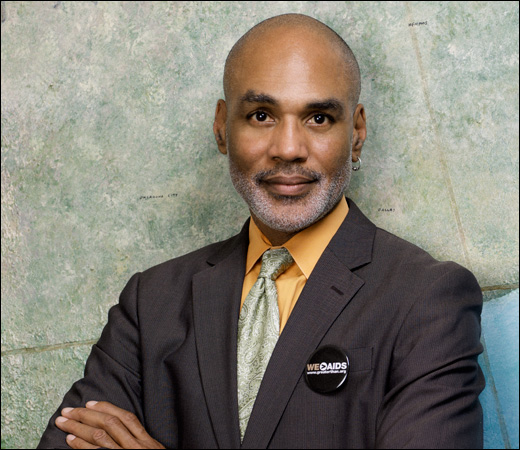
Last week the CDC released data from a new analysis showing If current HIV diagnoses rates persist, about 1 in 2 Black men who have sex with men (MSM) and 1 in 4 Latino MSM in the United States will be diagnosed with HIV during their lifetime. This study is the first-ever comprehensive national estimates of the lifetime risk of an HIV diagnosis for several key populations at risk and in every state.
I don't know what to say. This information is outrageous to say the least. But what is really outrageous is the information is not new.
In 2000, Dr. Linda Valleroy of the CDC released data from a six-city Young Men's Study showing that approximately one in three—33 percent—of young Black MSM ages 23-29 were HIV positive. In 2001, CDC released data showing HIV incidence (the rate of new infections each year) among young Black MSM was 15 percent.
In 2005 CDC released an analysis of data from five cities participating in the National HIV Behavioral Surveillance system showing the HIV prevalence rate for Black MSM was 46 percent, and two-thirds were unaware of their HIV status. That means that nearly half of all of the Black MSM that were tested in a 2005 study were already HIV positive and vast far majority did not know it. That was 11 years ago! Do Black Gay Lives Matter?
I spend many of my days listening to Black people share with me their belief that HIV is a deliberate attempt to commit genocide against us. And people think they are crazy. Really?
Black gay and bisexual men in the U.S. are the most at risk population for HIV infection on the planet. It seems as if it is no big deal for us to have HIV rates higher than some sub-Saharan African countries. Just like it seems to be OK for young Black unarmed men to be gunned down by the police or each other, or for 51 percent of Black teenagers to be unemployed.
But it is not OK and it's not right.
According to the CDC, they devote more HIV-prevention resources to MSM—especially MSM of color—than to any other risk group. That might be so, but it is still is too little, too late.
A few months ago I was speaking with a newly diagnosed Black gay man. I was visibly distraught—not at him, but for him. Even though I know why and how it happened. I was having a difficult time wrapping my brain around another young Black man having to live the rest of his life with HIV. He was surprised and a little confused at my reaction. He said to me, "Mr. Wilson, you just understand: nobody cares about us, including us."
I am often reminded of the founder of the United Black Fund in Washington, D.C., who said "nobody can save us, but us."
When it comes to Black MSM, many HIV-prevention policy makers seem to believe that the messenger doesn't matter. The CDC may be targeting MSM, but we're not going to end the AIDS epidemic among Black MSM unless and until we invest in Black MSM. HIV is a disease of sexual networks. Clearly Black gay men know how to find one another. We are looking for each other and finding each other in all sorts of ways and places, many of them we don't necessarily want government agencies or people outside our community to know about. But, we know who we are and where we are. What we don't necessarily know are all the current facts on HV science and treatment. If we are serious and we believe Black gay lives matter, then the messenger matters. We need a major, comprehensive, national effort to really attack the AIDS epidemic among Black gay and bisexual men. The primary tenet of that effort has to be "nothing for us, without us." We have to recruit and train Black bay men to play the primary role in the design, implementation and evaluation of any effort meant to save our lives.
In the words of Essex Hemphill, "I want to start an organization to save my life. If whales, snails, dogs, cats, Chrysler and Nixon can be saved, the lives of Black men are priceless and can be saved. We should be able to save ourselves."
And, speaking of saving ourselves, today is Super Tuesday, when primary voting and caucusing takes place in 12 states. This year's election is critically important. Whoever is the next President of the United States will determine if Black lives matter in this country. We have to make sure those seeking the highest office in the land know what we think and want. If you believe the lives of Black gay men matter, you have to get involved in this year's election. You have to vote.
Yours in the struggle,
Phill