Heroes in the Struggle: Mark Ridley-Thomas
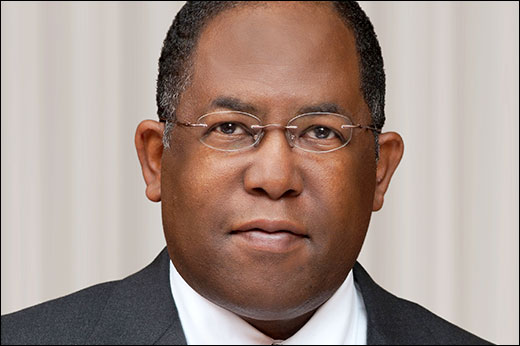
Mark Ridley-Thomas, Supervisor, 2nd District, Los Angeles County Board of Supervisors
The Black AIDS Institute's Heroes in the Struggle Gala and Award Celebration honors, in a star-studded event and photographic tribute, individuals who, over the past year, have made a heroic contribution to the fight against HIV/AIDS. Below, one in a series profiling the 2016 honorees.
For 25 years Mark Ridley-Thomas, the Los Angeles County supervisor for the 2nd District, has been a bellowing voice and strong advocate for the underserved, the disenfranchised and the marginalized. The health of the more than 2 million residents he governs has been at the forefront of his political agenda—especially in the HIV/AIDS fight, for which he has been on the front lines since his political career began.
Ridley-Thomas was elected to the Los Angeles County Board of Supervisors in 2008 and re-elected in 2012. Prior to that, he served as a California state senator from 2006 to 2008, a California state assemblyman from 2002 to 2006 and a Los Angeles city councilman from 1991 to 2002. While holding these positions, Ridley-Thomas worked closely with churches and other institutions to provide education, prevention and access to care for people living with HIV/AIDS. He met with some resistance early on, likely because of HIV/AIDS stigma. "That was over 20 years ago. Now churches are more willing to step into this arena out of a sense of care and concern, and seeing it as a health-care issue, rather than an opportunity to discriminate against people based on orientation," he says.
Ridley-Thomas has also been instrumental in instituting important health policies throughout his district. He oversaw the construction of the new Martin Luther King Jr. Community Hospital in L.A., as well as a network of other cutting-edge health-care facilities in Los Angeles County, and he secured funding for health clinics in underserved areas through public-private partnerships. Ridley-Thomas was also the champion behind the county's decision to expand access to pre-exposure prophylaxis (PrEP).
"Prevention and education are so important, and it's just that simple. There will be new methodologies and new technologies to up our game in the fight against HIV/AIDS," he says. "We need to take every opportunity to step forward and every opportunity to educate young and old people about their behaviors and what they can lead to. PrEP is what is new and what is next, and proving to be effective."
For Ridley-Thomas, promoting and providing new medications and applications makes the cause worth the pursuit. "From a public policy perspective, if we are serious about this issue of prevention and education, then we are obliged to extend the state of the art as broadly and deeply as possible in the fight against HIV/AIDS," he says.
But for many people, particularly Black Americans—who make up 44 percent of new HIV diagnoses—PrEP is not an option because they've never heard of the HIV prevention strategy or its medication, Truvada. In order for Black communities to see an increase in PrEP uptake, Ridley-Thomas says, an open and honest conversation is needed within those communities as well as within families. "It's a matter of asking, do you want to get sick, and more sick, and potentially die? Or do you wish to live at a certain quality of life that is available by simply following an uncomplicated regimen? You have choices and you ought to exercise them, and there need to be cultural norms that inform how we cause that to happen," he says. "Work needs to be done at the personal, familial, as well as the policymaking level and the governmental level."
Ridley-Thomas commits to remaining responsive and faithful to those he swore an oath to represent. He believes that health care is a right, not a privilege, and the fundament of being human in a democratic society. So he will continue to fight for human rights and social justice—particularly in health care and HIV/AIDS. He is building his legacy on it.
"I'm just a brother willing to step up and use the resources at his disposal to help end the struggle, one willing to listen to those who have much more knowledge and commitment to this issue," he says. "I want to be remembered as someone who chose not to cause anyone else to think that the quality of their life, or essence of their being, was anything less owing to a health malady."
The Heroes in the Struggle Gala and Award Celebration will take place Dec. 1, 2016, at the Directors Guild of America in Los Angeles. To purchase tickets, go here, email
LaShieka Hunter is a freelance writer and editor based on Long Island, N.Y.