BTAN Charlotte Bridging the Gap Between Church and Community
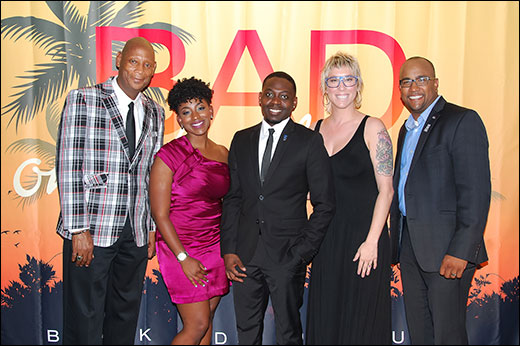
Jeffrey Edwards Knight, Solita Jeffries, Darrin K. Johnson, Hannah Stutts, and Jaysen Foreman of BTAN Charlotte
Stigma remains a major challenge when it comes to fighting the HIV/AIDS epidemic, but not only can the faith community play a huge role in reducing it, but many spiritual communities also stand ready and willing to lend a hand, said panelists at an AIDS 2016 Local Update event in Charlotte, N.C.
The discussion, held Sept. 23, 2016, at the Mecklenburg County Health Department, was one of several events hosted by the Black AIDS Institute across the country to inform the community about the research and advances that came out of the International AIDS Conference in Durban, South Africa, in July. The Charlotte chapter of the Black Treatment Advocates Network (BTAN) organized the event. A number of local partners and national organizations took part, including the Mecklenburg County Health Department, RAIN, Quality Home Care Services, Gilead and CADRE.
"This discussion in particular talked about how the church can better support members of the congregation and can be used as a safe space for HIV prevention and community engagement," says Darrin K. Johnson, a research project director at UNC Charlotte, and a BTAN Charlotte co-chair.
The conversation was particularly eye-opening because many people living with HIV/AIDS (PLWHA) have felt ostracized by the church at some point in their lives. "Churches want to do work for HIV, which is opposite from the assumed belief in the community," says Geneva Galloway, chief executive officer of Trinity House CLT, a Charlotte-based organization that educates faith-based organizations about HIV's impact on the community. Galloway, who was a panelist for the event, says that churches are opening their doors and looking for ways to connect.
Feeling safe within a faith community is important because "there is still a lot of HIV stigma in the community and it is a barrier for HIV prevention, community engagement and treatment," Johnson says. "Stigma is a contributing factor to increasing HIV rates. Continuous education and skills building among providers and community members is necessary to create and maintain strategies to reduce new infections."
The International AIDS Conference is the premier gathering for people working in the field of HIV, including policymakers, researchers and PLWHA. The goal of the conference is to assess where we are in fighting the HIV/AIDS epidemic, determine what the most pressing needs are and come up with a plan to move forward. Several significant activities took place at the International AIDS Conference around faith. Among them were the Interfaith Pre-Conference at AIDS 2016 and the Black AIDS Institute's Faith Webinar and Faith Breakfast Update.
Attendees of the Charlotte post-event also talked about the utilization of pre-exposure prophylaxis (PrEP) and the importance of getting more people to know about and use PrEP. While some attendees had heard of PrEP, everyone benefited from additional information about it, says Jeffery Edwards-Knight, supervisor of HIV/STD community services with the Mecklenburg County Health Department and one of the event's organizers.
One reason for the lack of knowledge about PrEP could be the medical mistrust within the African American community in general, Edwards-Knight points outs. Historical events such as the Tuskegee experiments in 1932, in which Black men were left with untreated syphilis and not informed that they were part of a government clinical study, have made many Black Americans fearful of medical research. However, "it's important that we be a part of these clinical trials and new treatments so we are more knowledgeable about how to help with our own prevention and treatment," Edwards-Knight says.
"We can prevent new cases from happening. We just need Black people to be involved in this fight, and there are ways of doing that," Edwards-Knight adds. "The BTAN Charlotte chapter, that's what we're working for: to get the education out there."
Tamara E. Holmes is a Washington, D.C.-based journalist who writes about health, wealth and personal growth.