Trauma-Informed Approach Enhances HIV Care
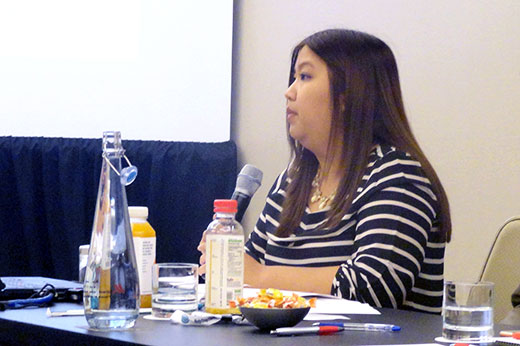
Wichada Hanatamachaiku, ISTAR Program in California
Is trauma-informed care linked to HIV retention? Community health organizations believe it is. A workshop at the 2015 United States Conference on AIDS in Washington, D.C., spotlighted several organizations that integrate mental-health treatment for victims of violence into their HIV care. As a result, the women are more inclined to adhere to HIV treatment and maintain ongoing relationships with health-care providers.
Trauma Care and HIV
Post-traumatic stress disorder (PTSD) is prevalent among women with HIV. Studies show a 30 percent rate of recent PTSD among HIV-positive women and a 55 percent rate of intimate-partner violence, more than twice the national rate. African-American women who experience substance abuse, a risk factor for acquiring HIV, are likely to have experienced co-occurring childhood sexual abuse, intimate-partner violence and PTSD.
Incorporating trauma-informed care into HIV-treatment services can ensure that women not only heal mentally but that they find renewed value for their lives and adhere to medications. The Substance Abuse and Mental Health Services Administration (SAMHSA) provides guidelines on how to address trauma and violence including several key principles of trauma-informed approach and care:
· safety
· trustworthiness and transparency
· peer support and mutual self-help
· collaboration and mutuality
· empowerment, voice and choice,
· Cultural, historic and gender issues
ISTAR
ISTAR Women's Program, a free, four-week long, intensive outpatient program where HIV-positive women can receive group counseling and therapy for co-occurring disorders such as PTSD, presented during the session. Wichada Hanatamachaiku, a representative from ISTAR said that the program, based in Long Beach, Calif., addresses mental-health struggles, interpersonal-relationships skills and health disparities, among other issues. Out of 110 women serviced through ISTAR, 80 percent report experiencing some form of trauma, she says. ISTAR's approach uses an amalgam of three counseling models: the Boston Consortium Model, SISTA Model, and Motivational Interviewing. As a result, ISTAR's clients have gained support, remained in HIV care and developed better relationships with each other.
"Many of the women say they never had women friends before; they don't trust women. But by the end, the women report that they feel better about female relationships. The group feels more like a family to them," reports Hanatamachaiku.
Greater numbers of organizations that help women with HIV are implementing trauma-informed care as a part of their overall mental-health strategy. This holistic approach has the promise to produce long-lasting results.
It's time to stop asking, "What's wrong with this woman?" and to start asking, "What has this woman been through?" This is when healing can truly begin.
Candace Y.A. Montague is an award-winning freelance health writer based in Washington, DC. She is also the health reporter for Capital Community News.