In This Issue
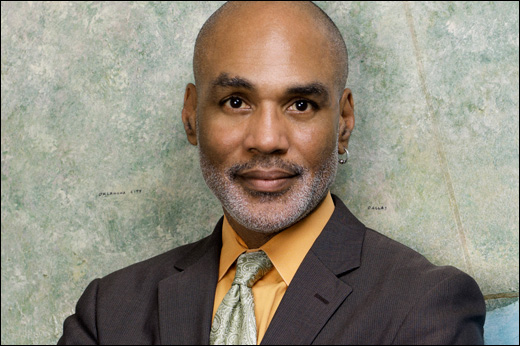
The past week has been an interesting, eclectic and exhausting week for the Black AIDS Institute. My week started off at the BTAN Chicago monthly meeting, where, among other things, we talked about a meningitis outbreak among Black gay and bisexual men. The health department is mobilizing and providing vaccines. Unfortunately, fewer MSM are being vaccinated than the department had hoped—or is needed to disrupt the outbreak. As we have said before: The messenger matters.
While I was in Chicago, other members of our team were launching a PrEP breakthrough collaborative in Atlanta, where our goal is to develop a set of community-based PrEP best practices and we were reminded just how complex the delivery of bio-medical interventions will be. Afterward, several of us launched BTAN Charlotte by conducting the first BTAN science and treatment training in North Carolina. From Charlotte, I flew to New York to attend the annual Dancers Respond to AIDS festival on Fire Island, where I was reminded of what can happen when communities come together.
I write this piece from Vancouver, Canada, where I am attending the 8th IAS Conference on HIV Pathogenesis, Treatment and Prevention and there are a number of presentations on biomedical interventions, including treatment as prevention (TasP), pre-exposure prophylaxis (PrEP) and post exposure prophylaxis (PEP). At the opening press conference on Sunday, Dr. Nora Volkow from the National Institute of Drug Abuse (NIDA) reminded us that we have the tools we need to end the epidemic but are not using them because we allow ideology to get in the way. She pointed out that the recent HIV outbreak in rural Indiana happened because ideology-based public health policy had prohibited the implementation of proven HIV risk-reduction strategies, like needle-exchange programs. On Monday, Dr. Tony Faucci from the National Institutes of Health spoke of how the combination of increased HIV screening, early treatment, TasP, PrEP, and PEP improve life expectancy of people living with HIV/AIDS and reduces both HIV transmission and acquisition. Studies conducted in both developing and developed nations show identifying people with undiagnosed HIV and helping them achieve and maintain viral suppression is good for the patient and good for the public health. But it all boils down to this basic question: What good are the medical/scientific advances if they are not used expeditiously, effectively and compassionately?
In this issue we introduce you to two important messengers in the HIV/AIDS movement who are getting the word out to Black MSM about the biomedical interventions. We start by introducing you to the Black AIDS Institute's program coordinator, Matthew Rose.
We also kick off a new series about some of the courageous young Black MSM in Kaiser's #SpeakOutHIV campaign, starting with Manyonge Jarrett Makokha, better known to many as Jai with the Funny Name.
Recently the CDC released a new Vital Signs Report that supports the call-to-action to increase the number of people living with HIV who achieve viral suppression. Dr. Jonathan Mermin reports for AIDS.gov.
Next Thursday, July 30, the White House and AIDS.gov will live stream the release of the National HIV/AIDS Strategy: Updated to 2020 during an event in Atlanta, Georgia. You can find all of the details here.
Finally, I hope that many of you have begun reading Ta-Nehesi Coates's powerful new book "Between the World and Me." In the event you haven't, we share a link to an in-depth article in New York magazine that we think is worth reading. He, too, is an important messenger.
Yours in the struggle,
Phill