Black AIDS Institute Holds National BTAN Meeting at 2015 U.S. Conference on AIDS
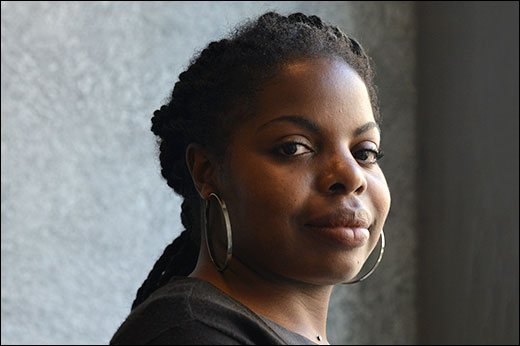
Darriane Martin, BTAN National Director, Black AIDS Institute
On Tuesday, approximately 60 people took part in "Black Lives Matter: Local Impact/National Reach," the second national conference of Black Treatment Advocates Network (BTAN) leaders and other activists, held in the Barbara Jordan Conference Room at the Kaiser Family Foundation. The gathering took place before the start of the 2015 U.S. Conference on AIDS (USCA) in Washington, D.C.
The "Black Lives Matter" national meeting gave BTAN participants the opportunity to discuss progress in the fight against HIV/AIDS, create a plan for 2016 and share ideas with other leaders and Institute staffers in real time. BTAN is a collaboration that links Black PLWHA to care and promotes HIV education and treatment literacy.
The day began with a presentation by Rebekah Israel, the Institute's training and capacity building manager. Israel provided an overview of BTAN's four main project areas: treatment education, which includes the African American HIV University (AAHU), brown-bag lunches, learning about the science and treatment of HIV, and biomedical prevention); patient navigation; voluntary disclosure; and advocacy.
She also introduced the Seek, Test, Treat, and Retain (STTAR) strategic framework, which seeks to connect with people who are at risk for acquiring HIV and/or who unknowingly live with the disease or have fallen out of care. It then tests them for HIV, treats the people who test positive and links them to care, then retains those individuals in care by engaging in supportive and meaningful interactions with them.
"When we think about adherence, we think about the research that shows that it's much easier for people to adhere to medications when they have someone guiding them along, being a mentor to them, as they're going to doctors' appointments and learning new medications," Israel said. "So patient navigation is really key."
She also spoke about the importance of clinical trials, which provide valuable information to researchers and assist them in developing treatments and medical interventions that work for specific populations.
"Black people are not excited about participating in clinical trials," said Israel. "We know that in the history of America, in the history of the world, Black people have been experimented on and we have these fears when it comes to participating, but it's really important for us to do so."
Josephine Ayankoya, BTAN mobilization coordinator, led a session on naming and confronting anti-Black racism in HIV/AIDS advocacy. The session included watching Dr. Camara Jones's lecture on institutionalized racism. Four breakout groups then discussed how to apply what they learned to BTAN's advocacy efforts.
The co-chairs of BTAN Los Angeles and BTAN Broward County then shared their experiences with planning HIV programs.
After lunch, the Dissonance Dance Theater performed "Zero," about HIV, and the choreographers and dancers discussed ways to use art forms to advocate and educate.
Participants then broke in to groups, where they presented and discussed their local 2016 work plans.
National BTAN director, Darriane Martin, said that she plans to visit all of the current chapters to assess the status of their work. The Institute partnered with Merck to launch BTAN in 2010. The first chapters were in Philadelphia, Pa., Jackson, Miss., and Houston, Tex. The next year chapters in Los Angeles, Calif., Chicago, Ill., and Atlanta, Ga., were added. Today, BTAN consists of 20 chapters, including dual chapters in Baton Rouge and New Orleans, La.; Miami and Fort Lauderdale, Fla.; and San Francisco and Oakland, Calif.
While the Los Angeles chapter of BTAN is set to implement the advanced STTAR model, some chapters are still in pre-launch mode while others have had to start over altogether.
The most important thing that BTAN members should learn from their experience at the United States Conference on AIDS is that advocates have power, said Martin.
"There is power is our voice, there is power in our work and there is power in our existence," said Martin. "BTAN gives us the opportunity to harness that power in such a way that it can't be ignored."
By Hilary Beard. Reporting by Freddie Allen.