Bringing the Story and Science to The People
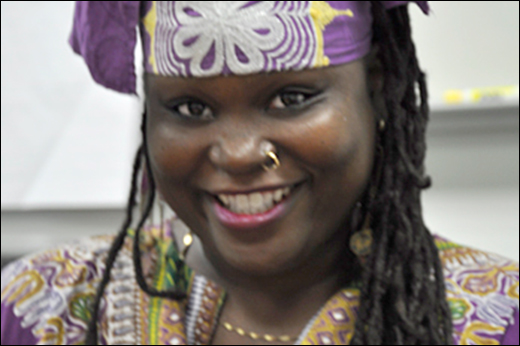
Yaa Simpson
I had never thought about going to Australia, but Lynn Kidd encouraged me so we can chart new international waters while continuing our over 20 years of committed advocacy work within the field of HIV.
During the past 10 years, Lynn and I have attended the United States Conference on AIDS (USCA), as well as several AIDS Clinical Trials Group (ACTG) national meetings. Although my first International AIDS Conference took place in Washington, DC, going to Australia would serve as my very first one that actually took place overseas. In DC, I was given the honor of being a Chicago delegate for the Black AIDS Institute (BAI), which included some media duties. But for the AIDS 2014 my entire role is as a media representative—not only for the Black AIDS Institute, but also for Chicago local cable network TV (CANTV) and the non-profit The Association of Clinical Services (TACTS).
As media representatives we are charged with covering various press releases, plenaries, sessions, and special events in the Global Village. More specifically our BAI team was given the task to cover the stories from the perspective of what is relevant for our Black/African-American constituents living in the U.S. My assigned topic was on HIV and Criminalization and its impact on Black people. I was asked to cover the press releases and panel discussions for this topic as well as take copious notes, pictures and get direct quotes from the speakers.
For example, at the press release for the session on Police Interventions, I greeted the panel in English and in Tree (a Ghanaian language) introduced myself and stated my BAI affiliation. I then asked James Pagel, former Seattle police chief, if other cities, like Chicago, were utilizing his "Law Enforcement Assessment Divergent Document," that outlines the policies for police officers to engage in harm reduction models, despite the laws, which enforce mass incarceration. He had visited the Southside of Chicago two years ago. "As of yet they had not signed on to the document," he shared.
I was also able to share with police officers from other countries, including Burma, Kenya and Ghana, that their non-traditional interventions to "protect and serve the people" were similar to the civil disobedience stance practice during the U.S. civil rights movement. My questions and comments must have struck a chord because afterwards I was able to interview James Pagel and Jones Blantari, chief superintendent of the Ghana Police Service's AIDS Control Programme—two of the main panel speakers. They both commented on how the laws they were sworn to enforce were in some ways causing more harm to their people.
The best part about being a media representative is having the access to meet so many interesting and key people. Of course, I got my morning directives from Phill Wilson, CEO of the Black AIDS Institute, and support and guidance from other members of our media team: BAI's Rebekah Israel, and journalists Linda Villarosa and Ann Solter. My first interview was with Sharon Lewin, co-chair for the AIDS 2014 Conference. I took pictures of Jones Blantari; Keletso Makofane, Senior Researcher at Global Form and member of the World Health Organization (WHO) committee on guidelines for HIV treatment; Robert Doyle, the Right Honourable Lord Mayor of Melbourne; Dr. Lydia Muguhuana, a Uganda physician living with HIV, and various speakers in the Global Village, including Rebekah Israel. People like my husband Charles, my daughter Ajua and girlfriend Lynn supported me. As media I also get the opportunity to learn about the most salient topics, such as remission treatment to reduce the virus, sex workers' rights and demands, non-traditional police interventions, the new release of the female condom, biomedical and social medical tools.
So our BTAN Chicago post-AIDS 2014 hub will focus on the impact of criminalization upon Black people living with HIV.
Sista Yaa Simpson, is a community epidemiologist, represents TACTS, and co-chair of BTAN Chicago.