In This Issue
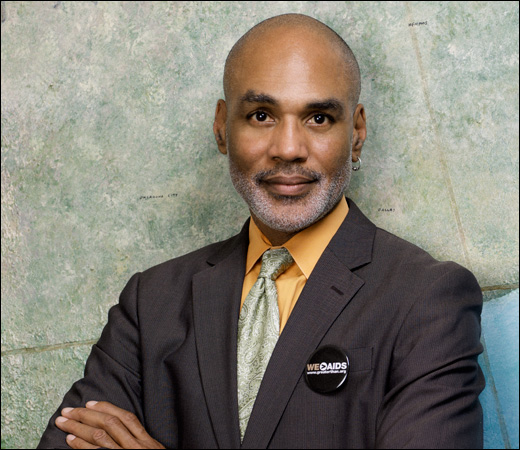
I'm not exactly a Sesame Street baby, but I remember the learning exercise that teaches children how to distinguish objects from other objects. It asks: Which one of these things is not like the other? This simple exercise helped me as a child and it might help us all better understand ideas necessary to effectively fight HIV/AIDS.
There was one major aha moment in the AIDS 2014 Monday morning plenary that I think will become a major theme in the new HIV/AIDS paradigm. This moment occurred during the presentation by Salim Abdool Kareem, M.D., Ph.D., from South Africa, who showed us a slide listing the top 10 countries (go to minute marker 41:30) that we need to address if we ever hope to end the AIDS epidemic. Nine of those countries—South Africa, Nigeria, India, Kenya, Mozambique, Uganda, Tanzania, Uganda and Zambia—are in Sub-Saharan Africa or the Global South. Can you guess what the 10th country is?
Yes, the U.S.A.
Setting aside the irony that the United States has the ninth worst AIDS epidemic in the world, the list instructs us what we need to do to end the pandemic, since 61 percent of it exists within these 10 nations.
In another session, titled "Taking the Pulse: WHO 2014 Global Update on the HIV/AIDS Health Sector Response," Mark Dybul, who was the first PEPFAR ambassador and is now executive director of The Global Fund, talked about how, unlike other diseases, HIV actually does discriminate. Engaging in geographic targeting and key-population targeting of HIV/AIDS will be critical to reaching the end game. Whether targeting countries, like Dr. Kareem's Top 10 List that includes the United States, or within the context of the U.S. epidemic itself, we need to be talking about regions and communities that the epidemic particularly impacts.
Finally, rejecting the Alice in Wonderland School of Public Policy—where we believe that what is, isn't and what isn't, is—might help bring about greater success. We know and have known for a very long time what populations in the U.S. are most impacted: MSM, sex workers, women (particularly Black women), youth, and Black America writ large. (Indeed, we urge you to read the Reports that the Black AIDS Institute has been publishing about the AIDS epidemic in Black America for 15 years, including these on Black MSM, Black women, Black youth and Black America.) Yet the funding does not appear to be following the science of the epidemic. Instead, a systemic dismantling of the HIV/AIS infrastructure in Black communities appears to be occurring.
Given the science coming out of this conference, it is imperative that the CDC in particular—which, for example, recently launched an MSM HIV campaign that virtually ignored Black men—but all federal, state and local agencies, pay attention to these realities. We will not be successful in ending the AIDS epidemic in if Black communities don't have infrastructure and capacity to lead in this work. If we fail in Black America, as The Black AIDS Institute has been saying for 15 years now, we fail in America.
In this issue we encourage you to watch the Institute's first AIDS 2014 webcast, where we interview Kaiser's Jen Kates and AmfAR's Greg Millett. We also report on the challenges and opportunities faced by PLWHA who have lived with the virus for 20 or more years. Ron Valdeserri talks with us about the rising mortality rates among African American men, implementing the National HIV/AIDS Strategy and the role that the Affordable Care Act will play in reducing hepatitis disparities. Anne Sulton of the Jackson Advocate reports on HIV/tuberculosis co-infection. And meet AIDS 2014 newsmaker Ifeanyi Orazulike, who runs a clinic for MSM and trans women in Nigeria, where homosexuality is now a crime and MSM account for 40 percent of new HIV infections.
Yours in the struggle,
Phill