July 25 Is National African American Hepatitis C Action Day
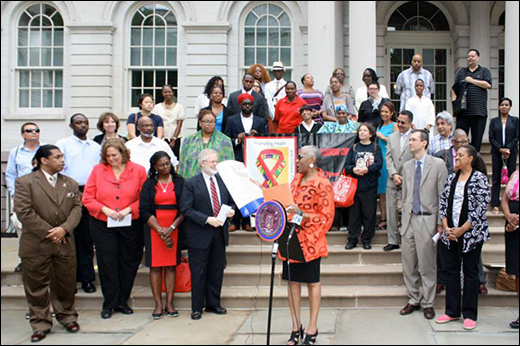
Hepatitis C Action Day in New York, 2013
In the United States, 3.2 million people have chronic hepatitis C virus (HCV) infection. HCV attacks the liver and causes hepatitis C, a contagious liver disease. Blacks make up about 22 percent of all HCV cases, according to the Centers for Disease Control and Prevention.
Hepatitis C is one of the leading causes of cirrhosis of the liver and liver cancer, but many people don't know anything about it. What's more, HCV is a "silent" virus that doesn't cause symptoms. People can live with it for many years and have no idea that they have it.
Who Is at Greatest Risk?
African Americans: Black people are twice as likely as Whites, Hispanics and Asians to have HCV. Anyone exposed to the blood of someone who has hepatitis C can acquire the virus. The primary modes of transmission include injection drug use, unprotected sex and accidental needle sticks among medical workers.
Baby boomers: Americans ages 45-64 are of special concern because of the higher rate of past injection drug use in their age cohort. In fact, about one in seven Black men in their 50s live with chronic HCV, which typically follows an acute infection.
Black MSM: In general, gay and bisexual men are considered at higher risk because they are more likely to engage in anal sex, which can tear tissues of the anus and cause bleeding (even microscopic amounts of blood can transmit the virus). Additionally, Black MSM account for a disproportionately high number of HIV infections (three-fourths of all new infections). Having both HIV and HCV, or coinfection, quadruples the risk of death from HCV-associated liver disease.
How to Take Action
The U.S. Preventive Services Task Force recommends HCV screenings for everyone who is at risk of infection and a one-time screening for every baby boomer. Screening involves giving a blood sample, which is then tested for hep C antibodies. Medications are available to treat acute and chronic hep C.
It's also important that we educate one another. Click here to access the free resources about HCV, offered by the National Black Leadership Commission on AIDS—a co-sponsor of National African American Hepatitis C Action Day—and to learn ways to increase community awareness.
Candace Y.A. Montague is a freelance health writer in Washington, D.C., who has been published in The Grio, The Body and Capital Community News.