Q&A: Grazell Howard, Incoming Board Chair of The Black AIDS Institute
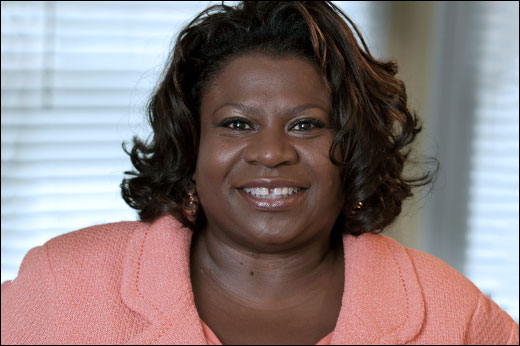
Strategic consulting expert and longtime health advocate Grazell Howard has been named chair of the board of The Black AIDS Institute. The North Carolina entrepreneur and New York native has worked for New York Rep. Charles Rangel; as a prosecutor and as an attorney for a major insurance company; and as an adviser, coach and partner with some of America's top executives and their organizations. Along the way Howard has also nurtured a passion for health issues. Here's where she sees the Institute heading.
What caused you to become a leader in the fight against HIV/AIDS?
I knew it was imperative that women, specifically Black women, be engaged in the conversation, in the policy and in the solution.
What got you involved in HIV/AIDS in the first place?
I didn't start in AIDS. I started with reproductive health and sudden infant death syndrome.
The founder of the National Coalition of 100 Black Women and the director of the National Institutes of Health entrusted me with being the architect of mobilizing people around specific health issues that impacted women and disproportionately impacted black women. For the first time, this mobilization effort was able to report a double-digit decline in sudden infant death. From there, I was invited to a weekend retreat hosted by The Black AIDS Institute.
I knew of AIDS. I knew of it back in law school when [I was] reading about it in The New York Times on a daily basis and people were dying. My friend David Cole from C&C Music Factory, he was dying. I knew that. I was not propelled initially to move. But by the time I left that weekend retreat, everything in me knew it wasn't about a specific population. It was about all of us.
What issues do you believe are among the most pressing now?
Our message is still relevant. Our mission is still relevant. But we have to continue to inform all communities about the constant need for funding to support the specific message for our community.
The Institute has a diverse group of audiences. And I am not the AIDS expert; I'm just part of the team. But I like this diverse group of seniors, middle-class people, the Talented Tenth, our tweens and the young vibrant, early professionals. When you have a diverse audience, you have to have appropriate outreach and solutions and funding.
It is distressing to me that the [Bill & Melinda] Gates Foundation only supports AIDS work in Africa, and the HIV-infection rates for populations in some U.S. counties are equal to numbers in sub-Saharan Africa. In small Southern towns, it can be worse [than in big cities].
How does the Institute fit into the goal of creating an AIDS-free generation?
The Institute has opened channels of communication with all of the demographics impacted by HIV and AIDS. We have a nice kind of dragnet, if you will, over this country, and the opportunity to help communities develop sustainable initiatives to move us towards an AIDS-free generation.
An AIDS-free generation means there will be amazing communication and some dissipation of stigma. We have to dissipate the stigma in order to be successful. That dissipation is also something the Institute can be relevant in.
What would you like to see the Institute accomplish during your tenure?
I'd like to see us continue to be the provocative advocate for people affected by HIV and AIDS. So that from the White House to my kitchen table to the Caricom nation of Jamaica, we can be far-reaching in changing policy and stimulating advocacy on HIV and AIDS.
We have to continue what Black AIDS Institute President and CEO Phill Wilson and I call "making friends." We need to make friends with people outside the world of HIV and AIDS. The legacy of my chair will be to have relationships with the top 50 corporations doing business in America that value our community. They value our community in general, including the fact that some of us are their employees, with the understanding that HIV affects their top and bottom revenue. You need a healthy workforce and you need a focused workforce.
I think part of my legacy will be to bring mainstream, middle-class Black women back to the conversation, because somehow we got derailed. We were looking for someone to tell us all Black men were on the down low, but they're not. And sexually transmitted diseases are life-threatening.
Being the feminist that I am, who happens to be Black, I know the only way this trajectory changes is if you engage Black women, irrespective of their age. Everyday Black women. If Bubba's mama is not at the table, and your sisters and aunts are not at the table, I don't know if you have a premise for success.
I get excited to hear about seniors having active sex lives. But I am totally dismayed when I hear of a 72-year-old contracting HIV, or about my mom's 68-year-old friend who doesn't think it's necessary to have safe sex.
So I would like to see funding, new friends through corporate spaces and a resounding declaration that message and the messenger matter.
Sheila Simmons is a Philadelphia-based freelance writer and public relations expert.