The Next Generation: Charles Scott
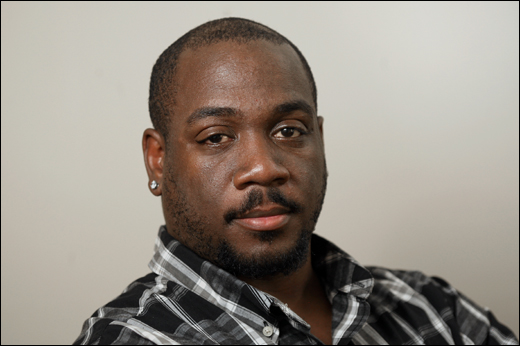
One in a series of profiles of the 2013 Fellows in the Black AIDS Institute's African American HIV University's Science and Treatment College.
Charles Scott was born in San Antonio to parents who are both doctors. He still remembers when he first became aware of the disease that he later learned was HIV/AIDS. "When I was a young boy, my aunt was always in and out of the hospital, and no one would say why. My mom would only say she's very sick," he recalls.
At around age 15 he learned the truth from his parents: His aunt was infected with HIV. His mother gave him a clear explanation of what HIV was and how people become infected with the virus. Shortly afterward he began volunteering with the San Antonio AIDS Foundation. Scott also noticed that many young people his age were becoming infected.
This all touched him so deeply that even though he had embarked upon an education in culinary arts in high school, he changed course and went into public health.
Good thing Scott was so knowledgeable about HIV and health. On the night of his 25th birthday, he was unknowingly drugged and then sexually assaulted by someone he'd believed was a friend. Scott became infected as a result of the assault.
After a stint in the military, Scott relocated to Houston, where he became involved in a unique area of HIV/AIDS work--as a risk-reduction specialist and HIV/AIDS program director for the Texas Department of Criminal Justice. "We fought for this beginning 10 years ago, and five years ago the Department of Justice finally decided to let us add HIV-education classes," the 33-year-old says.
Incoming inmates into Houston prisons receive mandatory peer-led HIV/AIDS education classes each day for four weeks.
"Many of the men are not gay, but some, due to the length of their sentences, eventually end up having sex with other men," he says. "As far I know, and certainly in the Southern region of the U.S., this is the only program of its kind."
In 2009 the Centers for Disease Control and Prevention sponsored Scott as an AAHU Fellow, and ever since he had aspired to attend AAHU's Science and Treatment College.
"The experience was eye-opening. I loved every bit of it," he says, underscoring that the training helped him increase his ability to articulate AIDS science.
"I was probably most impressed by the parts that focused on HIV/AIDS in Black MSM," he says. "I work with MSM here in Houston, but I didn't know until the training about the risk factors involved." Scott says he now knows how to present this information to MSM in a way that doesn't make them feel uncomfortable or as though they are being outed.
Glenn Ellis is a Philadelphia-based health columnist and radio commentator who lectures nationally and internationally on ethics and equity in health care.