A Surreal Experience Yields Priceless Insight: Dr. Bruce Rwabasonga Mandela
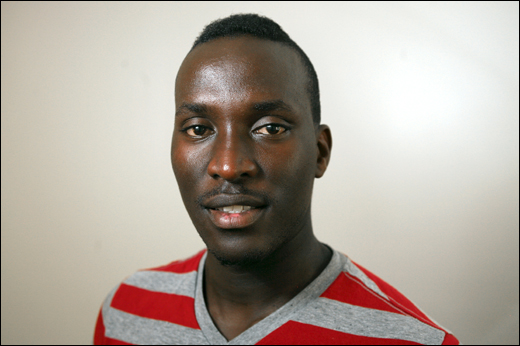
One in a series of profiles of the 2013 Fellows in the Black AIDS Institute's African American HIV University's Science and Treatment College.
In Uganda, as elsewhere in sub-Saharan Africa, AIDS has caused immense suffering over the past two decades, with more than 1.5 million children orphaned since the epidemic began. Every day an estimated 400 Ugandans are infected with HIV. When he was growing up in Uganda, Bruce Rwabasonga Mandela's motivation to become a doctor was shaped in large part by the worst era of the HIV epidemic in his country: the 1990s.
After his medical-school education, Dr. Mandela worked at the AIDS Support Organization, a HIV/AIDS organization that provides care and services to Ugandans living with HIV/AIDS.
This work gave Dr. Mandela his first professional experience with HIV. It also helped him develop a powerful understanding of what it means to be an HIV patient.
While performing an emergency cesarean delivery, Dr. Mandela accidentally pricked his finger and was exposed to the blood of the mother. "I managed to save her life and her babies but found out she was HIV positive and had not been diagnosed," he says. So Dr. Mandela followed treatment recommendations and began a one-month postexposure prophylaxis as a precaution. It was later determined that he was HIV negative, but this surreal experience gave him a priceless insight.
"It was very unpleasant. I honestly could not and didn't complete the full-month treatment," Dr. Mandela says. "I fully understood what it meant to be an HIV-infected patient on treatment. There is no way I could have ever fully appreciated what the patients I care for are going through. Fortunately, I am HIV negative today."
And for the first time, he could identify with PLWHA who were confronting stigma, ignorance and discrimination.
Dr. Mandela moved to the United States eight years ago, where his work has continued at Children's Hospital in Minnesota, which runs the state's perinatal and pediatric HIV/AIDS program. "We do as much as possible in working with HIV-infected mothers, ensuring that they have the education and support they need to bring a healthy baby into the world," he says.
The most difficult challenge Dr. Mandela encounters is mothers with HIV who insist upon breast-feeding their babies. He follows them especially closely to make sure they have an in-depth understanding of the risks and the options available to them. "We do as much as possible, ensuring that they have the education and support they need to bring a healthy baby into the world," he says.
Dr. Mandela is pursuing a master's in public health at the University of Minnesota, but upon learning about the opportunity to become a Fellow at the African American HIV University's Science and Treatment College, he knew this was a valuable experience that he couldn't miss out on, even though he is already a physician. "So much has happened in research and treatment since my days in medical school that I needed to be up on the latest developments," he says.
For Dr. Mandela, the only physician among the Fellows, getting to know the diverse group was one of the most rewarding aspects of the training. He will continue to work with Children's Hospital to fulfill the fellowship's activities requirements. His plans include eventually returning to Uganda to address the HIV epidemic there.
AAHU's Science and Treatment Fellows will be blogging about their experiences. To read the blogs, go here.
Glenn Ellis is a Philadelphia-based health columnist and radio commentator who lectures nationally and internationally on ethics and equity in health care.