Winning the Fight Against HIV in Children

Over thirty years ago, when the fight against HIV first began, the outlook for tackling the pandemic was bleak. Across the world, AIDS was seen as a death sentence. Within just a few years, it had devastated communities from the United States to South Africa.
But the world continued to fight, and the past three decades have seen tremendous progress in HIV research, prevention and treatment, thanks in large part to the leadership of the United States. Today, we can build on that strong legacy to answer President Obama and Secretary Clinton’s call for an AIDS-free generation.
Low Vitamin D Ups Coronary Artery Disease Risk in HIV+ US Blacks

Vitamin D deficiency more than doubled the risk of silent coronary artery disease (CAD) in HIV-positive African Americans, according to results of a 674-person study.
Research suggests that vitamin D deficiency is associated with CAD, and cardiovascular disease has become more prevalent as HIV-positive people survive longer thanks to combination antiretroviral therapy (ART). But the impact of vitamin D deficiency on CAD in HIV-positive African Americans had not been characterized until this study of 25- to 54-year-old HIV-positive African Americans in Baltimore, Maryland.
Read more: Low Vitamin D Ups Coronary Artery Disease Risk in HIV+ US Blacks
Tobacco Use Critical Issue for People with HIV

Today, we join the World Health Organization (WHO) in recognizing World No Tobacco Day and the global devastation caused by tobacco use.
Tobacco use is the leading preventable cause of death worldwide. The global tobacco epidemic kills nearly six million people each year, including 600,000 from secondhand smoke. If current trends continue, tobacco use will kill up to 8 million people per year by 2030, of which more than 80% will live in low- and middle-income countries.
The Black AIDS Institute and the AIDS 2012 Black Advocates Delegation would like to collaborate with you on AIDS 2012 Hubs!
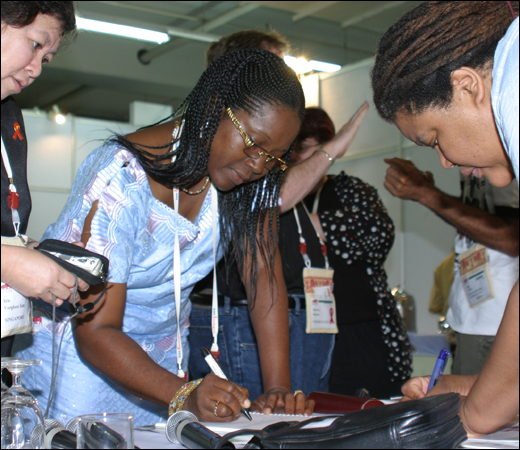
One of the world’s largest HIV-related scientific gatherings of people working in and living with HIV will take place in July 2012. Scientists, policy-makers, and community members will convene in Washington D.C. for six days at the XIX International AIDS Conference (AIDS 2012) sharing information about the most recent advances in HIV science. Through post-conference hubs, local communities will disseminate knowledge beyond the international conference into local communities.
In This Issue

In this issue AIDS 2012 governance committee member Marcus Day, director of the Caribbean Drug Abuse Research Institute and founder of the Caribbean Harm Reduction Coalition, shares his thoughts on the International AIDS Conference.
- AIDS 2012 Civil Society Leadership: Marcus Day
- Road to AIDS 2012: A Series of Town Hall Meetings—Seattle
- CDC Invites Public Comment on Draft Recommendations for One-Time Hepatitis C Testing for Baby Boomers
- The Black AIDS Institute and the AIDS 2012 Black Advocates Delegation would like to collaborate with you on AIDS 2012 Hubs!