A New Year’s Conversation With Frank J. Oldham Jr.
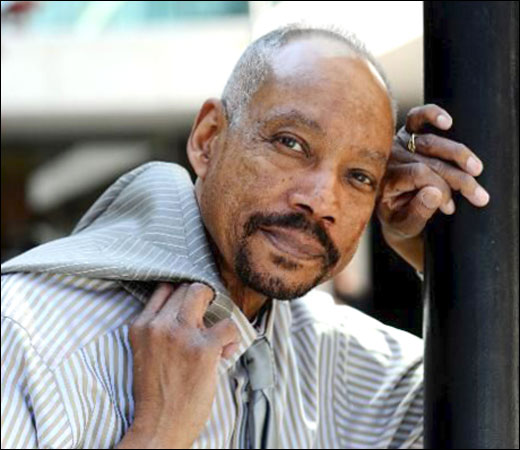
New Year's is always a good occasion for a glass of champagne, a little too much food, and then home late (or early) with the Significant Other. It's also time for all of us at NAPWA and in the HIV advocacy community to take stock, so we asked NAPWA President and CEO Frank Oldham to sit down with us and talk about where he thinks we need to head in this new year.
Positive Voice: Frank, the last twelve months were groundbreaking for the HIV/AIDS community. What do you think were the most important things that happened of 2011?
Frank Oldham: I think the most important thing is the initial implementation of the National HIV/AIDS Strategy. Specifically, Prevention with Positives being part of the strategy, and CDC leadership - Dr. Tom Frieden, Dr. Fenton, and Dr. Mermin actually making sure that Prevention with Positives will be part of the CDC's prevention strategy. That's major - major for NAPWA, but also major for all people living with HIV and AIDS, because we are part of the solution, and we have a leadership role, a responsibility in preventing HIV and AIDS. NAPWA founded the very first AIDS awareness day, National HIV Testing Day, more than eighteen years ago - we're all very proud of that, because as positive people we took a leadership role in insuring that people know their HIV status, get tested, and get into care as early as possible.
And now that HIV treatment is prevention - imagine this, treatment is prevention - we can make the virus undetectable in individuals and we can make it undetectable in communities. We have all the means we need now to stop HIV and end this epidemic in the United States. This is a phenomenal accomplishment, and we have to give credit to President Obama, and to Jeff Crowley, who has just left the White House Office of National AIDS Policy, for their leadership in making sure that we have a national HIV/AIDS strategy so we can use these tools to end the epidemic in the United States.
PV: And so we have a major new initiative coming out of Washington - first Secretary of State Clinton, and then President Obama say, Yes, we can end the epidemic. What has to happen to turn the hope into a reality?
FO: We have to put resources behind the passion. Behind the genuine, sincere will to end the epidemic. No matter what happens, we have to have enough money to do this. So, for example, if we're going to implement effective Prevention with Positives programs in major cities around the United States, that means people have to be trained, they have to have time to work with people who are positive and people who are at high risk and don't know their status. All of this will require resources.
But the other thing that's interesting is that doing this good work will actually create something that the country needs - and we hear it every day in the news - jobs. Creating jobs to do good work and save people's lives. Because by doing, people will not only be employed, they'll be employed to save lives and prevent disease. So that's a fantastic opportunity. And I hope that we see that as a reality. But again, Congress has to give us the resources to do this. And if our friends in government, CDC, HHS, do not have the resources to really implement the National HIV/AIDS Strategy to end the epidemic, then we still have a major HIV/AIDS health crisis in the United States.
And I would close by saying, the reason I'm a little cynical about this, and I'm usually a very optomistic, hopeful person, is that I have an image of New Orleans after Katrina. There was no reason for that to happen. We lost a whole American city - and lives - and it didn't have to happen. The same thing is true with HIV now: we have all of the tools, all of the information, all the treatments and prevention resources, the knowledge to end the epidemic, but are we going to have the will and the resources to actually do this?
Obviously, Hillary Clinton thinks so. Obviously, President Obama thinks so. And all of us in the HIV movement believe it can be done. But we have to have the resources. So it comes down to Resources, Resources, Resources.
PV: Apart from resources, there's also the continuing problem of the the "unreachable twenty percent." How can Prevention with Positives help reach that "unreachable twenty percent?"
FO: The "unreachable twenty percent" has really never been unreachable. They've only been unreachable because we never had Prevention with Positives implemented effectively, as Dr. Frieden, Dr. Mermin, and Dr. Fenton want to do at CDC. And it's very important that I mention all three of these gentlemen, because they really do get it, that it can be done. Everybody knows that HIV-positive people know other HIV-positive people, in our social networks, in our neighborhoods in our communities. All of us know people who have not been tested who are likely HIV-positive. And many of us - I'm sure you've experienced this, I've certainly experienced this - many time a month we say to someone, I really want you to take an HIV test, I'll even go with you, but you need to take the test. And if you do test positive, I can help you get some of the best care. You can get enrolled in care immediately, and you can have a full life, a productive life, at least as far as HIV is concerned.
But for that to happen, Prevention with Positives will have to be implemented. We know in theory it works, and we know anecdotally that it works because all of us at NAPWA do this all the time. However, it needs to be a massive program. And I believe, I'm prepared to say it, that NAPWA is prepared and able to provide leadership to this program.
PV: We have an annual conference for people living with HIV and AIDS, which in the old days we called "Staying Alive," and we're calling it the "National Healthy Living Summit [April 9-12, 2012, in Dallas-Fort Worh]" now, because it isn't just about surviving anymore. How have you refocused the conference, and what part does it play in Prevention with Positives?
FO: It's a very interesting story - I actually learned this from one of our corporate partners - I was at USCA in Orlando, and at the Gilead Plenary, no one knew what was going to happen. And the whole Plenary was actually about wellness. It wasn't about adherence, it wasn't about any specific kind of medication, it wasn't about being sick and taking all these pills. It was about the chance we have now to be well and healthy.
So now our conference is about wellness. As you know, we changed the name from "Staying Alive" - you remember in the eighties, people lived three months, two months, I had a friend who only lived one month after getting sick, and I believe that all of us who are long-term survivors have documentary films in our heads, and we can see all the faces and the painful deaths of our friends in those times. And "staying alive" was all we had.
Now we can be well, we can be healthy. We can lead fairly normal, good, productive lives - aside from all the other discussion you have if there's poverty, you have no home, there are employment issues, and all of that pain and suffering. But at least in terms of HIV, you do have a chance to be healthy and live in a state of wellness. So the Healthy Living Summit is going to be about wellness - the largest conference for PLWHA in America, and we're very proud of it, because it's going to be about how people living with HIV can stay well. How we can help our friends stay well. How we can implement Prevention with Positives, so that people who don't know their status or are not in care get into care and stay well. It's all about people living with HIV learning to stay well.
And that's why NAPWA is so important now, because we can be about the opportunities to stay well, to live healthily, and enjoy their right to happiness.
PV: That brings us to "NAPWA 360," which pulls together NAPWA's many programs. Can you tell us about that - what the purpose is, how NAPWA 360 will help the programs work together even more effectively?
FO: I'll be candid with you. I've been working in HIV leadership positions for at least twenty-three, twenty-five years, first - I'm very proud of this - as Director of Gay and Lesbian Health Concerns in the New York City Department of Health. All of us who work in agencies - our friend Julie Scofield is the founder of NASTAD, shefounded an agency - we were reacting to a health crisis. So these programs, a lot of wonderful work that still exists, weren't really thought out. They were reactions to emergencies.
And so were NAPWA's programs. Like "Staying Alive" - let's get everyone together so we can just stay alive. Like AIDSWatch: let's get people onto Capitol Hill to talk to their Congressmen right away, because NIH is not doing enough research to give us any kind of medications to combat AIDS. So much of this was reaction to a crisis - a total crisis, when you think that over 600,000 people in America have died of AIDS since the beginning of the epidemic. Over 260,000 gay men have died since the beginning.
We never really had a chance, until now, because of the new treatments - treatment is prevention, and that gives us new hope - the say, let's think about what people living with HIV, living healthily with HIV, what do they need? So we've come up with NAPWA 360,because the whole epidemic can do a 360. Now, in this year, 2011-2012, we have a chance to turn this epidemic around, and NAPWA, as the nation's oldest and largest organization of people living with HIV and AIDS, is taking the leadership role by saying, let's turn this around, let's talk about wellness, let's talk about living full and healthy lives.
A classic example, not a national example yet, but I can say this as a very proud openly gay man, is that New York State under Governor Cuomo's leadership now has gay marriage. That is a structural intervention to prevent HIV for gay men. It means that our lives are valued, that we can have rights like everyone else. So the social justice issues around AIDS are being addressed, especially for gay men.
And turning 360 also means, let's stop the bickering in our community! One of the most painful things I have experienced - I experienced it when we did National Gay Mens HIV/AIDS Awareness Day - I didn't realize the level of homophobia, deep homophobia and homo-hatred that exists. I was stunned at some of the reactions. I was very proud that CDC and HHS, and the White House Office of National AIDS Policy, supported NAPWA in having founded a gay men's HIV awareness day, September 27. But I was astounded by the number of people who actually resented that gay men actually have a culture they can be proud of, that we end up in battles with other groups. The most painful battle for me, as an African American gay man living with HIV, is that African American gay men are in a battle for resources with African American women. Well, that's totally, totally ridiculous. African American women living with HIV or at risk for HIV are our mothers and our daughters. African American gay men are their fathers and their sons. There should be no lack of unanimity among African Americans fighting the epidemic, especially when African Americans represent so much of the epidemic, and gay men represent so much of the epidemic - 60% of the epidemic. And AIDS is the number one cause of death for black women in the United States.
We need to have complete unity. And people who buy into division and perpetuate division need to be educated that this is not the way we should be living. I think as a veteran, as one of many AIDS warriors who are still alive, that we need to do a 360-degree turn that ends in unity in the AIDS community.
PV: Thank you, Frank! Do you have any closing thoughts?
FO: Last thoughts? Only that, going forward into 2012, I'm hoping that the infrastructure we've built over the last thirty years can be maintained, always up to date with the epidemic, that the lives of people living with HIV and AIDS will be valued, that the lives of all the groups - women, gay men - will be valued. And I hope the direction the country, this deeply divided country, has been headed in the last four years,toward hope and acceptance of people, toward health care - I hope that we stay on that path. And NAPWA will be part of that.
From NAPWA Positive Voice.