Meet Leisha McKinley-Beach, the New Southern Regional Coordinator for the Black AIDS Institute
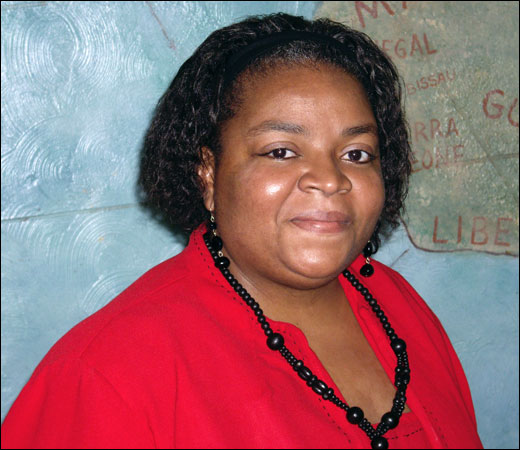
Little did she know that a report she wrote in high school would expose her to what would be her life's work in HIV/AIDS. Today she coordinates outreach and mobilization efforts across the South.
Do you remember when you first learned about HIV/AIDS?
I was a senior in high school and had to complete a science report about HIV. The next year, as a student at the University of Florida, I joined a peer-led group that raised campus awareness about HIV and AIDS. This was when colleges were just beginning to educate students about HIV. I used to tell people that I found the group, but recently I realized that the group "found" me. That was my introduction to what I consider to be my destiny: working in this field.
What caused you to become an AIDS activist?
I was called by the Creator to do this work, and have always been in the right position at the right time. I went to school on a music scholarship with a double major in public health. At that time I had no strong desire for a career in HIV advocacy. That changed when I went to my first HIV-counseling and -testing training.
There I met a young man named Wendel--now a lifelong friend--who introduced me to the face of AIDS. I noticed how seriously he took the role-playing exercises. Later he shared with me that he was HIV positive. Through him I met people who were living and dying with this disease. He thought it was important for me to understand the people my efforts were supporting.
In the late '90s I moved to north Florida as an outreach intern for a nonprofit. A young woman of color had passed away and was buried by three White gay men. They informed me that no services were available there for people of color who were infected with AIDS. So I started the first minority AIDS-service organization in Pensacola: United Counties Minority AIDS Care and Education.
There had only been one AIDS-service organization in that area until here comes this 24-year-old kid. Because I was a young Black female in a rural part of Florida, l was constantly called upon to participate in different forums and consultations across the state. So I've really grown up in HIV. I started this work at the University of Florida, and 21 years later I'm still here.
What excites you about the Black AIDS Institute?
The Institute's mission is to stop the AIDS pandemic in Black communities by engaging and mobilizing Black institutions and individuals to confront HIV. Throughout my career, there has always been an emphasis on Black communities. What people know me for is the work I've done with Black women and Black gay men, so it just falls in line with their mission. Working for the Institute also gives me the opportunity to continue my life mission of making a difference in the lives of others.
I've always had high regard and respect for Phill Wilson and the work that he's done. Even before I knew him personally, I felt like his voice represented the community that I was a part of, and I wanted to contribute to that.
What do you intend to accomplish in your new role?
I want to help mobilize individuals who may not be at the decision-making table but who will be critical partners to ensure that we reach zero new infections. I also hope to foster better relationships with health departments and Black-community-based organizations throughout the South.
What about your background do you think has best prepared you for this work?
The challenges that I have experienced in HIV. My greatest challenge has been patience. Starting a minority AIDS-service organization in an area that wasn't ready to support a major shift in the AIDS community was an uphill battle. I've seen populations severely underserved and wanted to rectify the situation overnight. It forced me to focus on the politics rather than the work.
I look at ways to improve the projects that weren't successful, and decisions that may have caused initiatives not to reach their full potential. This has prepared me for the next level of leadership in HIV and helped me become a better leader, trainer and educator.
April Eugene has more than 20 years of experience as a writer covering topics ranging from business to music personalities.