Does Using "The Shot" for Birth Control Up Your HIV Risk?
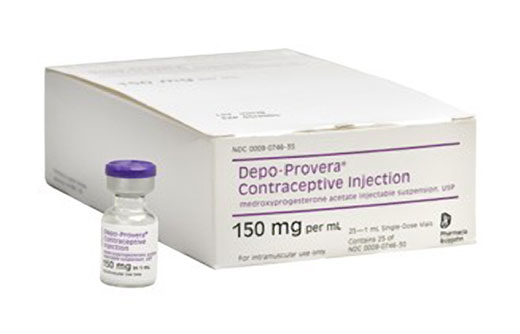
Earlier this month, a study published in the medical journal The Lancet Infectious Diseases--and the headlines that followed--left some folks wondering if their birth control method might be putting their lives in jeopardy. Researchers from the University of Washington followed nearly 3,800 sero-discordant heterosexual couples in seven African countries and found that women who used Depo-Provera-style birth control injections had twice the risk of acquiring an HIV infection or transmitting it to an uninfected partner, compared with women who did not use hormonal contraception.
Scientists suspect that the hormones trigger biological changes that make people more susceptible to HIV, which would extend the implications of the study's findings well beyond the continent. Although just 3.2 percent of American women on birth control use injectable contraceptives, Depo-Provera has been recommended disproportionately to poor women, young women, women of color and those with disabilities, according to the reproductive-justice group Committee on Women, Population, and the Environment.
So what should Black Americans make of the news? Experts caution against drawing sweeping conclusions. Although the study is noteworthy, major reproductive health organizations like the Guttmacher Institute point out that it also has limitations that could make the findings "less conclusive than they initially appear." Among them: The data weren't collected with the goal of examining links between birth control and HIV. Researchers initially set out to study the drug acyclovir's effectiveness in preventing HIV infection in people with herpes simplex.
That leaves many more questions than answers. For example, while researchers found that birth control pills also seemed to increase the risk of getting or transmitting HIV, so few Pill users were represented in the study that the results couldn't be considered statistically significant. Because participants self-reported about their behavior, some key details, including hormonal-contraceptive use and condom use, may not be accurate. And researchers did not identify the specific brand of hormone injectables used, though it's likely to have been a generic version of Depo-Provera.
In addition, says Gail E. Wyatt, Ph.D., associate director of the UCLA AIDS Institute, the route of transmission most prominent in the study is slightly different from how HIV typically plays out in the United States. "Female-to-male transmission is less likely in the U.S. than in Africa," she says. In the U.S. the most common transmission route is from positive men to negative women; however, female-to-male transmission can occur.
"I'd err on the side of not pushing for policy change or shifting funding or taking Depo-Provera out of the options," says Dazon Dixon Diallo, the founder and CEO of SisterLove, Inc., a non-profit committed to spreading the word about HIV transmission and prevention. "But at the same time, the study speaks to larger issues about how little we know about HIV and the intersection with women's reproductive health and endocrinology. We need to know more."
The World Health Organization will convene experts in January to examine hormonal contraceptives' effect on HIV infection, progression and transmission.
In the meantime, activists highlight some key takeaway messages, particularly for Black American communities disproportionately affected by HIV, that can be implemented right now--though if they sound familiar, they are. "The study doesn't change what we recommend," notes Theresa Mack, M.D., M.P.H., an HIV specialist and associate medical director at St. Luke's Medical Group in New York City's Harlem. "If you're in a sero-discordant relationship, condoms have to be used, and if you're on birth control, it prevents pregnancy, not HIV."
"We also need to expand the HIV health-literacy infrastructure in Black communities," says Phill Wilson, president and CEO of the Black AIDS Institute. "Knowledge is maybe the most critical element in reducing risk. When people are protecting themselves against one thing--in this case, pregnancy--do they understand the other sexual health issues involved?"
Activists emphasize four points in light of the study:
1. Hormonal contraceptives aren't a substitute for condoms and won't prevent HIV.
The Planned Parenthood Federation of America (PPFA) recommends that women use whatever birth control method works best for them. "A number of people use Depo-Provera because they've not had success with other methods," says Vanessa Cullins, M.D., PPFA's vice president for medical affairs. "We don't want to see women go to a less effective form of contraception." But "to prevent unintentional pregnancy and to protect oneself and one's partners implies the use of both [condoms and contraception]," she says.
2. Know your status, and don't be afraid to talk to your partner about his or hers.
"If you're sexually active, you have to know the status of your partner," Dr. Mack says. "And if you don't know, you have to use a condom."
There are parts of the equation that we can control, says Gary J. Bell, executive director of BEBASHI: Transition to Hope--namely, who we have sex with. "A lot of people feel they're not at risk for HIV, and their main concern is pregnancy. They don't think their partner would do things that put them at risk for HIV. I hope people start saying, 'I need to pay more attention and know the status of my partner.' "
There are helpful tips for starting the conversation about testing and condom usage. But, Wilson says, "The first conversation folks need to have is with themselves--about a commitment to protecting and valuing yourself. In the absence of that conversation, the fear surrounding the other conversations gets inappropriately and disproportionately high value."
3. If you are HIV positive, get treatment.
Early treatment with antiretroviral therapy can significantly reduce the risk that you'll pass the virus on to a partner.
4. Find a health provider that you trust.
It's important to have a medical professional you can feel comfortable talking with about the intimate details of your life, says Bell: "Black folks place emphasis on establishing a relationship with a hairstylist or barber, but we don't do that with our health."
Says Wilson, "People aren't having conversations [with their doctors about HIV], not so much because they're afraid, but because they don't know they should be."
Nicole Saunders is a freelance writer who lives in New York City.