Cleo Manago Challenges NBAAD
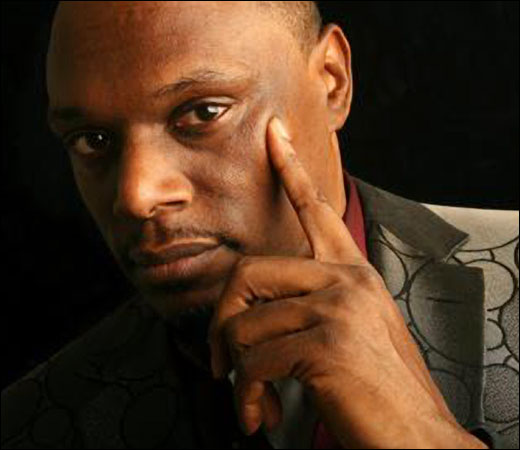
February 7 has been deemed National Black AIDS Awareness Day (NBAAD). NBAAD is a well-meaning, culturally extraneous attempt at bringing Black attention to HIV/AIDS. However, garnering the attention of Black people requires a campaign that is a culturally restorative, educational and affirming, Black critical thought enhancing and holistic process.
Everyday Black folks are just not interested in HIV/AIDS, or most things with that issue as the sole focus. More immediate priorities are to stop the disruption of communities, families, relationships and self-perception resulting from disproportionate incarceration, joblessness, poverty, an epidemic of health and well-being barriers resulting from substance and sexual abuse and bigotry, and a racist (or White biased) media and "educational" system that trivializes the consequences of its racism on African Americans.
Initially, in 1981, when HIV/AIDS first began ravaging the gay community, the media portrayed AIDS as a White gay disease. During the advent of the AIDS crisis, African Americans were keenly aware of (and demoralized by) the perpetual implication that this deadly virus came from a Black source. "Credible" reports came first that the AIDS virus originated in Haiti, then later, "experts" claimed that "HIV" came from a green monkey in central Africa. These now unfounded approximations - presented then as fact - wreaked havoc on already strained Black self-concept and perception.
The still high Black HIV/AIDS statistics are sustained by the intersection of two phenomena that create dual deterrents to African American's resolving HIV/AIDS. First, is the defacing of Black cultural and self-perception resulting from 500 years of life as Black in America, and second, is that "Black Crisis in America" is very lucrative.
'Black people in crisis' makes for lucrative business venturing in America. Beneficiaries include: the prison industrial complex; the hair product industry, i.e. hair weaves, etc.; fast-food companies; alcohol and crack-cocaine dealers; (Black) HIV/AIDS issue promoters; pharmaceutical companies, and federally funded research machines. All are getting rich off of Black crises.
Regarding the defacing of Black culture and self-perception, there are at least three documented examples of the impact of racially-charged self-perception dilemmas (and self-vilifying decision-making) on Blacks. The first instance precedes public recognition ofHIV/AIDS by 27 years. In 1954, Drs. Kenneth and Mamie Clark found that Black children often preferred to play with white dolls instead of Black ones. 52 years later, Kiri Davis’ 2006 film “A Girl Like Me" indicated the same results. And, last year, a CNN series called 'Black or White: Kids on Race revealed that a number of Black children have anti-Black views toward other Blacks and themselves.
In conclusion, National Black AIDS Awareness Day is fine, but Africans Americans need a 'National Black Restoration and Self-Love' (NBRSL) Day. Why should African Americans prioritize AIDS? Clearly, African Americans first need to resolve tendencies among African American children to pick the White doll over themselves. Once basic issues of self-love, self-esteem and cultural affirmation are clearly defined and addressed, it is then, when Black people will begin to really care about HIV/AIDS."
The views and opinions expressed by columnists are those of the author and are not necessarily those of the Black AIDS Institute, its partners or its funders.
Cleo Manago is the founder of the Los Angeles-based AmASSI Centers for Wellness, Education and Culture (http://www.amassigroup.com/), and Black Men's Xchange (BMX) (http://www.bmxnational.com.