SIGNING OF THE RYAN WHITE HIV/AIDS TREATMENT EXTENSION ACT OF 2009
OBAMA'S REMARKS AT RYAN WHITE SIGNING
We often speak about AIDS as if it's going on somewhere else. And for good reason -- this is a virus that has touched lives and decimated communities around the world, particularly in Africa. But often overlooked is the fact that we face a serious HIV/AIDS epidemic of our own -- right here in Washington, D.C., and right here in the United States of America. And today, we are taking two important steps forward in the fight that we face here at home.
It has been nearly three decades since this virus first became known. But for years, we refused to recognize it for what it was. It was coined a "gay disease." Those who had it were viewed with suspicion. There was a sense among some that people afflicted by AIDS somehow deserved their fate and that it was acceptable for our nation to look the other way.
A number of events and advances over the years have broadened our understanding of this cruel illness. One of them came in 1984, when a 13-year-old boy from central Indiana contracted HIV/AIDS from a transfusion. Doctors assured people that Ryan White posed no risk to his classmates or his community. But ignorance was still widespread. People didn't yet understand or believe that the virus couldn't be spread by casual contact. Parents protested Ryan's attendance in class. Some even pulled their kids out of school. Things got so bad that the White family had to ultimately move to another town.
It would have been easy for Ryan and his family to stay quiet and to fight the illness in private. But what Ryan showed was the same courage and strength that so many HIV-positive activists have shown over the years and shown around -- show around the world today. And because he did, we didn't just become more informed about HIV/AIDS, we began to take action to fight it.
In 1990, the year Ryan passed away, two great friends and unlikely political allies, Ted Kennedy and Orrin Hatch, came together and introduced the Comprehensive AIDS Resources Emergency Act -- the CARE Act -- which was later named after Ryan.
In a few minutes, I'm going to sign the fourth reauthorization of the Ryan White CARE Act. Now, in the past, policy differences have made reauthorizations of this program divisive and controversial. But that didn't happen this year. And for that, the members of Congress that are here today deserve extraordinary credit for passing this bill in the bipartisan manner that it deserves: Tom Harkin and Mike Enzi in the Senate, we are grateful to you for your extraordinary work; Speaker Pelosi, who's always leading the charge on so many issues; Frank Pallone, Jr., Joe Barton, Barbara Lee and Donna Christensen in the House, thank you for your extraordinary work -- oh don't worry, I'm getting to Henry. Nancy is always looking out for members, but we've got a special section for Henry.
And Chairman Henry Waxman, who began holding hearings on AIDS in 1982, before there was even a name for AIDS, was leading here in Washington to make sure that this got the informed attention that it deserved and who led the House in passing the original Ryan White legislation in 1990.
I also want to acknowledge the HIV community for crafting a consensus document that did so much to help move this process forward. Some of the advocates so important to this legislation are with us here today: Ernest Hopkins from Cities Advocating for Emergency AIDS Relief; Frank Oldham, Jr., President and CEO of the National Association of People with AIDS; and Julie Scofield, Executive Director of the National Alliance of State and Territorial AIDS Directors.
And I'm especially honored that Ryan's mother, Jeanne White-Ginder, is here today. For 25 years, Jeanne had an immeasurable impact in helping ramp up America's response to this epidemic. While we lost Ryan at too young an age, Jeanne's efforts have extended the lives and saved the lives of so many others. We are so appreciative to you. Thank you.
You know, over the past 19 years this legislation has evolved from an emergency response into a comprehensive national program for the care and support of Americans living with HIV/AIDS. It helps communities that are most severely affected by this epidemic and often least served by our health care system, including minority communities, the LGBT community, rural communities, and the homeless. It's often the only option for the uninsured and the underinsured. And it provides life-saving medical services to more than half a million Americans every year, in every corner of the country.
It's helped us to open a critical front on the ongoing battle against HIV/AIDS. But let me be clear: This is a battle that's far from over, and it's a battle that all of us need to do our part to join. AIDS may no longer be the leading killer of Americans ages 25 to 44, as it once was. But there are still 1.1 million people living with HIV/AIDS in the United States, and more than 56,000 new infections occur every single year.
Some communities still experience unacceptably high rates of infection. Gay men make up 2 or 3 percent of the population, but more than half of all new cases. African Americans make up roughly half of all new cases. Nearly half of all new cases now occur in the South. And a staggering 7 percent of Washington, D.C.'s residents between the ages of 40 and 49 live with HIV/AIDS -- and the epidemic here isn't as severe as it is in several other U.S. cities.
So tackling this epidemic will take far more aggressive approaches than we've seen in the past -- not only from our federal government, but also state and local governments, from local community organizations, and from places of worship.
But it will also take an effort to end the stigma that has stopped people from getting tested; that has stopped people from facing their own illness; and that has sped the spread of this disease for far too long. A couple of years ago Michelle and I were in Africa and we tried to combat the stigma when we were in Kenya by taking a public HIV/AIDS test. And I'm proud to announce today we're about to take another step towards ending that stigma.
Twenty-two years ago, in a decision rooted in fear rather than fact, the United States instituted a travel ban on entry into the country for people living with HIV/AIDS. Now, we talk about reducing the stigma of this disease -- yet we've treated a visitor living with it as a threat. We lead the world when it comes to helping stem the AIDS pandemic -- yet we are one of only a dozen countries that still bar people from HIV from entering our own country.
If we want to be the global leader in combating HIV/AIDS, we need to act like it. And that's why, on Monday my administration will publish a final rule that eliminates the travel ban effective just after the New Year. Congress and President Bush began this process last year, and they ought to be commended for it. We are finishing the job. It's a step that will encourage people to get tested and get treatment, it's a step that will keep families together, and it's a step that will save lives.
We are continuing the work of crafting a coordinated, measurable national HIV/AIDS strategy to stem and suppress this epidemic. I'm pleased to report that the Office of National AIDS Policy, led by Jeffrey Crowley, has already held eight in a series of 14 community discussions in cities across the country. They've brought together faith-based organizations and businesses, schools and research institutions, people living with HIV and concerned citizens, gathering ideas on how to target a national response that effectively reduces HIV infections, improves access to treatment, and eliminates health disparities. And we are encouraged by the energy, the enthusiasm, and great ideas that we've collected so far.
We can't give Ryan White back to Jeanne, back to his mom. But what we can do -- what the legislation that I'm about to sign has done for nearly 20 years -- is honor the courage that he and his family showed. What we can do is to take more action and educate more people. What we can do is keep fighting each and every day until we eliminate this disease from the face of the Earth.
So with that, let me sign this bill.
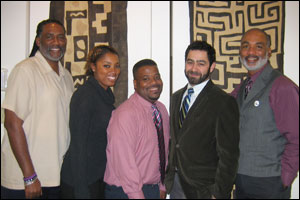
Black AIDS Institute Receives Funding From The CDC
New Funding For African American HIV University (AAHU)
Leaders from the Black AIDS Institute and the Centers for Disease Control and Prevention (CDC) met recently to finalize the details of a four and one-half year grant to fund the Institute’s African American HIV University (AAHU) Community Mobilization College.
The AAHU Community Mobilization College is a comprehensive training and internship fellowship program aimed at strengthening organizational and individual capacity to address the HIV/AIDS epidemic in Black communities. The program is designed to decrease stigma and misperception and increase the engagement of the Black community in HIV prevention and treatment services. This is achieved through leadership development and information transfer among key stakeholders.
Using the AAHU Community Mobilization Model as a foundation, the CMC curriculum prepares community-based and AIDS service organizations to engage traditional Black institutions such as churches, civil rights and social organizations, Black political leaders, sororities/fraternities, academia and the Black media in local strategies to fight HIV. The CMC uses a unique method for exploring the complex issues and barriers that prevent many in the Black community from using HIV prevention services.
Since 2000, the Black AIDS Institute has graduated more than 50 AAHU Fellows from around the United States and Africa. The next class is expected to be enrolling in early 2010.
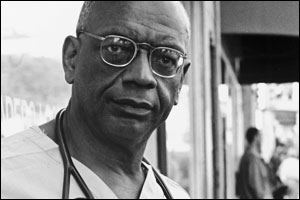
Hero in the Struggle
The Passing of Robert C. Scott, M.D.
October 11, 2009, Oakland, CA-- The family, friends, colleagues and associates of Robert C. Scott, M.D., are deeply saddened to announce his passing on Thursday, October 8, 2009, approximately 8:00 p.m., PST. Dr. Scott died from complications of two intensive blood clots: one in the lung, and one on the brain. He was in the care of Alta Bates – Summit Medical Center, Oakland, CA. Scott was admitted to the hospital on Thursday, October 1, and departed one week later. He was 65 years old. Born in Chicago, IL, Scott earned his B.S. degree at Parsons College in Fairfield, Iowa, followed by a M.S. degree and M. Ed at University of Illinois; he moved to California in 1968. In 1969, Scott taught anatomy, physiology and microbiology at Laney College in Oakland, CA. In 1974, he completed medical school at the University of California, San Francisco, followed by the completion of an internship in medicine at Emory University Hospital in Atlanta, Georgia. In 1975, Scott held a residency in Internal Medicine at Stanford University Hospitals in Palo Alto, California until 1977. Thereafter, Scott entered private practice some 32 years ago, specializing in infectious diseases and internal medicine. His Oakland based practice served several thousand patients, over 400 of who have the HIV virus—often working in typical 13-hour work days. He was a Regent’s Scholar of the University of California and a member of Phi Kappa Phi, Beta Beta, and other national honor societies. He served as a clinical instructor at the Medical Schools of the University of California, San Francisco, Davis, and Stanford University. A leading advocate for HIV/AIDS treatment and research, Scott led best practices in urban HIV prevention and treatment and was frequently asked to address practitioners and medical professionals throughout the United States and abroad. He pioneered innovative treatment of the HIV/AIDS virus when the disease catapulted within the United States in the early 1980s. Scott founded AIDS Project of the East Bay in Oakland, CA (est. in 1983), a community based organization dedicated to preventing the spread of HIV and supporting individuals infected with the virus through programs targeted at some of the most vulnerable and marginalized individuals in Alameda County. APEB ensures that individuals and communities beyond the reach of other agencies receive professional services of the highest standard. He was known for his support and contributions to many organizations throughout the community. He was an elected Board Member of the Project Open Hand, Families Created by Adoption, and the HIV Trial Researchers. He also established the Allen Temple Baptist Church AIDS Ministry (one of few black churches to set the tone for faith-based ministries in this area). In addition, he served as an enthusiastic usher at Allen Temple Baptist Church, where he was a member in good standing. During 2004, Scott became the first African American doctor to become licensed to practice in Zimbabwe, Africa. At the time of his passing, he maintained, on a volunteer basis, over 800 patients in Zimbabwe, where he traveled several times per year to deliver clothing and supplies from Allen Temple’s outreach efforts to children whose parents died of AIDS. Dedicated in all of his endeavors, Scott was a father-figure to the AIDS orphans in Zimbabwe, a confidante to thousands of HIV positive patients, and is a community role model. Indeed, Dr. Scott’s commitment to those who are in need cannot be underestimated—he even still makes house calls. His was a legacy rivaled by few. Scott was highly regarded both nationally and internationally for his groundbreaking work in HIV/AIDS, giving care to a patient population of over 800 patients at the Mother of Peace Orphanage in Zimbabwe. His remarkable care and concern for his patient base gave way to his commitment to treating this disease, particularly among under served populations. Scott saw himself as a “servant to the people.” He was bestowed innumerable accolades, commendations, special honors and recognition among them: • University of California – San Francisco He was characterized as a person who felt that his true wealth was the good he did in the world. Funeral services will be held Saturday, October 17, 2009, 11:00 a.m., Allen Temple Baptist Church, 8501 International Blvd., Oakland, CA. In lieu of flowers, the family has asked that donations be made to the Allen Temple AIDS Ministry and AIDS Project East Bay. Additional information will be updated to the website at www.allentempleaidsministry.org. Allen Temple inquiries should be directed to: Gloria Cox-Crowell, Co-Director, Allen Temple AIDS Ministry, 510-544-3342 or 510-913-5694. Media inquiries should be directed to: Sandra Varner, Varner PR Agency, 510-569-8855,
• Alameda County Office of AIDS, State of Emergency Task Force
• New Spirit Community Church
• Bay Area Consortium for Quality Health Care
• United Nations Association – East Bay
• Sinkler Miller Medical Association
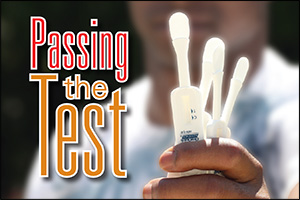
New Report from Black AIDS Institute
Passing the Test: The Challenges and Opportunities of HIV Testing in Black America
Download a copy of the Full Report Welcome to Passing the Test: The Challenges and Opportunities of HIV Testing in Black America. We are pleased to partner with the Global Business Coalition on HIV/AIDS, Tuberculosis & Malaria (GBC) and the National Association of People with AIDS (NAPWA) on this edition of the state of AIDS in Black America series by the Black AIDS Institute. Knowing your HIV status is a right and a responsibility. Knowing the HIV status of your partner can save your life, and finding out your HIV status has never been easier. HIV tests are affordable. There are agencies offering free HIV tests in nearly every city in America. HIV tests are painless. The most common form of HIV testing today uses an oral swab—no more blood or needles. The days of waiting a week to get your results are over. With the rapid tests, you can get your results back in less than an hour. People who are diagnosed late in the course of HIV infection have a much poorer prognosis than individuals whose HIV diagnosis is timelier. In New York City, individuals whose HIV and AIDS diagnoses occur within 31 days of one another are twice as likely to die within four months of diagnosis as people with a non-concurrent AIDS diagnosis. Early knowledge of HIV infection plays a key role in reducing HIV-related morbidity and mortality. So, let’s think about it. HIV tests are free, easy, painless, quick, and you get information that just might save your life. What’s not to love about that? You would think everyone in America would get tested for HIV. Yet, 1 in 2 of Black people in the U.S. infected with HIV don’t know their HIV status. Many people living with HIV are diagnosed only in response to symptoms, usually several years after initial exposure to the virus. In Washington, D.C., 69% of AIDS cases were diagnosed with HIV less than a year earlier. Among HIV-positive Black gay and bisexual men who participated in a CDC-sponsored multi-city study, 67% were previously unaware of their infection. Clearly, when it comes to the challenges and opportuities of HIV testing in Black America, we have not yet passed the test. This report looks at the reasons Black Americans get tested for HIV or not; describes the evolution of HIV testing technology; and looks at the impact of stigma on our willingness to get tested. The energy around testing is important, but it can also be dangerous—if the work stops there. This report explores the range of challenges that go hand-in-hand with testing—most importantly, the connection between testing, prevention and treatment—and the ways in which individuals, community leaders and policymakers can help take on those challenges. Most importantly, the report proposes solutions. In addition to government initiatives to close the testing gap, the report specifically examines the under-utilized potential of social marketing and other testing-promotion efforts to increase knowledge of HIV status in Black America like the new CDC initiative, Act Against AIDS and the Black AIDS Media Partnership, the National Medical Association’s Physicians Testing Initiative, NAPWA’s Mayor’s Testing Initiative and the Test 1 Million campaign. As always, we are ever mindful that “nobody can save us from us, but us.” At the end of the day, it all boils down to what you do. If we come together, we can meet this challenge and pass the test. Enjoy the report.
Download a copy of the Executive Summary
- Black Leaders Convene AIDS Mobilization Summit in Response to New Washington D.C. HIV/AIDS Data
- New national survey by the Kaiser Family Foundation provides insights into Black America’s attitudes
- SHOCKING NEW DATA ON WASHINGTON, D.C.’S AIDS EPIDEMIC REVEALS APPALLING FAILURE TO ADDRESS THE CRISIS
- New National AIDS Director: Promising, But Challenges Remain