2008 International AIDS Conference
Reception Honors Congresswoman Barbara Lee
By LaGloria Wheatfall
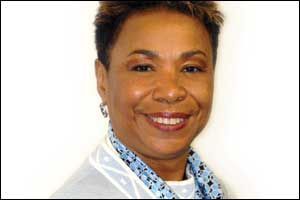
Visit Black AIDS Institute´s Youtube page and the Blackaids blog. MEXICO CITY -- The Black AIDS Institute hosted a reception honoring Congresswoman Barbara Lee on Wednesday night at the Marquis Reforma, The Ballroom in Mexico City. Lee was honored for her consistent and pro-active service on HIV/AIDS legislation in America. Rep. Barbara Lee (D-Calif.) leadership with HIV/AIDS: • PEPFAR provides billions of dollars to prevent new HIV infections. • Legislation contributed a total of 1.7 million people recieving antiretroviral therapy. • Guest speaker at sessions for the XVII International HIV/AIDS Conference. • Leadership in bridging the gap between the global and domestic fight for HIV/AIDS. In attendance, the founder and CEO of The Balm in Gilead, Pernessa C. Seele gave a heartfelt benediction. "...my favorite part of church is the benediction. We need to remember to wake up a fresh as we go forward in this fight for HIV/AIDS." Others attendees included founder and CEO of the Black AIDS institute, Phill Wilson. Wilson said, "There have been very few members of congress who have been able to advocate for the very real need to take a leadership role on the global front." Co-sponsor and attendee Deborah Frazier-Howze , founder of the National Black Leadership Commission on AIDS (NBLCA) and long-time friend of Lee, and newly appointed NBLCA President C. Virginia Fields, former Manhattan Borough president. The reception also featured a performance by actress and AIDS activist Sheryl Lee Ralph. Her captivating performance addressed the stigma and epidemic of HIV/AIDS by re-acting stories from real-life encounters from individuals living with HIV/AIDS. The night ended with Councilwoman Barbara Lee acceptance speech and reiterating the importance in the fight to end HIV/AIDS. "This is about life and death for millions of people, so you have to be committed."

2008 International AIDS Conference
Black Children Provide Some Good News in AIDS War
By Ivan Thomas
Visit Black AIDS Institute´s Youtube page and the Blackaids blog. MEXICO CITY -- There is finally some good news on the AIDS front. “In the 1980’s, 1,500 infants were born with HIV,” said Kevin Fenton, director of the CDC’s National Center for HIV/AIDS, Viral Hepatitis, STD and TB Prevention. “That number dropped to less than 60 for 2006. This is due to better screening, better awareness, and infants being provided with antiretoviral therapy.” The decline of mother to child infections is perhaps the major success story in the fight against HIV/AIDS. With increasingly advanced technology and with health care provided for these children, it enables them to fight the virus more effectively. That all sounds good. But while the numbers are declining for other populations, the numbers are not declining in the Black communities. In 2005, out of the 141 prenatal infections among infants, 65 percent of them were Black, and they continue to make up the vast majority today. Why? “AIDS is a disease of poverty. Just like in Africa, the poor have less knowledge about it, and even when they do know, the supply is not there,” said Dr. Agnes Binagwaho, executive secretary for the National Commission for the Fight Against AIDS in Rwanda. She is a specialist on HIV/AIDS in Africa and around the world. HIV/AIDS in infants can be transmitted in several ways, including before labor, during labor, and even afterward with the feeding of breast milk. However, experts say that many Black women are uneducated on this issue and therefore do not take the proper precautions. In Binagwaho’s opinion, there is still a long way to go to diminish the number of Black children born with HIV. “There is a need for strong structural innovation and change,” she said. “We need to increase the access to care and the quality.” Dr. Jim Yong Kim, director for social medicine at Harvard University, said he also feels that structural problems in our government and health care system are to blame for the disproportionate numbers. “All of the most important issues are structural issues,” he said. “It is poverty; it is lack of access to health care, lack of fair housing. It doesn’t have to do with the choices that African Americans make. They have fewer choices. If you put them in a position to where they have no choice but to make poor choices, what do you think is going to happen?” Kim, a member of the Joint Learning Initiative on Children and HIV/AIDS, also observed that many programs have been cut that serve low-income African American women. In the most powerful country in the world, Kim states that 53 million people are without health care, and the majority of them are African American. He said it t is important for Black women to be able to access the programs and services available in order for there to be a reduction in the rate of mother to child transmissions of HIV/AIDS. He said there is an even greater outrage. “We can prevent it almost completely. In like 99.9 percent of cases we can prevent the mother from transmitting the disease to the child,” said Kim. “We have to create an environment where African-American men and women can make the best possible choices, and that does not exist today. Because of that, Black infants and children will continue to suffer until we present real solutions.”

2008 International AIDS Conference
No Explanation Yet For Higher MSM HIV Rates
By Hilary Beard
Visit Blackaids' youtube page and and blog. MEXICO CITY -- Gay and bisexual men account for more than half of new U.S. HIV infections and experience the highest HIV infection rate of any demographic group, according to the Centers for Disease Control and Prevention (CDC). "The data confirm what we knew before: that the epidemic was severely impacting gay men and impacting African American and Hispanic communities," said Dr. Kevin Fenton, director of the CDC's National Center for HIV/AIDS, Viral Hepatitis, STD, and TB Prevention. On Saturday, the CDC revised upward its estimate of U.S. HIV incidence, which it had underestimated by 40 percent. Men who have sex with men (MSM)—the description preferred by public health officials, since men label their sexual identity in ways that may not accurately describe their sexual behavior—now account for 29,000 or 53 percent of, new infections each year, a rate the CDC says has increased steadily since the early 1990's. Glaringly absent from the CDC's report was specific data on Black MSM, whom experts have long known experience the highest rates of HIV infection in the United States. The CDC also acknowledged that 80 percent of targeted prevention messages calling upon MSM's engaging in high-risk behavior to reduce those behaviors were not reaching their audience. "This is a massive failure of our public-health system,” said Edward Thomas, a New York health-department professional. “I'm outraged in general—and upon hearing this news. What the [expletive deleted] happened? How did we not know what the real numbers are?" For years studies have indicated that HIV-rates among young Black MSM in major cities have hovered near 50 percent, a rate more than twice that of white MSM (21 percent)—and perhaps the highest HIV-infection rate of any demographic group anywhere. Surveys in six U.S. cities, show that Black gay and bisexual men are eight times more likely than white men to not know that they're infected. Another study showed that 34 percent of Black men who have sex with men also reported having sex with women; however, they may not call themselves bisexual. Public-health surveillance data lag behind the epidemic. The most recent estimate was developed using "breakthrough technology" providing the "clearest picture to date of HIV epidemic in U.S.," Fenton stated. Why are HIV rates among Black MSM so high? "Black gay men are not riskier. If anything, they are slightly less so," says Walt Senterfitt, an epidemiologist with the Los Angeles County health department and chair of the board of directors of the Community HIV/AIDS Mobilization Project, an HIV, human rights and social-justice group in Los Angeles. "Once there's a much higher prevalence of HIV in your partner pool, then your risk of getting infected is much higher." He noted that most people pick partners of their own race or ethnicity. Poverty, homelessness, higher STD rates and having concurrent partners also play important roles in the numbers. So do stigma and homophobia, which prevent people from acknowledging their risk and accessing services and positive social networks that could help sustain health and safety, including getting HIV-tested. While Thomas believes that individual Black MSM need to know their HIV status and communicate to their partners, he also believes to stop the pandemic the Black community must take charge. "We need to become more outraged about this. We need to become better informed. We need to go to our churches and build strategies around how we can change this. We need to talk with our families and friends about what we can do to make sure that the next person that we know does not become HIV-positive. "There is failure within the health care system, but when there are failures we don't have to accept those failures," Thomas adds. "We have enough intelligent, qualified, people to speak for ourselves, advocate for ourselves and train ourselves on how to address this health disparity—and we need to do it."
2008 International AIDS Conference
Teens Seek Ways to Reduce Rising HIV Rates
By LaGloria Wheatfall
Visit Black AIDS Institute´s Youtube page and Blackaidsblog. MEXICO CITY -- There is a new trend that is running wild among Black teens. It isn’t a new designer jean or an expensive cell phone rapper 50 Cent endorsed. The new trend is that HIV/AIDS is affecting youth at an alarming rate. Although African Americans represent only 16 percent of U.S. teens, they represented 69 percent of all new AIDS cases reported among teens in 2005. Dr. Helen Gayle, president of CARE, said, “There is a lack of youth tailored prevention programs that relate to the youth culture.” At the young age of 19, AIDS activist Marvelyn Brown found out she was HIV positive. She said, “I didn’t love myself enough to think of using a condom.” And she paid a price. More teens are sexually active than some adults want to admit. And if they don’t protect themselves, they, too, might pay a high price for their risky behavior. According to the 2007 CDC’s Youth Risk Behavioral Survey, 66 percent of high school students have engaged in sexual intercourse. The survey reports that 16 percent of teens had sex before the age of 13. Imaad Jones, a 23-year-old young men’s education officer from London, says: “Youth need to learn to put on their seatbelts—and when I say seatbelts, I mean condoms. There needs to be more distribution of condoms and classes on safe sex period.” The United States has come under criticism for requiring an abstinence-only approach that does not allow the distribution of condoms or other protection. The Oxfam International Youth Partnership (OIYP) represents a global network of young people in 150 countries working for change in their communities. Fifteen of the 300 teens from around the world were selected to attend the international conference on AIDS in Mexico City. George Mike Jijita, a 24-year-old action partner for the OIYP, is passionate about educating youth on HIV/AIDS. The Zimbabwe native is the project coordinator, organizing forums that speak to young males which address HIV/AIDS and build self-esteem within his community. Jijita says, “We need to talk more openly about AIDS/HIV and we need to mix education with fun.” Another group tries to do just that. Y-Peer and MTV International, “Staying Alive” campaign focuses on “The Big Question,” which is: Why, when the risks are known, are young people still having unsafe sex? The campaign includes commentary from celebrity entertainers giving their perspective on HIV/AIDS and safe sex. Y-Peer also incorporates a writing contest with a twist that will allow the winners´ story to be produced and air on MTV channels on World AIDS Day. Fun was even evident at the international conference on AIDS. Showcased was an array of youth-driven initiatives, including superheroes handing out condoms and candy and expressive dancing to theatric performances that focus on educating adolescents. Chutima Saisaengjan, project manager for the “We Understand Group” in Thailand said, “Letting youth express their creativity about how they feel about being HIV-positive and the surrounding stigma, builds their self-esteem, in turn allows them to pursue their dreams.”
2008 International AIDS Conference
The Lady With the Dildoes Has Plenty of Sister Love
By Linda Villarosa
Visit Black AIDS Institute´s Youtube page. and Blackaidsblog. MEXICO CITY -- In and around Atlanta, Dazon Dixon Diallo has been known as “the lady with the dildoes.” That’s because her organization, SisterLove Inc., hosts graphically entertaining Healthy Love parties to teach women the basics of HIV/AIDS prevention and safer sex practices while affirming their right to control their sexual health and have a little fun, too. Diallo, 43, has also been known as “that woman who’ll show you her cervix.” Her group also sponsors Community PROMISE, a program that teaches women attending historically Black colleges and universities in Atlanta about sexually-transmitted infections, including HIV. But these days, for several months a year the 20-year veteran of HIV education and community advocacy has a different gig: She’s a farmer. In 2004, Diallo formed a partnership with three HIV/AIDS organizations and 66 community members affected by AIDS in South Africa to form the Thembuhlelo Trust Cooperative. Their collective, which owns 668 acres 90 miles east of Johannesburg, grows vegetables and raises chickens and cows. It provides food and hope for a rural area that’s been devastated by both HIV/AIDS and poverty. The staff and volunteers of “the farm” also offer HIV education, counseling and testing between chasing chickens and managing their land. “When women are poor and economically dependent on men they are vulnerable to HIV,” says Diallo, who presented a poster about her program at the XVII International AIDS Conference in Mexico City. She also participated in a satellite session on AIDS, Race, Gender and Inequality in the Americas on Tuesday. “We realized that if we had even a little bitty piece of land and could feed some chickens and milk some cows, we could feed ourselves and sell whatever we don’t need. We could give women and families living with HIV and affected by the disease empowerment and independence and help restore dignity and a sense of self.” Diallo’s cutting-edge work—on both continents—illustrates both the similarities and differences of the global HIV/AIDS epidemic and its effect on women of African descent. According to the most recent UNAIDS report, worldwide, women account for half of all people living with HIV, and nearly 60 percent of HIV infections in sub-Saharan Africa. In South Africa, three out of every 20 citizens is infected with HIV, and disproportionately women. In the United States, HIV prevalence in locations where African Americans are most heavily concentrated approaches those reported in South Africa and other greatly affected African countries. In both Africa and the United States, the overwhelming risk for women is unprotected sex with men. Though SisterLove’s approach is vastly different in Atlanta than it is in rural South Africa, Diallo points to the shared experiences. “We must address what we have in common as women of African descent,” says Diallo. “Women of African descent worldwide are bearing the brunt of the epidemic. Whether in Africa or in modern, post-feminist America we don’t own our sexuality and in our relationships we defer to men. We act as if every woman who is positive has made a choice to have unsafe sex. But in reality, most of our decisions are really non-choices.” As in South Africa, at the heart of Diallo’s work in the United States is the message that HIV prevention is a social justice and human rights issue. “I have a saying ‘if you change women’s lives, you change the epidemic,’” she says. “Women around the world are the backbone. Though we are the caregivers to our community, we have a voice we don’t use. We have to get the power to women.”