Heroes In The Struggle
Curry Continues the Fight Against HIV/AIDS With the Written Word
By Kim Tolley
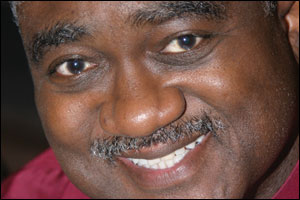
Heroes In The Struggle is honoring George Curry as “Drum Major” in the fight against HIV/AIDS in the African American Community from 6-10 p.m. Thursday, Feb. 7 at the Disney Concert Hall in Los Angeles. Purchase tickets here. George Curry professes not to know why he's being honored as one of the Heroes of the Struggle. "I don’t why I’m being honored. But I’m looking at it as an advance award so I plan on doing enough work to earn it,” Curry joked during a recent interview. Curry, a veteran journalist, is the former editor in chief for the National Newspapers Publishers Association (NNPA). From 1993 to 2000, he also served as editor in chief for Emerge, a news magazine for African Americans and was a panelist on BET’s news program, Lead Story. Curry was also the first African American to serve as president of the American Society of Magazine Editors. Although he is being recognized for his stories, Curry says the improvement in HIV/AIDS coverage by the black press is a result of the man honoring him. “The black media has gotten better in its coverage,” said Curry. “But I credit Phill Wilson for that. He confronted black America and made them open their eyes. He’s taken the disease out of the realm of being only a homosexual disease. He reached out to civil rights organizations and helped put faces with the numbers.” But Wilson, the founder and executive director of the Black Aids Institute, said he believes Curry is a deserving recipient. “There are few black journalists who have had a greater influence on how black media looks at HIV/AIDS,” Wilson said. “As editor of NNPA, he was influential in helping black newspapers address HIV/AIDS and he’s been consistent and relentless in looking at how black institutions address HIV. Prior to five years ago, HIV/AIDS was rarely addressed in the black media, and when it was, it was often in a sensational way as possible.” However, Richard Prince, who chronicles media activity at Richard Prince’s Journalisms , notes there had been some prior coverage. He singled out Essence magazine in particular for covering the disease as a particular concern to African American women. “Linda Villarosa, an Essence editor, has been covering the issue all along,” he said noting that Villarosa has also written articles about the issue for the New York Times. “The downlow lifestyle was a hot topic written about frequently. Yes, the coverage was sensationalistic, but it raised awareness even if it might have gone too far.” “Gay bashing is prevalent in our community so groups can come in and exploit it,” Curry said. “It’s important that the disease not be isolated within one community and become a referendum on certain lifestyles.” Both Curry and Wilson agree that black leaders need to be more aggressive in the public fight against HIV/AIDS. “The only people who seem to be carrying the banner are gays and lesbians,” said Curry. “Straight men need to take up the mantle.” “The stigma is exacerbated when people believe it is someone else’s problem,” stated Wilson. “Heterosexual men have not taken a leadership role in confronting HIV. George has been leading the way.” According to the Centers for Disease Control and Prevention (CDC), of all the ethnic and racial groups in the United States, HIV/AIDS has most severely affected the black community. In 2005, 41 percent of men living with HIV/AIDS and 64 percent of women living with HIV/AIDS were African American. Yet, as Curry travels around the country for speaking engagements, he is struck by how many African Americans are unaware of how the disease has affected the community. “When I speak to black audiences, people act like they’re hearing the numbers for the first time,” he said. “It wakes them up.” Curry suspects that many people, seeing public figures such as Earvin “Magic” Johnson living with the disease without any apparent ill effects, underestimate its seriousness. “Don’t just look at Magic Johnson. Let’s talk about Eazy E,” said Curry referring to the rapper and hip hop entrepreneur who died 10 days after he learned he had AIDS in 1995. “We need to make people understand that you’ll end up like Eazy E if you’re not treated early.”