Prevention
By Sharon Egiebor
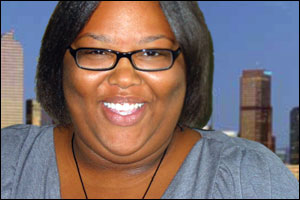
In Denver, HIV/AIDS prevention workers inevitably get around to the conversation of highly-educated African American women and the rising rate of HIV infection among them. The chatter goes, if the women are so educated, why aren’t they smart enough to protect themselves from the HIV and other sexually-transmitted infections? Ru Johnson, program manager for Colorado AIDS Project, says people are confusing formal education with culturally relevant HIV prevention teaching. “People’s perception of their risk is slightly skewed,” said Johnson, who manages prevention programs for women and youth in communities of faith, with a specific concentration of communities of color. “Black women, are at the height of the HIV/AIDS epidemic in Denver and nationally because they lack HIV awareness and prevention education.” According to the U.S. Census, nearly 86.9 percent of Denver County residents have a high school diploma. An estimate 80 percent of African American women over 25 have a high school diploma or some college education, compared to 91 percent of white, non Hispanic women over 25 and 48.2 percent Hispanic women over 25. African Americans make up 11.5 percent of the Colorado population, but 17.6 percent of the new HIV infections in 2005. Colorado statistics mirror the nation, in that most of the new HIV infections are in men who have sexual contact with men (MSM), 64 percent. However, there are still a disproportionate number of African American women in Colorado who are newly infected with HIV, compared to the general population. “I’m not sure there is a connection between a highly-educated population and a high number of HIV infections,” Johnson said. “It is about the behavior, not the lifestyle. You can have a 35-year-old woman who is educated and she can be HIV positive.” Johnson said the woman may be unable to talk with her partner about safe sex or she may have become infected while in high school. “If you look at the age of those women when they were affected, 50 percent of all of those infected were considered youth, between the ages of 13-24 by Centers for Disease Control and Prevention standard, “ she said. “Formal education between 13 and 24 is not going to tell the story about their knowledge of HIV/AIDS. It will not tell whether they have been educated on prevention practices and STDs in general. Formal education between 13 and 24 is not where they’ve gotten the information.” Johnson, who joined the Denver-based AIDS service organization in November, said part of the problem is creating a sense of urgency with the prevention method. “We haven’t found a way to make people understand that it is an epidemic,” Johnson said. “There is still a disconnect in how we were teaching prevention back when HIV/AIDS was predominantly a white, male, gay disease and how we are teaching prevention now,” she said. “We as a prevention community in general have not figured out the strongest and most effective to reach these communities.” Johnson teaches at five-week HIV prevention program for African American women who are incarcerated in alternative jail facilities. Her agency targets women in jail settings because they know that African American women who are intravenous drug users between 20 and 40 years old are at high risk for acquiring HIV.
“When you are dealing with people of color, you have to understand which strategies are going to work and which are not. You have to understand the culture and the sociological foundation of why blacks are being impacted at such a disproportionate rate,” she said. “Regardless of what you see on television, black people do not have an inherited gene to acquire HIV. Blacks have a lack of trust in the medical system. A lot of folks don’t necessarily have access to information and may not know that they can get condoms for free at medical clinics.”
She is beginning an outreach to Denver’s faith community, specifically to the black churches. “This is going to be very tricky population to introduce to our prevention efforts as a whole. The church has traditionally been the foundation in the black community, understanding what those initial principles are and understanding what is going on today will be a fine line in how we blend together,” she said. “We are looking to find churches that are open to doing testing, or find churches that would be willing to provide prevention materials in a larger way by having prevention specialists come in and discuss HIV/AIDS or coming together to have a faith breakfast to discuss what are the barriers to getting this information to our community. A lot of times those barriers will include different avenues to presenting that information,” Johnson said. Johnson said the goal is to find a balance between the faith community beliefs and prevention guidelines. “We’ll discuss abstinence as an option to preventing a plethora of diseases and pregnancies, while still providing the most accurate, update strategy of those communities that are at risk.”