Commentary
By Chris Collins
You cannot expect concrete results for your investments without a clear plan of action. So when the United States sets out to help a country tackle its AIDS epidemic one of the first things we do is insist that a national AIDS plan is in place. Over a quarter century into the AIDS epidemic we still don’t apply that same logic to the epidemic at home, and we have just the kind of results you would expect. New HIV infections have remained at 40,000 a year for well over a decade – one new infection every 12 minutes. The outcomes in treatment are no better. The latest estimates are that only about half of Americans who have HIV are receiving appropriate medical care. The stark racial disparities that characterize our country’s AIDS epidemic are a continuing national shame. Half of all new HIV infections are among Black Americans, though Blacks represent only 13 percent of the population. And Black Americans who have HIV disease have not seen equal benefits from AIDS treatment. Between 2000 and 2004, deaths among whites living with HIV declined 19 percent compared with 7 percent for Black Americans. How can a country that spends $18 billion a year on its domestic AIDS epidemic tolerate such miserable outcomes for its own citizens? There is no easy fix for America’s AIDS epidemic, but we can make a start by refocusing our sights on improved outcomes and developing a comprehensive strategic plan to achieve them. A national AIDS plan would set targets for lowered HIV incidence and expanded access to HIV care, and require the government to report annually on progress toward those goals. A strategic plan would force the public health establishment to clearly define the barriers to better outcomes, and then outline specific steps to address those barriers. The plan we need would encourage experimentation with new ideas to address racial disparities and environmental and social factors in health care utilization. A true national strategy will need the ongoing involvement of many sectors of society. And though a national plan must serve all Americans, it will need to focus its attention on the epidemic in Black communities. There can be no significant improvement on AIDS prevention and treatment outcomes unless our government programs better serve the needs of Black Americans. A national AIDS strategy is no panacea. More important are increased resources for programs like the CARE Act and AIDS housing, along with removal of co-pays and benefit caps on Medicaid services. Expanded access to needle exchange programs, condoms in prisons, and comprehensive sex education would reduce the number of new infections. All these programs, and many others, deliver results every day and they need our support. But in addition to defending good programs we need to start demanding better outcomes. AIDS has become a devastating and chronic health affliction in our country, a disaster we could have avoided but still have the means to address with greater ingenuity and effectiveness, and with steadily improved results.
Heroes In The Struggle
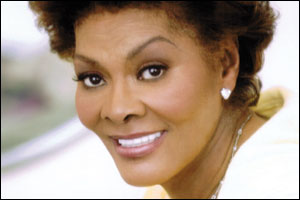
The song is so familiar that if someone starts humming the intro most people will jump in with “That’s what friends are for….” Rod Stewart originally recorded “That’s What Friends Are For” in 1979 for the movie “Night Shift.” However, it wasn’t until Dionne (Warwick) and Friends (Elton John, Gladys Knight and Stevie Wonder) recorded the Burt Bacharach/Carole Bayer Sager tune did it become a No. 1 hit and a Grammy Award for Best Pop Performance by a Duo or Group with Vocals. In a courageous effort to do their part to combat the disease that was discovered 25 years ago and deemed a “gay” man’s disease, the proceeds from “That’s What Friends Are For” were donated to American Foundation for AIDS Research (amfAR) in 1985 in the United Kingdom and in 1986 in the United States. While many celebrities are now stepping forward in the fight, it was Dionne and Friends who were the pioneers of this movement. The Black AIDS Institute’s 6th Annual Heroes In The Struggle celebrates the song’s 20th anniversary at a gala and reception Thursday, Nov. 16 at the Director’s Guild of America, 7920 Sunset Blvd., Los Angeles. A VIP reception begins at 6 p.m., followed a rare stateside performance by Cheryl Lynn, who has scored several No. 1 hits -- “Got To Be Real,” “Shake It Up Tonight,” “If This World Were Mine,” w/ Luther Vandross, and “Encore.” The event will be hosted by Rocky Carroll. Las Vegas comedian J. Reid will perform. Featured will be two Ashford & Simpson-penned tunes for the new stage production “E. Lynn Harris’ Invisible Life: The Musical” will be featured. Other performers include “American Idol’s Trenyce and Broadway actor Billy Porter. Dionne Warrick began singing gospel with her family, and started her professional career after graduating from the University of Hartford. In the earliest stage of her career, she sang backing vocals on records by Chuck Jackson, Dinah Washington and Solomon Burke, among others. Her first solo single was 1962's "Don't Make Me Over,” the title supplied by Warrick herself when she snapped the phrase at producers Burt Bacharach and Hal David during an arduous recording session. From the phrase, Bacharach and David created an elegant R&B recording, which became a top 40 pop hit in the U.S. (and a top 5 U.S. R&B hit.) Famously, Warrick's name was misspelled on the credits, and she soon began using the new spelling (i.e., "Warwick") both professionally and personally. "Anyone Who Had a Heart" was Warwick's first top 10 pop hit. This was followed by "Walk on By," a major hit that launched her career into the stratosphere. For the rest of the 1960s, Warwick was a fixture on the U.S. and Canadian charts, and virtually all of Warwick's singles from 1962-1972 were written and produced by the Bacharach/David team.
| A 1967 LP called “Here Where There Is Love” became a big hit, as did her single "I Say a Little Prayer" (on her album “The Windows of the World”) which is now famous for being featured in the movie, “My Best Friend's Wedding.” In addition, her 1960s recording of "Wives and Lovers" was used as the theme song for the 1996 hit movie “The First Wives Club.”
Her next big hit was unusual in that Bacharach and David did not write it. "(Theme From) Valley of the Dolls" was a smash success, as was the Bacharach/David-penned follow-up, "Do You Know the Way to San Jose?” More hits and a few Grammy Awards followed in the last two years of the 1960s. Warwick had become the priority act of Scepter Records with the release of "Anyone Who Had A Heart" in 1963. However, in the post-Woodstock era of the late 1960s, the decision was made that she would begin looking for a major label. Warwick's last recording for Scepter was in 1971. She debuted on the Warner Brothers label -- in a five-year contract that was the biggest contract for a female artist at that time. Although she initially teamed with Bacharach and David as writers/producers, this association dissolved after one LP on Warner’s. For the next few years, Warwick would team with a variety of producers, looking for an elusive hit. Her career slowed greatly in the 1970s, with no big hits until 1974's "Then Came You," recorded as a duet with the Spinners and produced by Thom Bell. It was her first U.S. No. 1 hit on the Billboard Hot 100. Nevertheless, other than this success, Warwick's five years on Warner Brothers -- despite the fact that she worked the entire time -- left her almost completely without hits. This trend ended with the move to a new label, and the release of "I'll Never Love This Way Again" produced by Barry Manilow. The accompanying album “Dionne” was her first to go platinum. This was her debut on Arista Records to which she had been personally signed and guided by the label's founder Clive Davis. Warwick's next hit was her 1982 full-length collaboration with Barry Gibb of The Bee Gees for ”Heartbreaker”. Her following hit was the duet “Friends In Love” recorded with Johnny Mathis, her good friend and music legend who is one of the largest record sellers in the world. In 1986, Warwick led the amfAR benefit single "That's What Friends Are For" with Friends (Gladys Knight, Elton John, and Stevie Wonder). It also marked a reunion of Warwick and song co-writer Bacharach (lyrics by Bayer Sager). In 2005, Dionne Warwick was honored by Oprah Winfrey at her Legends Ball and enjoyed one of her largest audiences ever when she appeared on the May 24, 2006 fifth-season finale of “American Idol.” An estimated 36 million U.S. viewers watched Warwick sing a medley of "Walk on By" and "That's What Friends Are For," with longtime collaborator Bacharach accompanying her on the piano.
|
|
A 2006 Heroes in the Struggle
By Erv Dyer
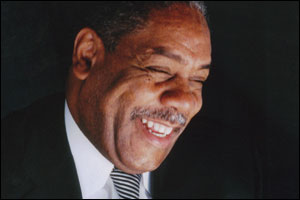
[Editor's Note: Tony Wafford will be honored at the Black AIDS Institute's sixth annual Gala Reception, silent auction and awards presentation, Heroes In The Struggle, Thursday, Nov. 16, 2006 at the Directors Guild of America, Los Angeles. To buy tickets or get more information, call 213-353-3610 or click here.] In 1998, after learning that more than half of the new HIV cases among women in Los Angeles County strike African Americans, Tony Wafford got into the prevention business. Suddenly, Wafford says, it dawned on him that the face of the virus could be the face of his 22-year-old daughter. "A light went on over my head," he says. "I love my daughter more than I love oxygen. That's when I started getting involved." For years, he worked the streets, handing out free condoms and advice. In 2004, he convened the first-ever national African-American summit on AIDS. Today, Wafford is community advisory board chair for the HIV Prevention Trials Network in Los Angeles and is bringing HIV/AIDS out into the open and getting much needed information out into the community. It’s a long way from Detroit. When Wafford left the Motor City 30 years ago for Los Angeles, he was young, broke, alone and lacked formal education. His diminished resources, however, were coupled with a larger-than-life desire to realize his dreams. His second day in town, he landed a job at Damon Construction, where he would eventually work up to field supervisor. Soon after coming to Los Angeles, Wafford became involved with his church, the local NAACP and Rev. Jesse Jackson’s 1988 presidential campaign. His volunteer ventures brought him to the door of Congresswoman Maxine Waters, where for the past seven years, he’s helped her coordinate the annual Congressional Black Caucus’ "Young, Gifted and Black" conference. Participants have included Russell Simmons, Chris Rock, Jada Pinkett-Smith, Chris Tucker and Robert Townsend. A few years later, Wafford’s entertainment involvement put him in contact with Terrie Williams, a New York-based public relations guru. With Williams, Wafford worked with Eddie Murphy, Miles Davis, Anita Baker, Avery Brooks and more celebrities. After a number of years, he set up his own freelance public relations firm, Wafford Consulting in Los Angeles in 1985. Still, the busy executive continued to volunteer. The latest statistics on HIV haunted him: HIV/AIDS was quickly becoming the leading killer of black people ages 22-45. In 1985, fewer than 5,000 African Americans were infected. By 1994, more than 30,000 had died from AIDS related illnesses. The Centers for Disease Control and Prevention says African Americans made up nearly 50 percent of all new HIV infections in 2005. Wafford, who wanted to slow the crisis, met with the Community Advisory Board (CAB) on HIV/AIDS. In 2000, Wafford became chair of America’s Working Group for HIV Prevention Network, heading initiatives that provide education, testing and counseling. One of his first projects was "Takin' It to the Street," a grassroots program to distribute condoms and information about HIV to barber shops, beauty salons and shoe repair shops. In July 2002, Wafford addressed the International AIDS Conference in Barcelona, Spain. Another successful campaign is "Fighting HIV Through R&B." Enlisting his contacts in the entertainment world, Wafford persuaded Al Haymon, a prominent African-American concert promoter who handles acts like Luther Vandross, Usher, Patti LaBelle and Destiny's Child, to offer tickets to his shows as incentive for HIV/AIDS testing. Agouron Pharmaceuticals was a partner and provided HIV testing materials. This effort resulted in testing and educating more than 20,000 African Americans in more than 24 states and 66 cities throughout the country. His most recent public sector project included coordinating the HIV/AIDS Community Development Initiative Services with the County of Los Angeles Department Office of AIDS Programs and Policy. Reaching out to the African American community, this initiative provided quality HIV/AIDS education to nontraditional audiences including businesses, community-based organizations, and service providers. Working closely with faith-based organizations, Wafford recruited more than 150 African American churches to establish more than 300 HIV ministries throughout Los Angeles County. These ministries help set the foundation for instituting a grassroots approach to HIV/AIDS testing, referrals and quality education in urban communities throughout the County. He coordinated a successful faith-based HIV/AIDS summit titled HIV/AIDS and the Black Faith Community: Roles and Responsibilities, which featured the Rev. Al Sharpton and other leading clergy. HIV/AIDS, said Wafford, is “worse than slavery. We’ve got to talk about how to address it.”

Column: Black Gay Men
By Roderick A. Scott-Padilla
*BlackAIDS.org welcomes Roderick A. Scott-Padilla, a gay black man who has spent several years conducting HIV prevention outreach, as a monthly columnist. NEW YORK -- While the African American gay community deals with the threat of violence, racism and homophobia, it may be forced to handle another obstacle that could harm it both medically and physically. A recently discovered disease in New York, as reported by a New York Times article, Lymphogranuloma Venereum (LGV) is a form of the bacterium Chlamydia trachomatis. This disease is contagious and has debilitating symptoms, but it is curable. Doctors says it could spur HIV infections. LGV is a disease that is sexually transmitted during vaginal and anal sex. It is most prevalent in tropical and subtropical areas, such as Southeast Asia, Central America and the Caribbean. According to the New York State Department of Health, clinical manifestations include primary symptoms of small non-painful genital lesions occurring on the penis, vagina and in the rectum. These symptoms tend to go unnoticed until the infection spreads to the lymph nodes of the groin area and the surrounding tissue. If untreated, symptoms could include swelling, acute pain, draining and bleeding of the infected areas, including painful, bloody, rectal infections that may be confused with inflammatory bowel disease. The average incubation or onset period usually happens from 3 to 30 days after exposure. Once infected, the disease can remain within the body until fully treated, just as any other STD. Treatment includes several types of antibiotics, including Doxycycline and Azithromycin. It has only been recent that the disease became known internationally. The first major report was published on Nov. 5, 2004 by the Associated Press, which concluded that the Netherlands’ Institute of Public Health (IPH) discovered “an outbreak of a rare STD among gay and bisexual men” surfacing in the country. Last year, U.S. health officials expressed concern when the New York State Health Department and the Centers for Disease Control and Prevention (CDC) confirmed the presence of LGV in two gay men (“2 Cases of Rare Sex Disease Are Detected in New York,” The New York Times, Feb. 3, 2005). This phenomenon could contribute to a major medical concern affecting men who have sex with men (MSM) and who are at risk of HIV. Because LGV creates external ulcerations on the epidermis layer of skin and mucous membranes of the human body, HIV from infected blood or bodily fluids such as semen could have a greater chance of by-passing scout cells and connecting to CD-4 cells within the body. Due to the current rarity of LGV in either country, clinical evidence or data does not exist to support either theory. The Netherlands statistical data arguably suggests the possibility that already being infected with HIV could increase the risk of contracting LGV. According to Marita Van de Laar, the country’s IPH spokesperson, of the 92 cases of LGV infected men in the Netherlands, about 80 percent were HIV positive. So how does the existence of LGV in America potentially affect the U.S.’s men who have sex with men population? Epidemiological findings concluded that all of the Netherlands patients diagnosed with LGV were white (the nation’s largest infected ethnic group) and reported risky sexual behavior. Is there a connection between at-risk minority populations? Could LGV adversely affect America’s black population, which accounts for the highest rate of HIV infections. Dr. Sam Mitchell, an epidemiologist from the San Francisco Department of Public Health, said there is no indication for alarm in relation to HIV-patients being at higher risk for complications of LGV. Instead, he said during an interview with hivandhepatitis.com suggests the opposite, making a connection to Clamydia-infected patients and the high risk of contracting HIV due to the ulceration caused by the bacteria. “The idea is to knock it out quickly. If it circulates widely, it could be quite challenging,” Mitchell said. Statewide Health Departments are working hard to prevent the spread of LGV. Free, confidential STD screenings are being offered at health department clinics across the five boroughs of New York. As an immediate precaution, health officials are encouraging individuals to practice safer sex, and asking clinical practitioners to be on the look out for any signs of the disease. In addition, it is recommended that persons limit their number of sex partners, use latex or polyurethane condoms, and wash genitals after sexual contact. If there are any concerns of exposure or infection, it is recommended that there be an avoidance of sexual contact before visiting a local STD clinic, hospital or doctor. For more info about Lymphogranuloma Venereum, please visit the following: New York State Department of Health and Centers for Disease Control and Prevention.
STATEMENT: Mourning the Loss of a Leader
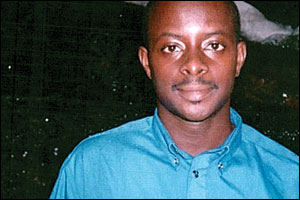
The world lost one of its most talented and caring voices in the struggle against HIV/AIDS last week. Nigerian journalist and AIDS activist Omololu Falobi was shot to death in Lagos,Nigeria, on Oct. 5. He was 35 years old.
Details of Falobi’s death are still unclear, but what we know is that he was returning home when he encountered a shout-out involving armed robbers. He had just addressed a group of young entrepreneurs about the importance of social responsibility in their careers.
Falobi, a Black AIDS Institute board member, had himself been a model of social responsibility throughout his life. “Omololu was instrumental in helping to lay the early strategic foundation for the Black AIDS Institute,” said Phill Wilson, the Institute’s executive director. “He was a quiet but clear voice on our board.”
Falobi accomplished much in his too short life. He finished high school at 14, had a masters degree by 26 and at 29 was named features editor of Nigeria’s leading weekly paper, The Sunday Punch. In 2000 Falobi left that position to take a leadership role in educating his country and continent about HIV/AIDS. He became executive director of the Nigerian group Journalists Against AIDS (JAAIDS), which coordinates the efforts of African journalists to disseminate information about the epidemic. From that post, he traveled the continent and the world spreading his message – that people in all walks of life must contribute if we are to win the fight against AIDS, especially in impoverished regions such as sub-Saharan Africa.
He served as the African NGO representative to UNAIDS for 2004 and 2005; helped convene the African Civil Society Coalition on HIV and AIDS, which coordinates the advocacy efforts of African NGOs; and co-founded the Nigeria HIV Vaccine and Microbicides Advocacy Group, to name just a few of his many projects. He won many global awards, including being appointed a 2001 Ashoka Fellow, an elite group of 200 social entrepreneurs recognized for developing innovative approaches to building a better world. JAAIDS was the first recipient of the Institute’s Frontliners Award, which honors developing world organizations and individuals who pioneer cutting-edge strategies.
“Omololu was an inspired and really dedicated leader in the world of journalism, who took a stance early on to mobilize the media in Nigeria to play its part forcefully in confronting HIV/AIDS,” said the Kaiser Family Foundation’s Penny Duckham.
He also helped in countless unsung ways. American journalist Mark Schoofs, who wrote a Pulitzer Prize-winning series on AIDS in Africa, recalls that Falobi introduced him in 1999 to key Nigerian sources and sat with him in a Lagos hospital when the American was stricken with drug-resistant Malaria. “The story from Nigeria was the best from that series,” said Schoofs, “and I simply couldn’t have got that story without Omololu’s help.” Schoofs and Falobi remained close friends until Falobi’s death.
Omololu first joined the Black AIDS Institute’s team during the 2000 global AIDS conference in Durban, South Africa. He brought boundless energy and bold ambition to not only our organization’s work but our individual lives as well. At any formal event, he was always the best dressed person in the room, resplendent in his traditional Nigerian robe and hat. His radiant smile, warm spirit and infectious optimism reminded all who encountered him of life’s joy. We will sorely miss our beloved brother.
“I’m still in shock,” said Wilson. “The global AIDS community has lost an amazing advocate. But I think the greatest tragedy is that Omololu’s children have lost a remarkable father. Our prayers go out to his wife and his children.”
Falobi is survived by his wife and two young children in Nigeria. The Black AIDS Institute is establishing a fund to help support his family. To contribute, please send check or money order to:
The Omololu Falobi Fund
c/o The Black AIDS Institute
Attn: Maxim Thorne
1833 West 8th Street
Suite 200
Los Angeles, California 90057