Mobilization
By B. Denise Hawkins
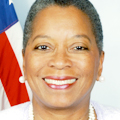
Washington (Aug. 14, 2006) — For Donna Christian- Christensen (D-VI), the equation should be simple and the response swift when there is a matter of “national security” looming. But there is no war raging as HIV/AIDS continues to disproportionately ravage African- Americans and other people of color, says the first female physician in Congress.
“If some of us are compromised by AIDS and other health disparities, then the whole country is at risk,” says Christian-Christensen, who is among the more than 20,000 international officials and delegates attending the XVI International AIDS Conference in Toronto. In 2003 she was named to the House Select Committee on Homeland Security and currently is urging fellow lawmakers to make responding to HIV/AIDS a matter of national security. “A strong country is one that has people who are in good health,” she says. Christian-Christensen sounds weary as she wonders aloud what more must happen before the nation provides increased funding and greater access to HIV/AIDS care, education and treatment. The number of African Americans aged 25-44 dying of the virus “isn’t making a big enough difference in how this country is responding,” declares Christian- Christensen. “I don’t know what we will have to say or do to make a difference,” says Christian-Christensen, who is known as the legislative go-to person on matters of health disparities. She hopes that revamping HIV/AIDS “arguments and messages” to ones that emphasize the epidemic’s “economic impact and link to national security” will gain the attention of Congress and translate into action. "If the HIV/AIDS crisis is [not addressed] in other minority communities, they will soon mirror the tragedy that has befallen African American communities nationwide,” she predicts. With the recent reports from the Centers for Disease Control and Prevention, which have shown that the epidemic continues to rage in African American and Latino communities, the Congressional Black Caucus' Health Braintrust, along with the minority caucuses in the Congress, have joined forces to demand $540 million to fight the epidemic. The Minority AIDS Initiative, as it has become known, was the main feature in the call for a “State of Emergency” to deal with the growing infection rates in communities of color. For the first time, the medical concerns of African Americans were brought to the attention of national policymakers. An opportunity to apply to public policy what she learned caring for her patients was a motivating factor in her decision to seek office in 1996. Christian-Christensen was a practicing family physician and public health administrator in the Virgin Islands in the mid-1980s when HIV/AIDS arrived. Then the virus was new and complex, but healthcare providers at her hospital knew enough to be frightened. Christian-Christensen recalls treating her first patient and the “hell” that erupted in those early days. The young man came to her office with a raging fever and a “crackling sound in his throat.” She ordered a chest X-ray and an AIDS test that returned positive. Before the results were even confirmed, Christian-Christensen's patient was shunned by nurses and other hospital staff. With time and increased education about how HIV is contracted, attitudes and treatment began to change, explains Christian-Christensen. But she’s doubtful whether she will see an increase in funding, treatment or focus in the U.S. on minorities with HIV/AIDS. The spread of the disease in parts of Asia and Central Europe, she suggests, may also eclipse attention given to African Americans and those in Africa with HIV/AIDS.